
Arches National Park Travel Guide: Best Things to Do, Hikes & Tips
Planning a trip to Arches National Park? Discover the best hikes, scenic drives, photography spots, and insider tips from a Southwest local.


All photographs are © Roaming the Southwest unless stated otherwise. Unauthorized reproduction or use is prohibited.
Home to more than 2,000 natural sandstone arches and the highest concentration in the world, Arches National Park is one of Utah's most recognizable destinations. The park sits just north of Moab, making it convenient to combine with nearby Canyonlands National Park and Dead Horse Point State Park.
One of my favorite things about Arches is how much you can experience without spending hours hiking. Whether you have one day or an entire weekend, here's what I'd prioritize, along with everything you need to plan your visit.
Quick Guide to Arches National Park
| Planning Information | Details |
|---|---|
| Location | Moab, southeastern Utah |
| Hours | Open 24/7, year-round, except during closures |
| Entrance Fee | $30 per private vehicle, valid for 7 days |
| Timed Entry | Not required in 2026; check for future changes |
| Best Time to Visit | Spring and fall |
| Recommended Time | 1–2 days |
| Most Famous Landmark | Delicate Arch |
| Best for | Hiking, photography, scenic drives, and families |
| Pets | Not permitted on hiking trails |
| Nearest Major Airport | Grand Junction Regional Airport (GJT) |
| Official Website | National Park Service |

Want My Exact Southwest Adventure Locations?
My Southwest Adventure Guide includes 350+ locations I've personally scouted, including hikes, scenic drives, photography spots, hidden gems, and 7 pre-built itineraries, all with interactive maps to help you plan your trip. Use code ROAM15 to always save 15%.
Where Is Arches National Park & How Do You Get There?
Arches National Park is located approximately five miles north of Moab, Utah, along US Highway 191. Its main scenic drive stretches 18 miles into the park, with additional paved roads leading to popular attractions.
You'll need a vehicle to explore Arches. There's no park shuttle or public transportation between trailheads, but a standard passenger car is suitable for reaching the major attractions.
Best Airports for Visiting Arches National Park
| Airport | Approximate Drive Time |
|---|---|
| Canyonlands Regional Airport (CNY) | 15–20 minutes |
| Grand Junction Regional Airport (GJT) | 1 hr 30 mins |
| Salt Lake City International Airport (SLC) | 3.5–4 hours |
| Denver International Airport (DEN) | 5.5–6 hours |
| Harry Reid International Airport (LAS) | 6.5–7 hours |
My recommendation: Grand Junction is a great option if you're flying in specifically for Arches and Canyonlands. Salt Lake City offers more flight choices, while Moab's smaller airport has limited service.
If you're driving from Interstate 70, take Exit 182 at Crescent Junction and follow US-191 south to the park entrance.
Keep in mind that Devils Garden, at the far end of the scenic drive, is approximately 18 miles beyond the entrance station. Allow around 40–45 minutes to reach it without stops or traffic.
Best Time to Visit Arches National Park
Spring and fall generally offer the most comfortable temperatures for hiking, although both seasons can be busy.
- Spring (March–May): Great hiking weather, but expect spring break crowds and busy trailheads.
- Summer (June–August): Temperatures frequently exceed 100°F. Start hikes at sunrise and avoid strenuous activities during the hottest hours.
- Fall (September–November): Excellent hiking conditions, particularly in October and November. October can still be crowded.
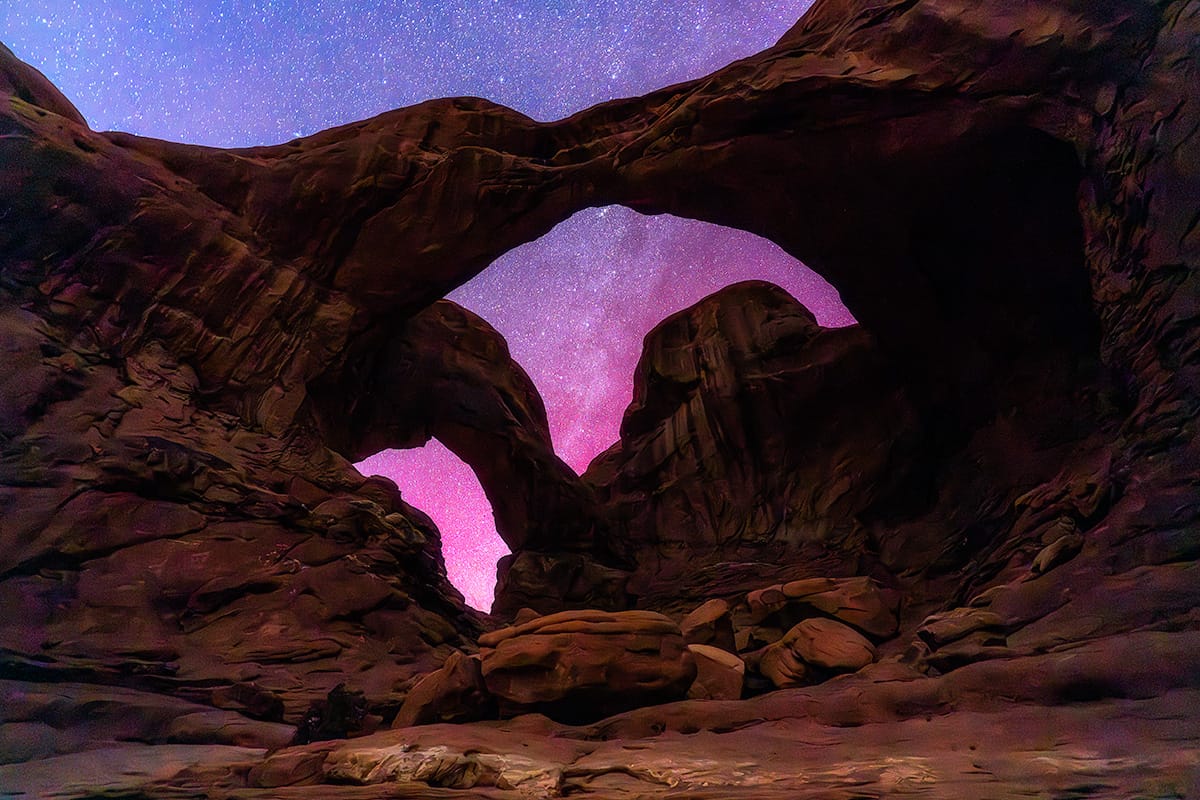
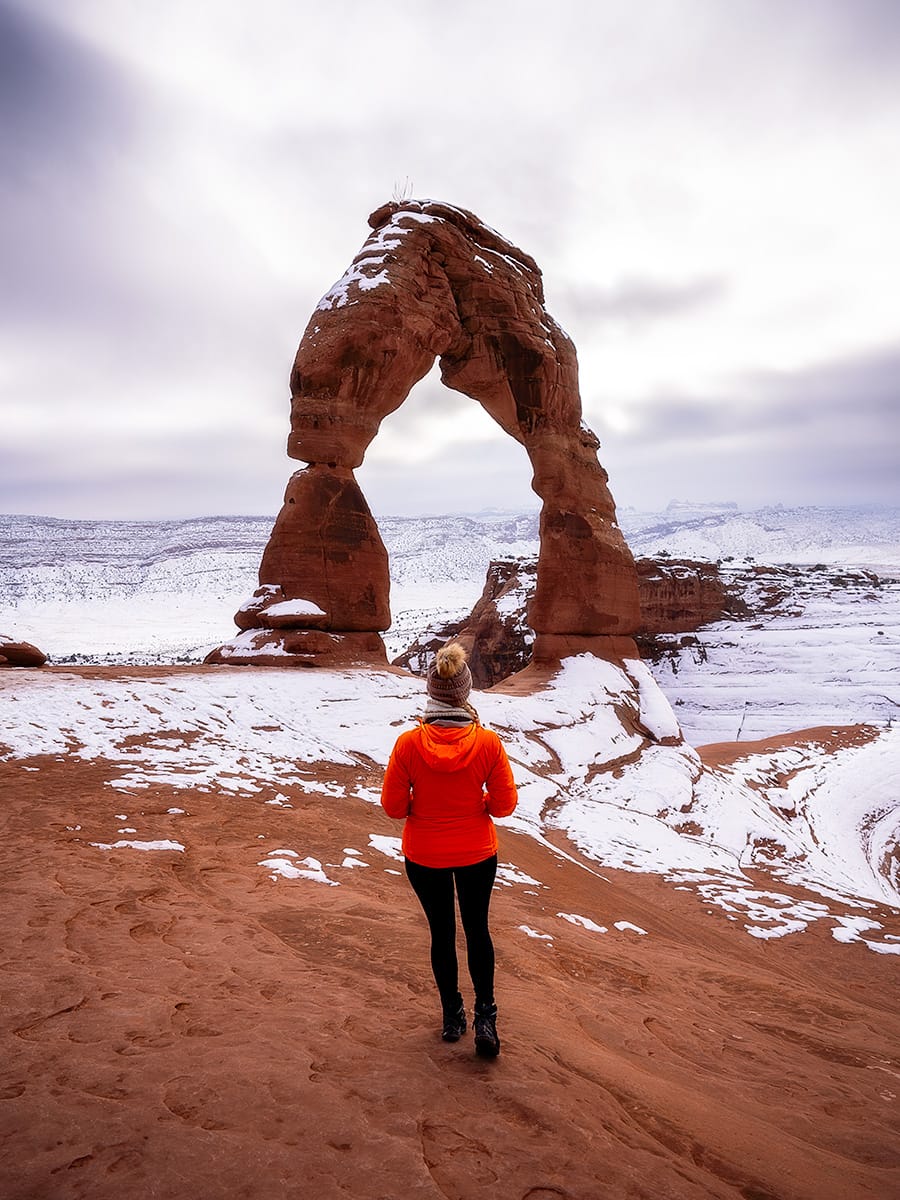
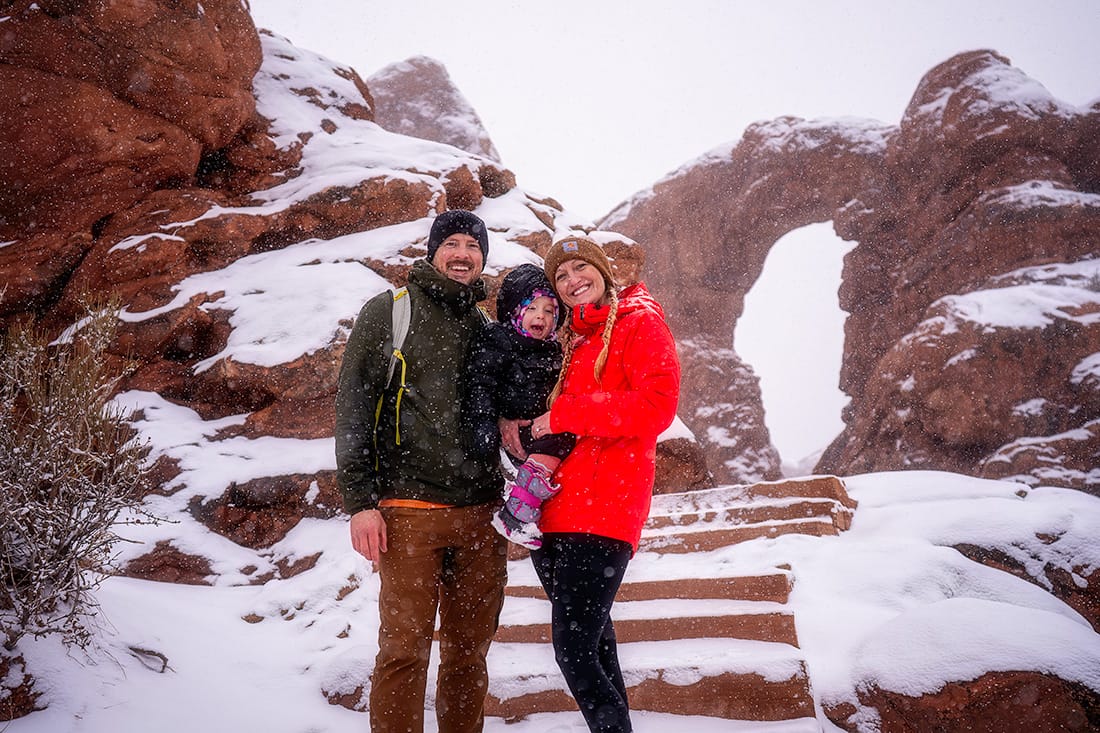
- Winter (December–February): Fewer visitors, cooler temperatures, and the possibility of snow-covered arches. Watch for icy trails.
Late fall and winter are my personal favorites. There's something pretty incredible about seeing the red sandstone covered in snow, and I'll happily trade summer heat for cooler hiking temperatures.
For more detailed planning, read my Best Time to Visit Southern Utah guide and When NOT to Visit Southern Utah, where I cover seasonal weather, crowds, and holidays worth avoiding.
Arches National Park Entrance Fees & Reservations
Arches charges $30 per private vehicle, valid for seven consecutive days. Motorcycle entry is $25, and individual entry on foot or bicycle is $15.
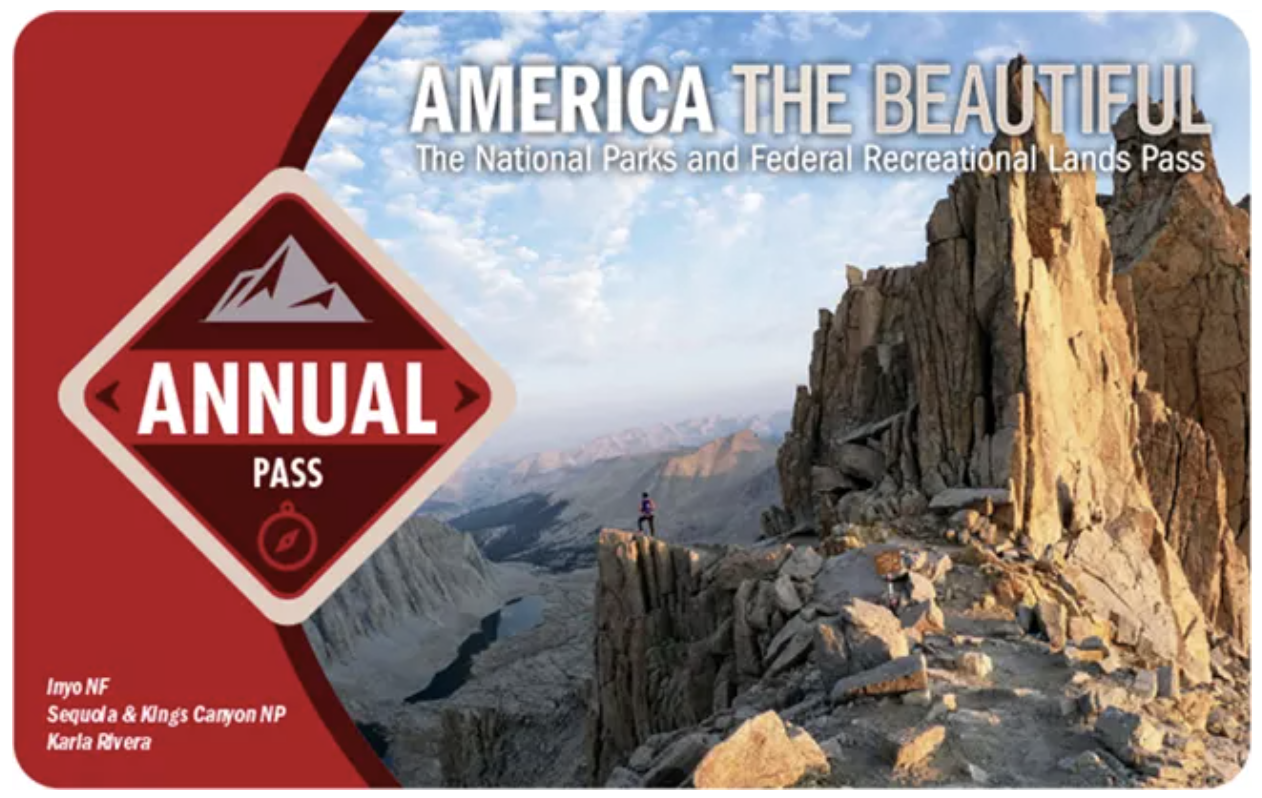
If you're visiting multiple National Parks, consider purchasing an America the Beautiful Pass instead of paying individual entrance fees.
Do You Need a Timed-Entry Reservation?
Timed-entry reservations are not required in 2026. However, the park can temporarily restrict vehicle entry during periods of heavy congestion.
I recommend arriving early, especially during spring break, weekends, and holidays. Parking at popular trailheads can fill quickly.
Because reservation policies can change, always check the official NPS planning page before your trip.
Other Reservations & Permits
- Fiery Furnace: A permit or ranger-led tour is required to enter this area. View permit requirements.
- Devils Garden Campground: Reservations are required during the main camping season. Winter camping is generally first-come, first-served. View campground information.
Most popular day hikes, including Delicate Arch, Landscape Arch, and Double Arch, do not require separate hiking permits.
Best Things to Do in Arches National Park
You don't need to hike every trail to experience the best of Arches. These are the places I'd prioritize, especially on a first visit.
1. See Delicate Arch
Can you really go to Arches without seeing Delicate Arch?! No, you can't. If you can't make the hike to the actual arch, consider going to the Lower Delicate Arch Viewpoint to at least see it from a distance. This spot is also wheelchair friendly.
2. Explore the Windows Section
One of my favorite areas of the park, especially with kids. North Window, South Window, Turret Arch, and Double Arch are all accessible by short hikes, making it easy to explore several arches in one stop.
3. Drive the Arches Scenic Drive
The 18-mile scenic drive connects most of the park's major attractions. Stop at Park Avenue, Balanced Rock, and the various overlooks along the way. Allow at least two to three hours with short stops.
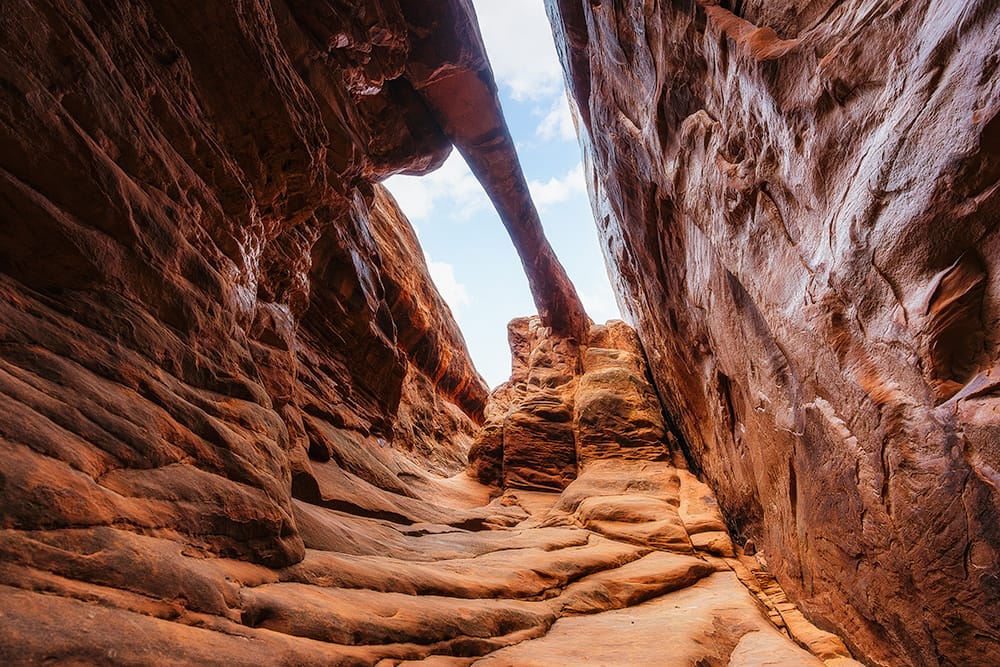
4. Visit Sand Dune Arch
Don't skip this one, especially with kids! A short, sandy trail leads between towering sandstone fins to an arch tucked into the rocks. This is my favorite short hike in the park, and there are so many places for kids to explore and play back in here, including a mini slot canyon.
5. Explore Devils Garden
Home to Landscape Arch, Partition Arch, Navajo Arch, and Double O Arch, Devils Garden is one of the best areas for hiking. You can keep it relatively easy or hike the longer, more challenging primitive loop.
6. Walk Through Park Avenue
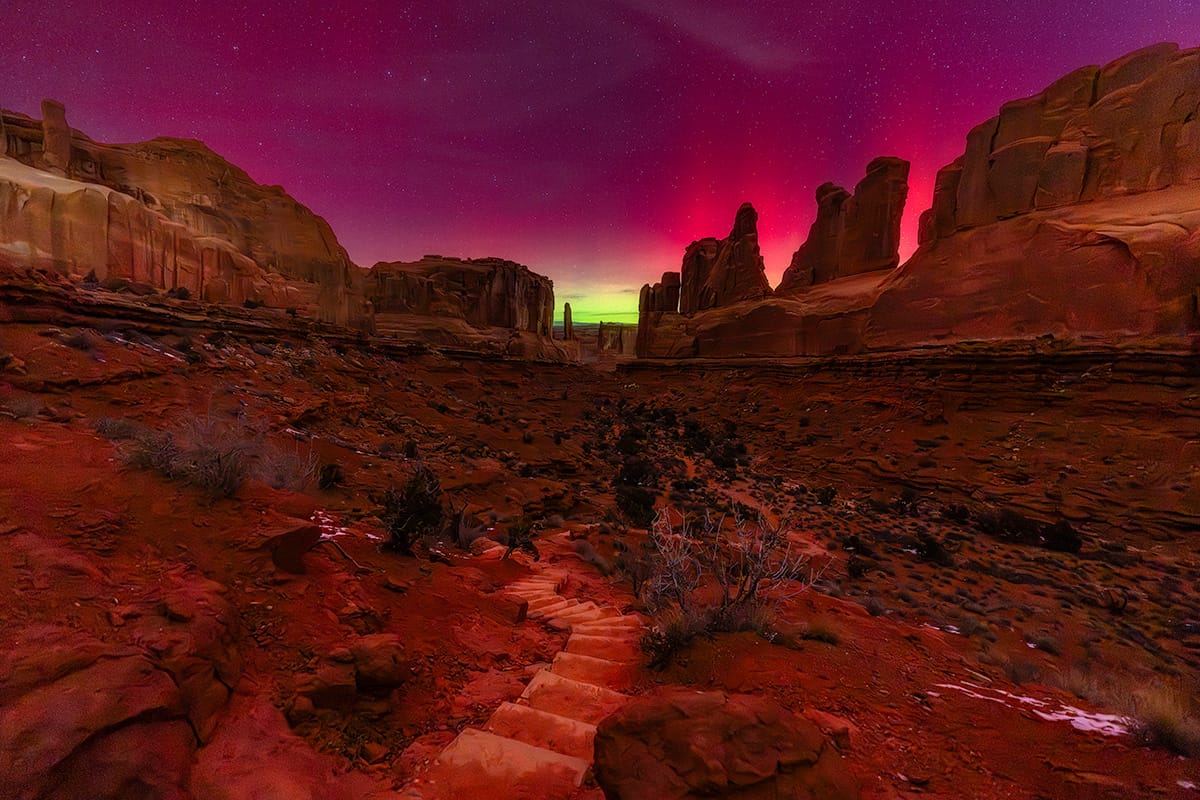
One of the first major stops after entering the park. The towering sandstone walls are impressive from the overlook, but walking down into the canyon gives you a completely different perspective. If you have the time, I would take the trail, but if you're short on time, even just the overlook is impressive. I captured the aurora borealis here in January 2026 and it's one of my favorite photos in Arches to date.
7. Experience the Fiery Furnace
This is my favorite hike in the park, followed by Devils Garden Primitive Loop as a close second. A maze of narrow passages and towering sandstone fins, the Fiery Furnace is one of the park's most unique areas with no official trail. You'll need a permit or ranger-led tour, so plan ahead. Something to know is that children under five are not permitted in the furnace at all.
8. Go Stargazing
Arches is an International Dark Sky Park, making it an excellent destination for stargazing. On clear, moonless nights, the Windows Section and Panorama Point are great places to enjoy the night sky.
Best Hikes in Arches National Park
Some of the park's best hikes are surprisingly short, while others involve exposed sandstone, scrambling, and steep climbs.
| Hike | Round-Trip Distance | Difficulty |
|---|---|---|
| Sand Dune Arch | 0.3 miles | Easy |
| Double Arch | 0.6 miles | Easy |
| Windows Loop | 1 mile | Easy |
| Landscape Arch | 1.9 miles | Easy |
| Broken Arch Loop | 2 miles | Moderate |
| Delicate Arch | 3 miles | Moderate |
| Fiery Furnace | ~2 miles (varies) | Challenging |
| Double O Arch | 4.1 miles | Challenging |
| Devils Garden Primitive Loop | 7.9 miles | Challenging |
My recommendation: If you only have time for a few hikes, choose Delicate Arch, Double Arch, Sand Dune Arch, and Landscape Arch.
For families with younger kids, Sand Dune Arch and the Windows Section are especially good options. Experienced hikers should consider Devils Garden Primitive Loop or the Fiery Furnace, which includes exposed sandstone, scrambling, and route-finding.
Most trails have little shade, so carry plenty of water and avoid exposed hikes during extreme heat. Check the NPS hiking guide for current trail conditions.
Best Photography Spots in Arches National Park
Arches is one of my favorite places in Southern Utah for photography. Sunrise and sunset can completely change how the sandstone formations look, so I recommend planning around the light.
| Photography Location | Best Time |
|---|---|
| Delicate Arch | Sunset or sunrise for fewer crowds |
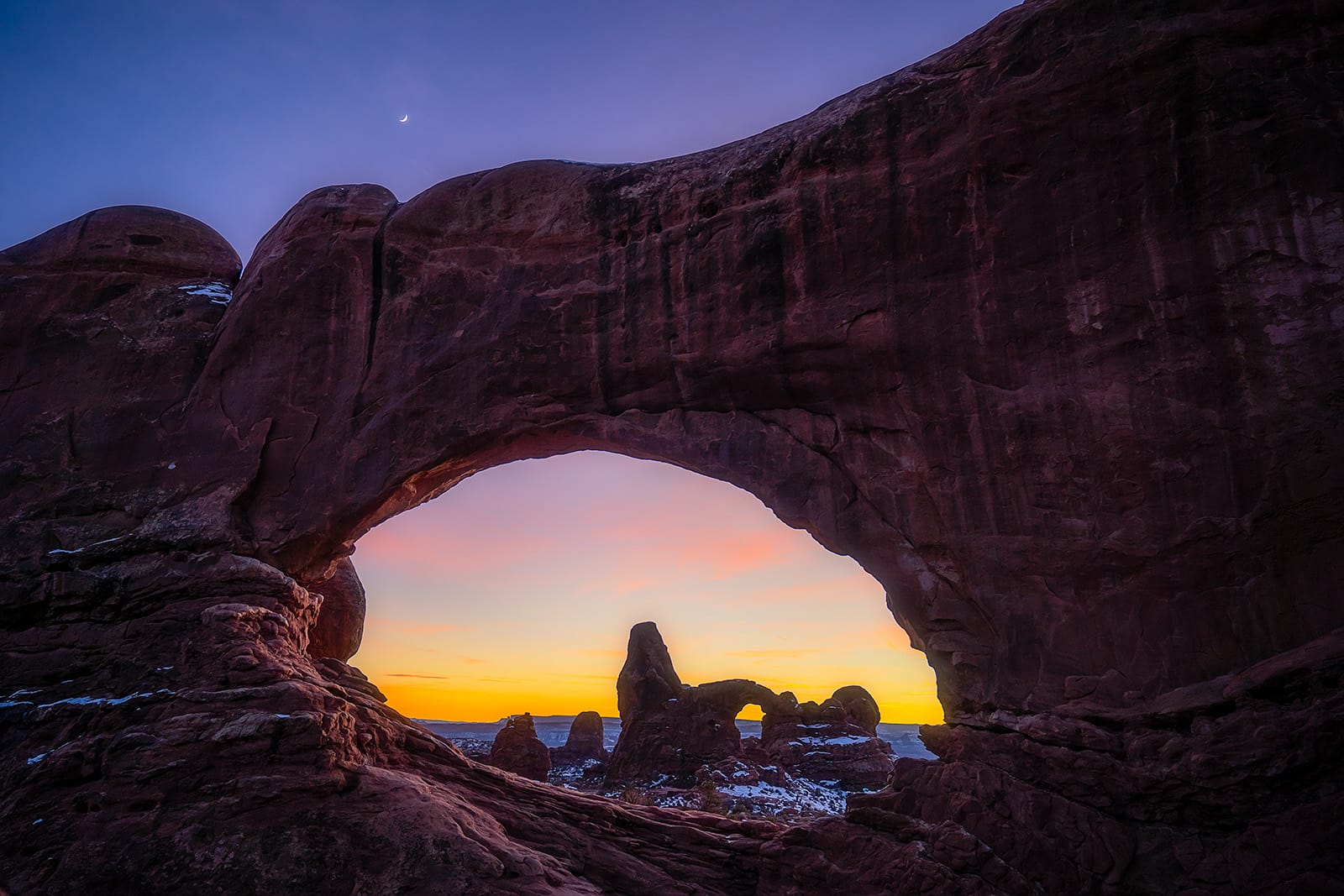
| Turret Arch Through North Window | Sunset |
| Double Arch | Early morning or late afternoon |
| Park Avenue | Early morning or late afternoon |
| Landscape Arch | Morning |
| Sand Dune Arch | Anytime |
| Balanced Rock | Sunset or blue hour |
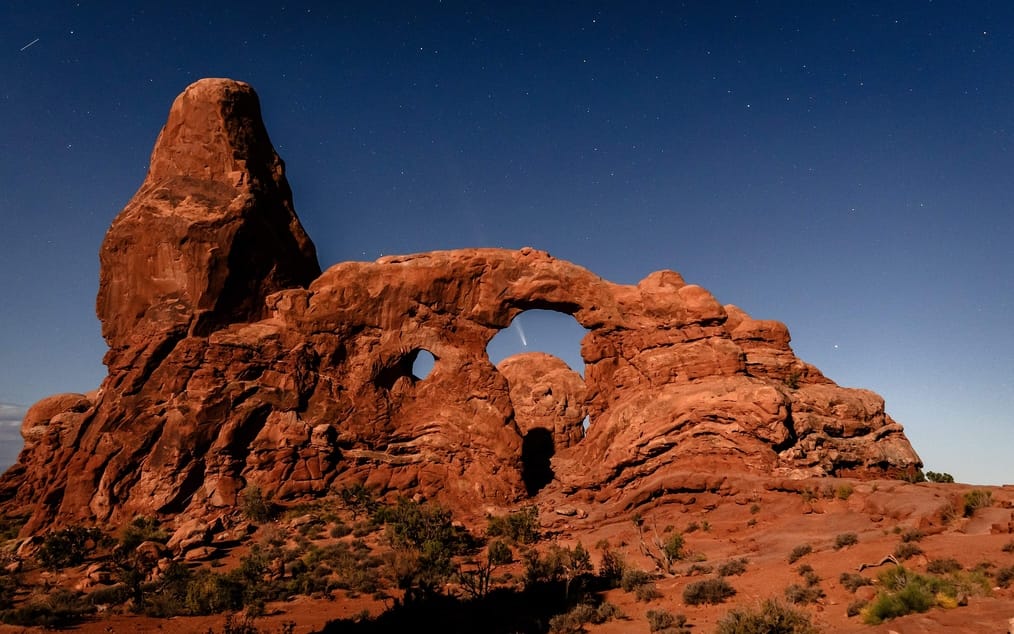
If photography is a priority, plan for at least one sunrise and one sunset. If I only had time for one of each, I'd choose sunrise at Delicate Arch and sunset photographing Turret Arch through North Window.
Remember to stay on established trails and durable surfaces to protect the park's fragile biological soil crusts.
Arches National Park Itineraries
You can see many of Arches' highlights in one day, but two days gives you more time for longer hikes and photography without rushing.
One Day in Arches National Park
- Sunrise: Hike to Delicate Arch.
- Morning: Explore the Windows Section and Double Arch.
- Midday: Visit Sand Dune Arch and Landscape Arch.
- Afternoon: Stop at Park Avenue and enjoy the scenic drive on your way out.
This is a full day, so start early and plan around the heat.
Two Days in Arches National Park
Day 1: Delicate Arch, the Windows Section, Double Arch, and Park Avenue.
Day 2: Devils Garden, Sand Dune Arch, and any scenic stops you missed.
If you have a third day in Moab, I'd recommend Canyonlands National Park or Dead Horse Point State Park. The exception would be if you can get Fiery Furnace permits, because I'd absolutely dedicate another day to exploring that area.
Where to Stay Near Arches National Park
Moab is the best place to stay, just five miles south of the park entrance. You'll find hotels, vacation rentals, restaurants, and plenty of options for exploring the surrounding area.
If you prefer camping, Devils Garden is the only developed campground inside Arches. There are also campgrounds and designated dispersed camping areas on surrounding public lands.
Dispersed camping around Moab is heavily regulated, particularly within approximately 20 miles of town, where camping is restricted to developed campgrounds or designated sites in many areas. Free camping is available on some BLM lands, but always check the official BLM camping map before choosing a site. A portable toilet or approved human waste disposal system is required for dispersed camping.
Accommodations fill quickly during spring and fall, so I recommend booking well in advance.
Things to Know Before Visiting Arches National Park
- Arrive early. Popular trailheads fill quickly, especially during spring break, weekends, and holidays.
- Download offline maps. Cell service is unreliable throughout much of the park. I have AT&T and usually have service until I get to the Cottonwood Wash area then lose it in the rest of the park.
- Bring plenty of water. Summer temperatures regularly exceed 100°F, and most trails offer little shade.
- Know the pet restrictions. Dogs are permitted in certain developed areas but not on hiking trails or at overlooks.
- Check accessibility information. Some viewpoints and trails have accessible features, but conditions vary. See the NPS accessibility guide.
- Protect the desert. Stay on established trails, avoid biological soil crusts, and follow Leave No Trace principles.
- Watch the weather. Summer thunderstorms can bring lightning and flash flooding, while winter snow and ice can make exposed trails dangerous. If you're visiting in winter, I highly recommend bringing traction devices with actual metal spikes, like Kahtoola MICROspikes. For a more budget-friendly option, these from Amazon work well, too. I actually own that exact pair as a backup, but I go through a pair every season or two, compared to my Kahtoolas, which I've had for 10 years. I'd avoid Yaktrax or anything with chains or coils on the bottom. In my experience, they break easily on slickrock. Look for actual metal spikes instead.
Frequently Asked Questions About Arches National Park
Can You Visit Arches National Park in One Day?
Yes! One full day is enough to see the major highlights, including Delicate Arch, the Windows Section, Sand Dune Arch, and several scenic viewpoints. Two days is ideal if you want to tackle longer hikes.
Do You Need Reservations for Arches National Park?
Timed-entry reservations are not required in 2026, but this could change in future years. Fiery Furnace hikes and Devils Garden camping have separate permit or reservation requirements.
Can You Drive Through Arches National Park Without Hiking?
Absolutely! The 18-mile scenic drive offers plenty of viewpoints and roadside attractions, including Balanced Rock, Park Avenue, and the La Sal Mountains Viewpoint.
Is Arches National Park Kid-Friendly?
Yes! Sand Dune Arch, Double Arch, and the Windows Section are some of my favorite places to explore with kids. Just be mindful of exposed ledges, extreme summer heat, and limited shade.
Can You Visit Arches and Canyonlands National Parks in One Day?
Yes, but you'll be limited to the highlights of each park. I recommend spending at least one full day in each if your schedule allows.
Planning a Southwest Road Trip?
If you're planning to explore more of Utah or the Southwest, these resources will help:
I've also put together more than a decade of exploring the Southwest into my Best of the Southwest Travel Guide.
It includes 350+ personally vetted locations, an interactive map with exact locations, and seven pre-built road trip itineraries covering National Parks, scenic drives, hikes, and places you might otherwise miss.