
When NOT to Visit Southern Utah (Brutal Truth From A Local)
Planning a trip to Southern Utah? Learn the worst times to visit, from extreme summer heat to spring break crowds, and how to avoid common mistakes.


Thinking About Visiting Southern Utah? Read This First.
There’s no single “perfect” time to visit Southern Utah.But there are very real times when your trip can look completely different than what you expected—whether that’s because of heat, crowds, or just bad timing.If you’re picturing empty trails, easy parking, and hitting multiple parks in a day… timing matters more than you think.Here’s the honest breakdown of when NOT to visit Southern Utah—and what to do instead.
📌 Related Blog Posts To Save For Later
- Best Time to Visit Southern Utah (Month-by-Month Guide)
- Common Mistakes First-Time Visitors Make in Southern Utah
- Utah National Park Entrance Fees + Reservations
- How Much Water Do You Need To Drink Hiking in Southern Utah?
Quick Summary: When to Avoid Southern Utah (in my opinion as a 10+ year local)
- Worst overall: July–August (extreme heat)
- Most crowded: Spring break + major holidays
- Most limiting: July–August
- Most misunderstood: Winter, it's my favorite time in the desert
July + August: Brutal Heat + Limited Flexibility
Summer sounds convenient because your kids are out of school—but it’s easily the hardest time to visit.
What it actually looks like:
- Daytime temps: 100–110°F+
- Very little shade in most parks
- Hiking becomes unsafe by mid-day
- Flash flood risk in slot canyons during monsoon season
Places like Zion National Park and Arches National Park are especially tough in the afternoon.You’ll end up planning your entire day around the heat:
- early mornings
- long mid-day breaks with limited things to do unless you have water plans in a pool
- limited flexibility
Spring Break (March–Early April): Crowds Everywhere
This is one of the most popular times to visit—and it shows. That said, March and April outside of major spring break weeks are incredible.
What to expect:
- Full parking lots early in the morning
- Long shuttle lines in Zion
- Busy trails and viewpoints
- Limited lodging availability
Even quick stops can turn into 30–60 minute delays.Especially busy in Zion National Park and Bryce Canyon National Park
Better option: Late February or late April for a similar experience with fewer crowds, but obviously, spring break exists for a reason and sometimes that's the only time you can visit. If you can, research spring break dates for major colleges in the Southwest and avoid those dates if possible. Late April to Early May is typically much less busy because kids and college students are in classes and the weather is still really moderate.

Holiday Weekends + Holidays
Memorial Day, Fourth of July, and Labor Day weekends are some of the busiest times of the year. Thinking people will be with their families on Thanksgiving and Christmas? Wrong. One of the worst decisions I've ever made was going to Arches National Park on Thanksgiving the first year we lived here. I mean - who wants to eat a PB&J at Delicate Arch on Thanksgiving?! Apparently everyone LOL The worst crowds I've EVER seen in Arches have been on Thanksgiving and Christmas with lines for entry back to the highway. If you do want to visit on a holiday, GO EARLY. Trust me on this one.
The reality:
- Traffic backing up into park entrances
- Parking gone by early morning
- Overcrowded viewpoints throughout most of the park
- Slower everything as a result
Better option: Shift your trip by a few days so you don't visit on the actual holiday, or if you do visit on the actual holiday, GO EARLY.
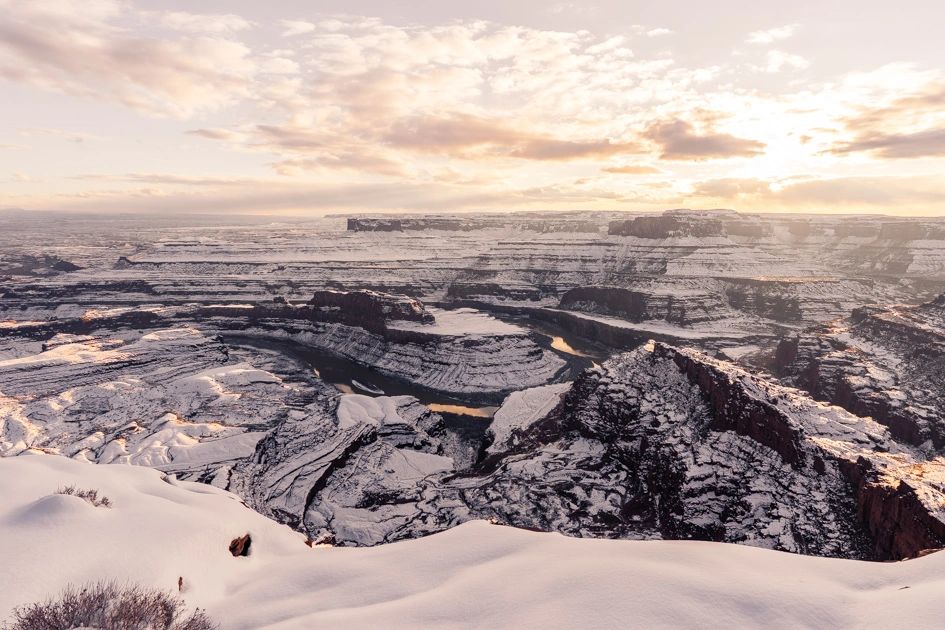
Winter (December–February): Underrated, But Not for Everyone
Winter can actually be a great time to visit—but it depends on what you’re expecting. It's actually my favorite time to be in the desert because nothing beats snowy red rocks and I can hike for hours with low crowds.
What changes:
- Cold mornings (often below freezing)
- Shorter days so not the best time for a road trip with limited time
- Snow and ice on the trails so this takes extra accessories to be fully prepared
- More flexibility with traveling, especially if lots of driving is involved, as roads DO close during snow storms.
What catches people off guard:
It absolutely snows in the desert and ice can really linger on the trails. If you visit in the winter, you need to be sure to pack traction for your boots.
The trade-off:
- Fewer crowds
- Easier parking
- Slower, quieter experience
Best for: flexible itineraries, photography, avoiding crowds
The Real “Worst Time” Isn’t a Month—It’s Showing Up Unprepared
Southern Utah is not a place you can wing. No matter when you visit, it takes advanced planning and being prepared.Distances are longer than you expect, parking fills up fast, and some hikes require permits well in advance. See Southern Utah Hikes Requiring Permits (Full List + How to Apply) and make sure to read Common Mistakes First-Time Visitors Make in Southern Utah if there's no other blog you read prior to planning your trip.
If you don’t plan ahead, your days can end up looking very different than what you had in mind:
- more time waiting
- more driving
- fewer hikes and stops
- inaccessible roads due to weather
So When Should You Visit Southern Utah?
If you’re looking for the best overall experience:
Late April–May
September–October
You’ll get:
- more manageable temperatures
- better hiking conditions
- more flexibility in your days to do as much as possible
- remember when kids are out of school, the parks are likely to be busy (I understand this can't be helped if you have children, but just keep it in mind and plan accordingly. GO EARLY.)
Planning a Trip to Southern Utah?
I’ve spent 10+ years exploring the Southwest, and THIS digital guide is everything I’d actually recommend—organized so you can build your trip without second-guessing every stop. It has hikes, scenic drives, overlooks, and 7 pre-built itineraries so you can plan it right the first time. Click the map above to learn more.
See you out there,
Mallory