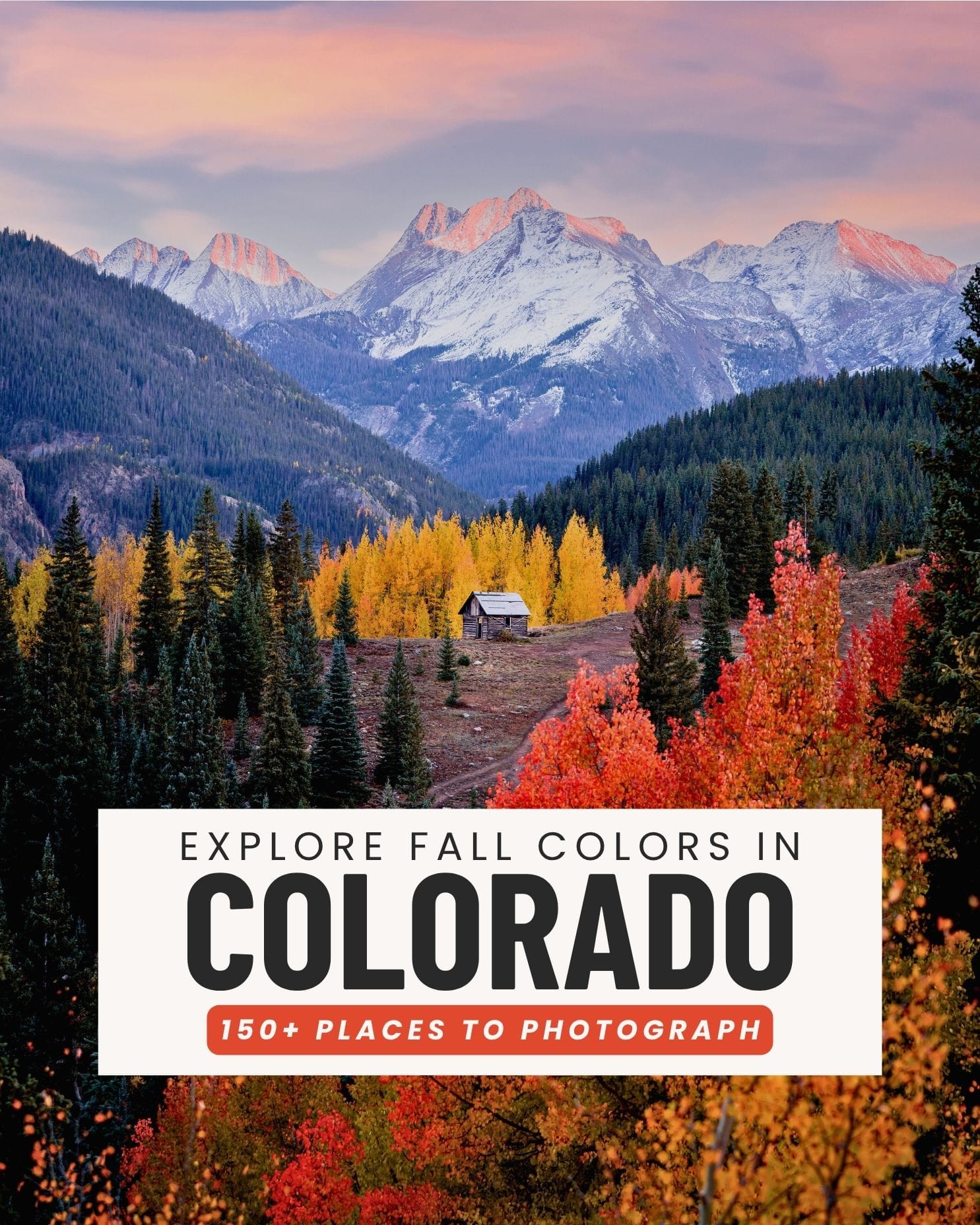
Fall Colors in Colorado: A Complete Guide to Peak Timing, Where to Go, & What to Do
Everything you need to plan a Colorado fall colors trip in one place, including when to visit, where to find the best fall colors, scenic drives, real-time color tracking, what to pack, airports, and a sample Colorado fall road trip.


Welcome
Hi friends! Planning a Colorado fall colors trip in 2026? I’ve put everything I’ve learned into one place for easy access. Consider this your one-stop shop for planning a Colorado fall colors road trip: from when to visit and where to go to scenic drives, airports, what to pack, tracking the colors in real time, and even a sample road trip to help you plan your own. If you're chasing peak fall colors in Colorado, WELCOME, you're in the right place!
After a decade of living in Colorado, fall is still my favorite time of year here. Every September and October, I spend two to three weeks chasing after peak colors, and after doing this for years, I can tell you that planning a Colorado fall road trip isn’t as simple as picking a “peak” week and seeing the best of the best. Colors can vary wildly depending on elevation, location, weather, and sometimes even from one grove to the next.
This guide covers everything you need to get started, but I have plenty more if you’re looking for specifics.
When Do Fall Colors Peak in Colorado?
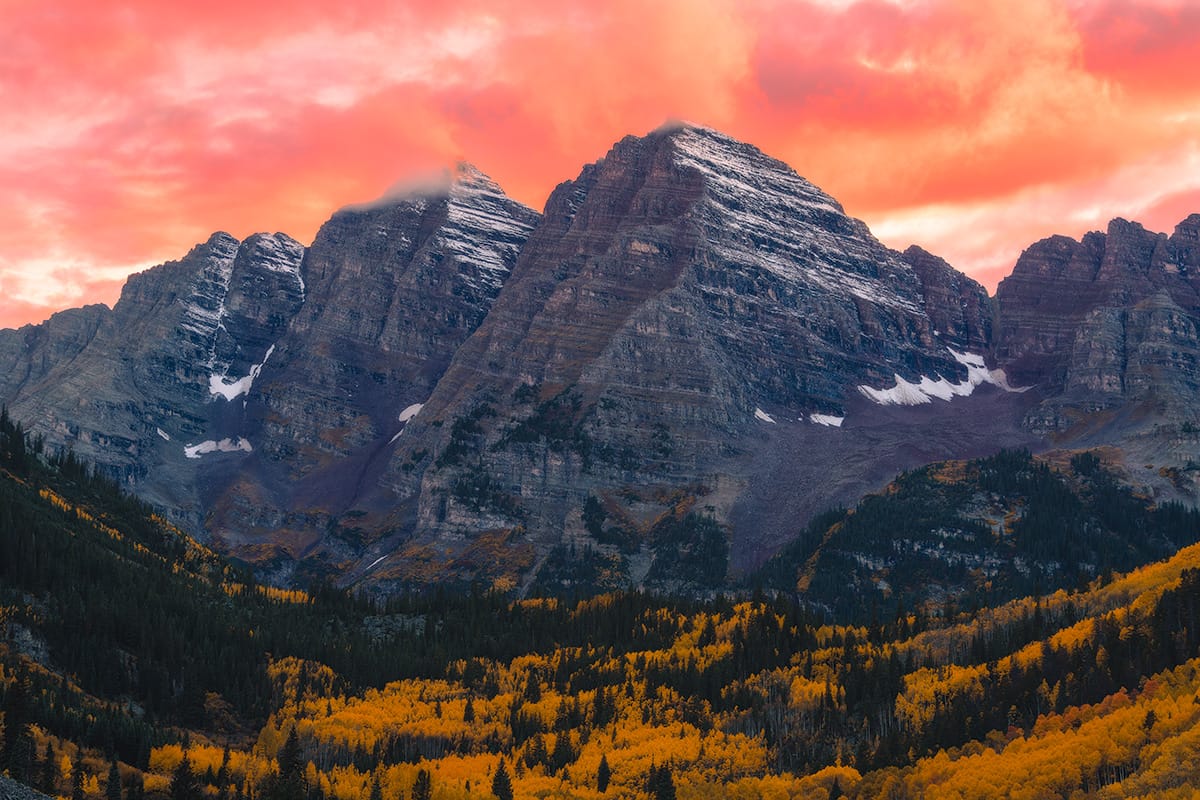
The short answer: Colorado’s fall colors generally peak from mid-September through early October, but there is no single “peak week” for the entire state, and this answer isn't very helpful.
If you’re planning a trip around fall colors, this is probably the most important thing to understand. Colorado is a big state with huge differences in elevation, and the aspens don’t all change at once. Some of the highest-elevation areas can be nearing peak while valleys just a few miles away are still mostly green. It's important to pick exactly what you want to see/do and make specific plans around that spot.
General Colorado Fall Color Timeline
These dates are a general starting point, not guaranteed peak dates. Timing changes every year, and elevation can make a huge difference even within the same area.
- Mid-September → highest elevations and most northern latitudes
- Late September → most mountain areas
- Early October → lower elevations and southern latitudes (think San Juan Mountains)
- Mid to late October → Front Range and western Colorado
September 1-10:
This is typically when we will start to see the earliest change. It's usually only a few trees here and there in areas particularly hit hard by the drought. This is when people usually start freaking out that "Fall is two weeks early" based on a few trees starting to change.
September 10–20:
More high-elevation groves begin changing, and some may already be approaching peak. Northern Colorado and higher mountain locations are usually your best bet during this window, but expect plenty of green mixed in, especially at lower elevations. I would focus on Frisco, Silverthorne, Breckenridge, and Estes Park during this window.
September 20–30:
This is prime fall color season across much of Colorado. Large portions of the high country can reach peak or near-peak during this window, making late September one of the best times for a Colorado fall foliage road trip. Keep in mind that some of the highest elevations may already be past peak while other areas are still green.
October 1–10:
Don't assume the season is over. Some of Colorado's most beautiful fall destinations can peak during the first week of October, particularly in southwest Colorado and at lower elevations. The San Juans, Telluride, Kebler Pass, and other southern and western locations can still have incredible color during this window. If I'm telling the truth, the first week of October is my favorite because the mass visitors have usually gone home, but Ridgway and Telluride are always putting on a show. This is when we routinely have our first snow, too.
After October 10:
Aspen color becomes much less reliable in the high mountains, but fall isn't necessarily over. Lower elevations and cottonwoods can continue changing later into October, and this is when you'll generally want to start looking toward lower elevations, including Denver, portions of the Front Range, and Grand Junction/Fruita area (especially at the end of the month.)
Elevation Matters Just as Much as Latitude
You’ll often hear that Colorado’s fall colors move from north to south, but it’s not quite that simple. Elevation can matter just as much as latitude.
Aspens at higher elevations generally change first, with color gradually moving down the mountainsides into lower elevations and valleys. That means an area farther south can sometimes peak before somewhere farther north simply because it sits at a higher elevation. You can even see huge differences within the same area. A high mountain pass may be completely golden while the aspens closer to town are still green.
A good rule of thumb for elevation: if you’re early, go high. If you’re later in the season, look lower.
A Simple Colorado Fall Color Road Trip Strategy
If I were planning a Colorado road trip specifically around fall colors, I'd treat peak as a moving target rather than locking myself into one location months in advance. These aren't guaranteed peak dates, but they're a good starting point for deciding which areas to watch as your trip gets closer.
September 10-16 — VERY early season so would not expect peak in a typical year. You MAY start seeing some changes though.
- Breckenridge + Summit County
- Leadville + Twin Lakes
- Rocky Mountain National Park
September 16–24 — Start Higher + Farther North
- Breckenridge + Summit County
- Leadville + Twin Lakes
- Rocky Mountain National Park
- Steamboat Springs
- Higher elevations throughout Central Colorado
- Higher elevations around Silverton + Lake City
September 24–30 — Prime Colorado Fall Color Season
This is the week I recommend booking your fall colors trip, as you are guaranteed color this week. MANY places can all peak at once this week.
- Summit County
- Leadville + Twin Lakes
- Aspen + Independence Pass (Maroon Bells usually fits here)
- Crested Butte - town
- Silverton
- Red Mountain Pass + Million Dollar Highway
- Grand Mesa
October 1–7 — Start Looking South + Lower
- Aspen area (particularly Capitol Creek is later)
- Crested Butte + Kebler Pass + Ohio Pass (Usually Kebler and Ohio Passes will peak 7-14 days after the town of CB)
- Ouray
- Ridgway + Dallas Divide + Owl Creek
- Telluride
- Ophir
- Lower elevations throughout the San Juans
October 5–14 — Look at Lower Elevations and South
- Telluride + surrounding valleys
- Ridgway + Dallas Divide + Owl Creek (Some years I've shot peak here as late as October 14)
- Lower San Juan valleys
- Lower elevations around Aspen
- Lower-elevation Front Range areas
October 14+ — Look at the Valleys and Desert
- Cottonwoods across the state
- Lower-elevation Front Range areas
- Most all aspens will be done by mid-October
The exact progression changes every year, which is why I always recommend choosing a week like the last week of September to guarantee you will hit color somewhere, but you may need to be flexible with location if you can.
Want More Specifics?
I have an entire guide breaking down when fall colors typically peak across Colorado, including historical timing and what to expect in different regions and elevations.
→ MORE INFO HERE:
 Roaming the Southwest
Best Places to See Fall Colors in Colorado
Colorado has incredible fall color across the state, but where you should go depends heavily on when you're visiting.
If you only have a few days, I don't recommend trying to cover the entire state. Pick a region that typically aligns with your dates and spend more time actually enjoying the colors instead of driving between them.
Front Range + Summit County
Best for: Easy access from Denver + shorter trips
Typical peak: Mid to late September
If you're flying into Denver or only have a few days, this is one of the easiest areas to explore. Breckenridge, Silverthorne, Georgetown, Grand Lake, and Rocky Mountain National Park all offer great fall color without requiring a drive across the state.
Some of my favorite areas include Guanella Pass, Peak to Peak Scenic Byway, Boreas Pass, Trail Ridge Road, and Rocky Mountain National Park.
Just be prepared for crowds. Fall weekends close to Denver can be incredibly busy.
Steamboat Springs + Flat Tops
Best for: Fewer crowds + rolling mountains covered in color
Typical peak: Mid to late September
Steamboat is a great alternative if you want beautiful fall color without the crowds you'll find around Aspen or some of the areas closer to Denver. This is one of those wild card areas you expect to peak earlier than others based on latitude and that's not always the truth
Look around Buffalo Pass, Rabbit Ears Pass, and the Flat Tops for some of the best color.
Central Mountains: Vail, Leadville + Twin Lakes
Best for: Mountain passes + easy scenic drives
Typical peak: Mid to late September
This is one of my favorite areas for an easy Colorado fall road trip. You'll find huge aspen groves, mountain views, and plenty of color you can see without hiking.
Some of the best drives include Independence Pass, Tennessee Pass, Vail Pass, and Shrine Pass.
Aspen + Maroon Bells
Best for: Iconic Colorado fall scenery
Typical peak: Late September into early October
Aspen is probably Colorado's most famous fall destination, and for good reason. Beyond Maroon Bells, you'll find incredible color along Independence Pass, Castle Creek Road, Ashcroft, and the surrounding mountains. If Capitol Peak is on your radar, know that this particular area peaks later than the surrounding area at Maroon Bells. Capitol Creek usually peaks the very early part of October.
Keep in mind that Maroon Bells requires advance planning, with parking and shuttle reservations required during the fall season.
→ Want more details? Read my full guide on How to Photograph the Maroon Bells in the Fall
Crested Butte + Kebler Pass
Best for: Massive aspen groves + scenic drives
Typical peak: Late September into early October
If you want aspens, it's hard to beat Crested Butte. Kebler Pass, Ohio Pass, and Gothic Road are some of my favorite fall drives in the state, and you don't need to hike miles to see incredible color.
Timing can vary even within this region. Gothic and the areas immediately surrounding Crested Butte can change noticeably earlier than portions of Kebler and Ohio Pass.
Grand Mesa
Best for: Huge aspen forests + fewer crowds
Typical peak: Late September
Grand Mesa is one of the most underrated places to see fall colors in Colorado. Instead of dramatic alpine peaks, you'll find a massive high-elevation plateau covered in aspen forests. Usually crowds are very low given it is so far from the front range.
The Grand Mesa Scenic Byway and Mesa Lakes make it incredibly easy to see a ton of color without complicated logistics or rough roads.
San Juan Mountains
Best for: Dramatic mountains + some of my favorite fall scenery in Colorado
Typical peak: Late September into early October
The San Juans are my personal favorite, and this is where I spend most of my time chasing fall colors. Silverton, Ouray, Ridgway, Telluride, Lake City, Dallas Divide, and the Million Dollar Highway are all incredible in the fall.
Timing here can be especially tricky. Silverton and Lake City generally change a week earlier than everything else, while Ridgway, Dallas Divide, and Telluride often follow later usually the first week of October. You can easily have areas that are past peak while others less than 10 miles away are still green.
Don't Try to See Everything in One Trip
One of the biggest mistakes I see people make is trying to squeeze Aspen, Crested Butte, Telluride, Rocky Mountain National Park, and every famous fall destination into the same trip.
Not only is that a lot of driving, but these places don't necessarily peak at the same time. You're looking at multiple places that peak over the course of 3-4 weeks.
If you only have a few days, choose your region based on your travel dates. If you have a week, you can absolutely turn it into a road trip, but be prepared for some areas to be green, some at peak, and others already past.
→ MORE INFO HERE:
 Roaming the Southwest
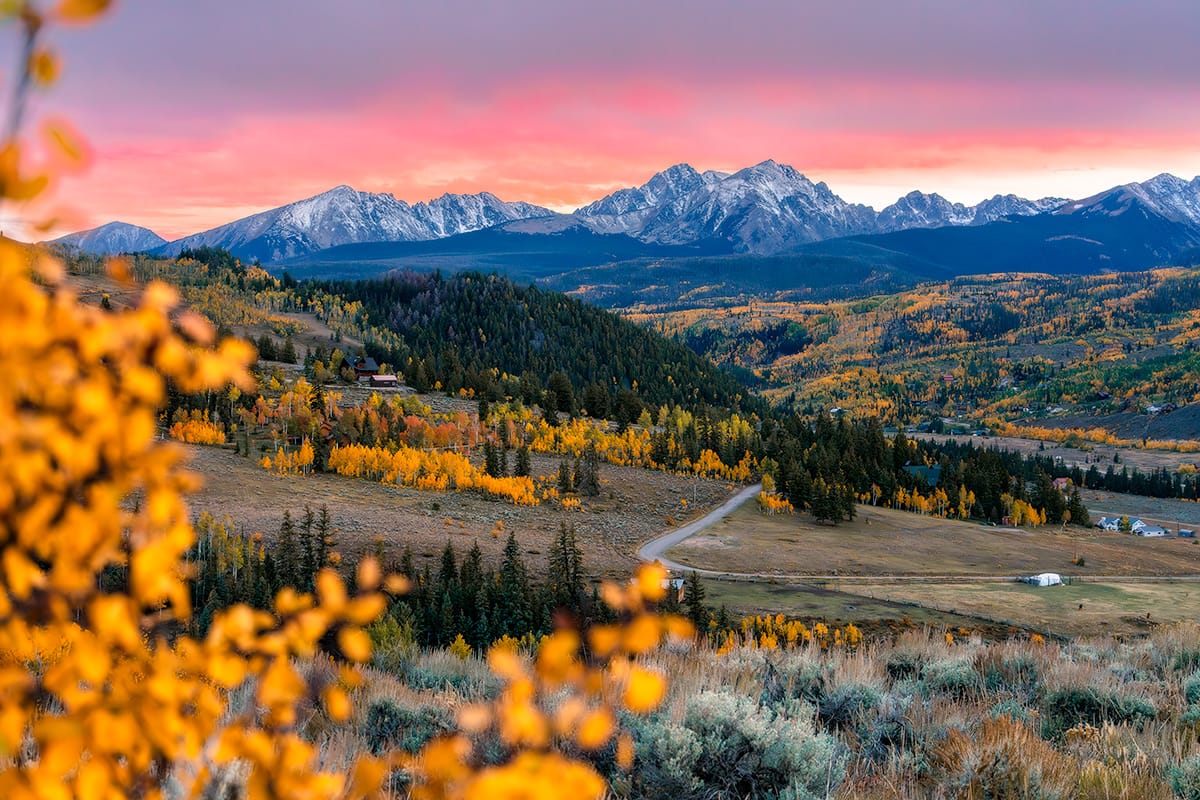
Map of My Favorite Colorado Fall Color Locations
Click the map below for all of my exact Colorado fall color locations.
Where to Find Current Color Reports
Chasing Colorado Fall colors always slightly changes in timing year to year, and the million dollar question is related to current conditions. These are my recommendations on how to follow the color change in REAL TIME.
- Check webcams online. These are the ones I follow closely.
- Check Facebook Groups. These are some of the groups I use:
- Check Tourism Boards, as several post live updates online
- Check CDOT cameras along major highways and I-70
- https://maps.cotrip.org/home
- Select "Find a Roadway" and make sure that the camera option is selected to see available cameras
- Follow Color Reports from the USFS -- This isn't the most timely, but do usually update at least once a week. I was surprised to see these published in 2025 after cuts earlier this year. I have only seen this report published by San Juan National Forest.
- Check AllTrails reviews for recent color change reports
- Use the Fall Colors Overlay on Open Snow app
- Instructions on how to access the map here: https://opensnow.com/news/post/2025-fall-foliage-colors-map
- MY FAVORITE -- ME! Starting mid-September every year, I start posting color updates to my Instagram via both stories and reels. I also have a Colorado Fall Colors channel you can find HERE. If you live in Denver and need help on deciding when to make the trek to Western Colorado – let me help you! New for 2025, I'm inviting other collaborators across the state to help share as many relevant areas as possible. Follow along as I will keep you updated with both photos and videos of all of the hot spots.
→ MORE INFO HERE:
 Roaming the Southwest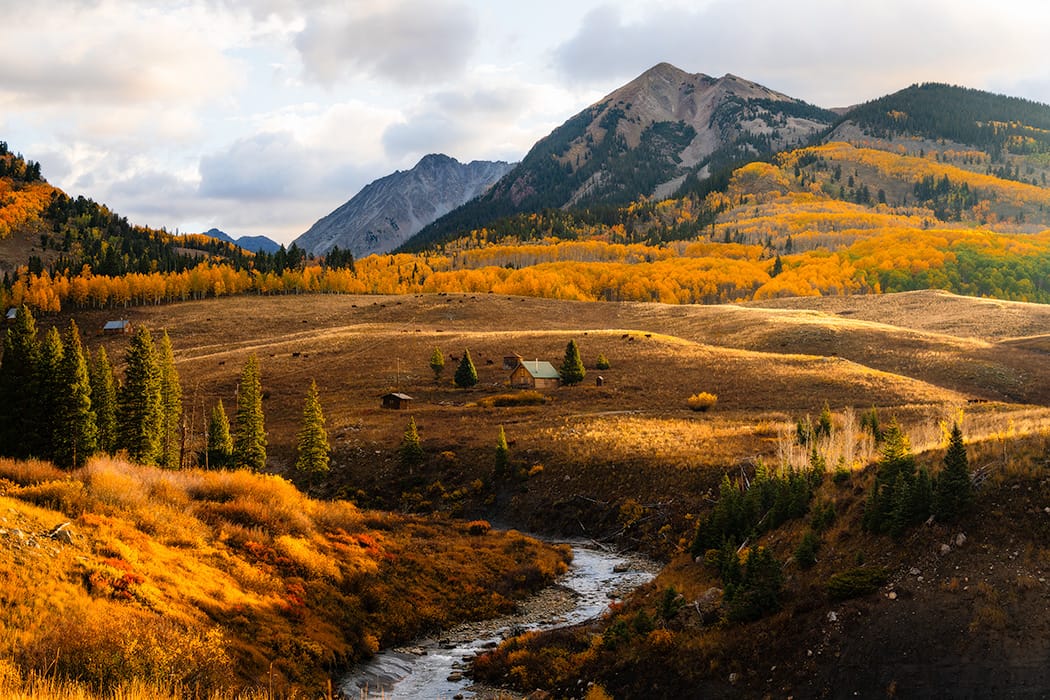
Best Scenic Drives for Fall Colors
One of the best things about fall in Colorado is that you don't have to hike to see incredible color. Some of the state's biggest aspen groves are right along scenic highways and mountain passes, making a fall road trip one of my favorite ways to see the season.
I've included my favorite fall drives below, along with mileage and road conditions so you know what you're getting into. Many are completely paved and doable in any passenger vehicle, while a few require dirt roads or higher clearance.
Keep in mind: Road conditions can change quickly in the mountains, especially after rain or early-season snow. Always check current conditions before heading onto unpaved mountain roads. If you're going on a weekend day trip from Denver, GO EARLY. These drives can get extremely busy with bumper to bumper traffic. The closer to Denver they are, the busier they will be so plan ahead and go early.
Front Range
- Peak to Peak Scenic Byway — Estes Park to Black Hawk | 55 miles | Paved
- Guanella Pass Scenic Byway — Georgetown to Grant | 22 miles | Paved
- Kenosha Pass — Grant to Jefferson | ~18 miles | Paved
- Trail Ridge Road — Estes Park to Grand Lake | 48 miles | Paved
- Boreas Pass Road — Breckenridge to Como | ~22 miles | Paved → dirt/gravel | 2WD safe
- Berthoud Pass — Empire to Winter Park | ~25 miles | Paved
Central Mountains
- Collegiate Peaks Scenic Byway — Salida to Granite via Buena Vista | 57 miles | Paved
- Independence Pass — Twin Lakes to Aspen | ~44 miles | Paved
- Castle Creek Road — Aspen to Ashcroft | ~13 miles one way | Paved → dirt | 2WD safe
- McClure Pass — Carbondale to Paonia | ~47 miles | Paved
- Kebler Pass — Crested Butte to Hwy 133 | ~30 miles | Mostly dirt/gravel | 2WD safe
- West Elk Loop Scenic Byway — Carbondale → Paonia → Gunnison → Crested Butte → Carbondale | 205 miles | Paved, except Kebler Pass section
- Tennessee Pass — Leadville to Minturn | ~36 miles | Paved
- Buffalo Pass — Steamboat Springs to Hwy 14/Walden area | ~45 miles | Paved → dirt/rough gravel | High clearance recommended for full route
Southwest + Western Colorado
- Last Dollar Road — Telluride area to Dallas Divide | ~21 miles | Dirt | High clearance recommended; 4WD preferred when wet
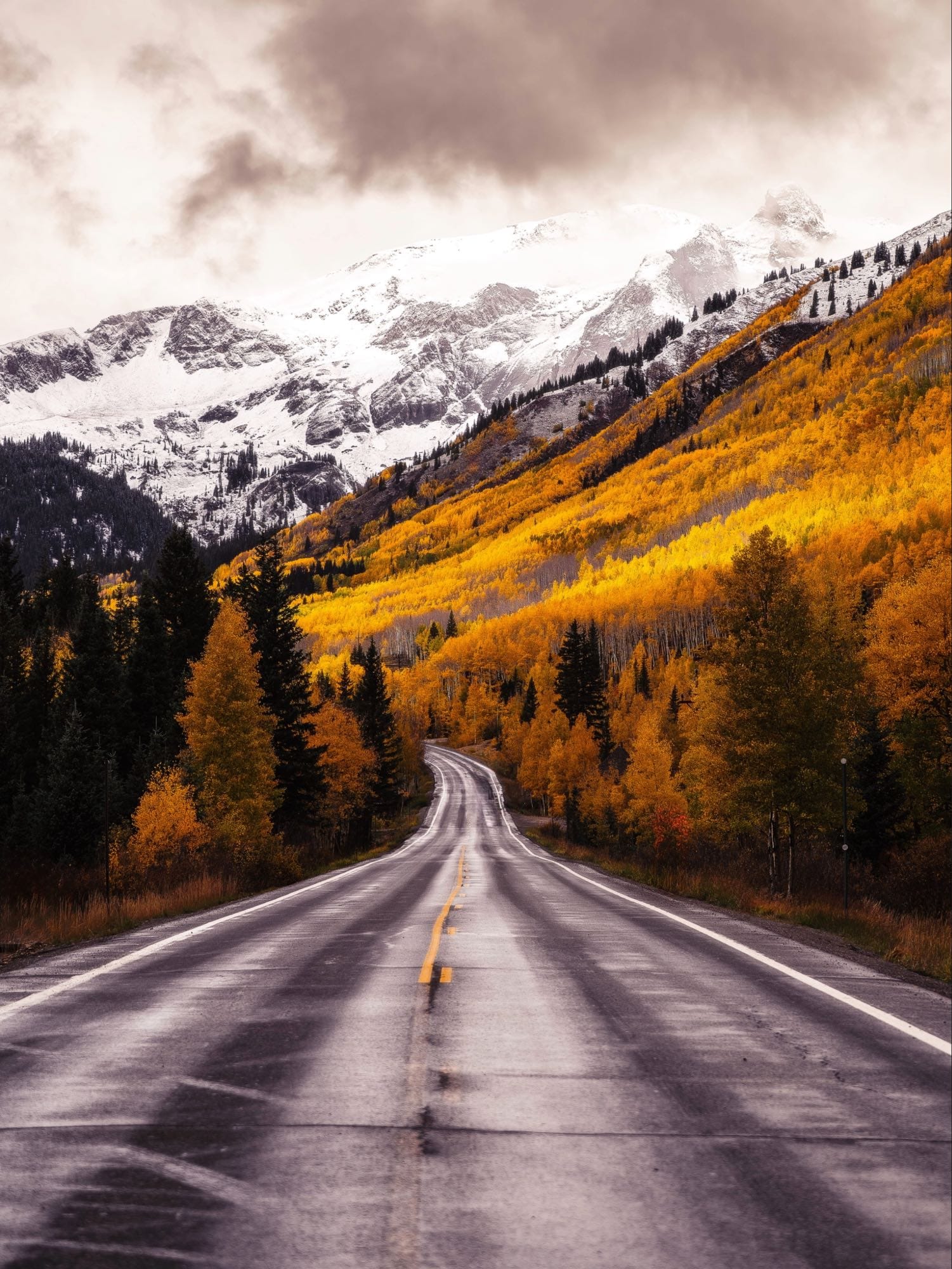
- Million Dollar Highway — Silverton to Ouray | 25 miles | Paved
- Owl Creek Pass — Ridgway to Hwy 50/Cimarron area | ~42 miles | Dirt/gravel | 2WD generally safe when dry
- Divide Road — Unaweep Canyon/Whitewater to Divide Forks area | ~30–40 miles depending on route | Mostly dirt/gravel
- Silver Thread Scenic Byway — South Fork to Lake City | ~75 miles | Paved
- Grand Mesa Scenic Byway — Cedaredge to I-70 via Grand Mesa | 63 miles | Paved
→ MORE INFO HERE:
 Roaming the Southwest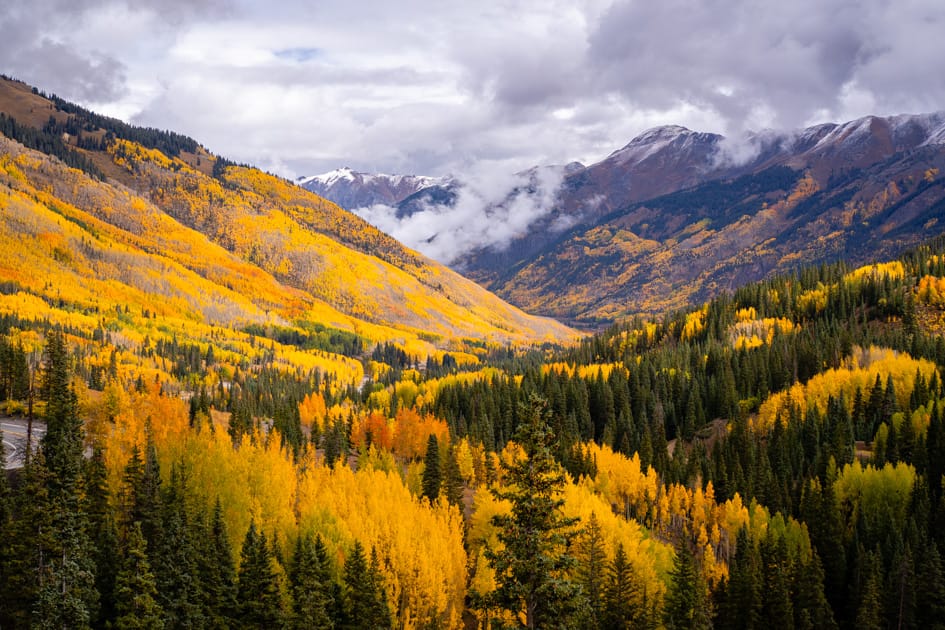
Best Airports for a Colorado Fall Colors Trip
The best airport for a Colorado fall trip really depends on which part of the state you plan to explore. Denver is usually the first airport people consider, and often has the cheapest flights, but it isn't always the most convenient if you're wanting to focus on Western Colorado. Colorado is HUGE, and spending five or six hours driving from the airport can easily eat up two full days of your trip going there and back.
Denver International Airport (DEN)
Denver is the most flexible option if you're planning a larger Colorado fall road trip or focusing on the Front Range and Central Mountains.
Best for: Rocky Mountain National Park, Georgetown, Guanella Pass, Summit County, Breckenridge, Vail, Leadville, Twin Lakes and Buena Vista.
If you're planning to start near Denver and gradually work your way west or south, consider flying into Denver and out of a regional airport like Montrose or Grand Junction. This can save you hours of backtracking at the end of your trip when you could be photographing fall colors instead of driving.
Eagle County Regional Airport (EGE)
Eagle is another regional airport worth checking, especially if your fall trip is focused around Vail and the Central Mountains. It's much closer to the I-70 mountain towns than Denver and can save you a lot of driving, and potentially I-70 traffic.
Best for: Vail, Beaver Creek, Minturn, Tennessee Pass, Glenwood Springs and the surrounding Central Mountains.
Flights are much more limited than Denver, particularly depending on the season, so I'd compare availability and price before building your trip around it. You will likely connect in Denver, too, so factor that in as well as you might be able to get there faster if you land in Denver and drive.
Aspen/Pitkin County Airport (ASE)
If Aspen is the main focus of your trip, it doesn't get much more convenient than flying directly into Aspen.
Best for: Aspen, Maroon Bells, Castle Creek Road, Ashcroft, Independence Pass, Glenwood Springs and Twin Lakes.
Flights can be more expensive than Denver, but the time you'll save driving may be worth the difference—especially on a shorter trip.
Gunnison-Crested Butte Regional Airport (GUC)
Gunnison is a great option if you're building your trip around Crested Butte and some of Colorado's biggest aspen groves. I do find this airport to be one of the more expensive ones, so if you're wanting to fly to the Western Slope, I'd prioritize Montrose or Grand Junction.
Best for: Crested Butte, Kebler Pass, Ohio Pass and the Gunnison Valley.
Montrose Regional Airport (MTJ)
If you're coming specifically for fall colors in the San Juan Mountains, Montrose is one of the first airports I'd check. It's significantly closer than Denver and puts you right at the gateway to southwest Colorado. If you do fly in to Denver, Montrose is a great option for your flight out if you're working your way from East to West.
Best for: Ridgway, Ouray, Telluride, Dallas Divide, Silverton and the Million Dollar Highway.
Montrose is approximately 30 minutes from Ridgway, 45 mintues from Ouray, and 1.5 hours from Telluride, making it one of the easiest places to fly into for a San Juan Mountains fall trip.
Grand Junction Regional Airport (GJT)
Grand Junction is another airport that's often overlooked when planning a Colorado fall trip. It's especially convenient if you want to combine Western Colorado with Aspen, the Grand Mesa or the northern San Juans.
Best for: Grand Mesa, Palisade, Grand Junction, McClure Pass, Aspen, Crested Butte and the western approach to the San Juan Mountains.
Grand Junction is farther from the San Juans than Montrose, but it can be a great alternative depending on flight prices and your itinerary. Grand Junction and Montrose are usually similar with prices so I would choose whichever you can get cheaper.
Durango-La Plata County Airport (DRO)
Durango is worth checking if you're concentrating your trip farther south.
Best for: Durango, Silverton, Pagosa Springs, Highway 550 and the southern San Juan Mountains.
What About Salt Lake City or Albuquerque?
Salt Lake City and Albuquerque can sometimes have cheaper flights, but don't choose an airport based on airfare alone. Both can leave you with very long drives and wasted time before you even reach Colorado's main fall destinations.
Once you factor in the extra gas, rental car mileage, and—most importantly—the time you'll spend driving to and from the airport, saving a little money on airfare may not be worth it.
For a shorter trip, I'd almost always compare the regional airports before automatically booking Denver, Salt Lake City or Albuquerque.
One-Way Flights Can Save a LOT of Driving
If you're planning a longer Colorado fall road trip, consider flying into one airport and home from another. For example, you could fly into Denver, travel west through the mountains, and fly home from Montrose or Grand Junction instead of driving all the way back to Denver.
It may cost a little more, but it can save you several hours of backtracking, and give you more time for the reason you came in the first place: fall colors.
Driving in Colorado During Fall
Road Trip Drive Times to Keep in Mind
One of the easiest mistakes to make when planning a Colorado fall road trip is trying to fit way too much into one day. Places can look surprisingly close on a map, but driving through the mountains takes time. Winding roads, mountain passes, construction, traffic, and let's be real, constantly pulling over because the views are incredible during the fall, can turn a relatively short distance into several hours.
A few drive times to keep in mind when planning your trip:
- Aspen → Crested Butte: around 3.5 hours by car; you have to cross multiple mountain passes, so I would plan for closer to 5–6 hours with stops on McClure Pass and Kebler Pass
- Denver → Aspen: around 3.5–4 hours
- Denver → Breckenridge: around 2 hours
- Denver → Crested Butte: around 4–5 hours
- Denver → Telluride: around 6–7 hours
- Durango → Silverton: around 1 hour
- Gunnison → Crested Butte: around 35–40 minutes
- Montrose → Ouray: around 45 minutes
- Montrose → Ridgway: around 30 minutes
- Montrose → Telluride: around 1.5 hours
- Ouray → Silverton: around 45 minutes without stops (2+ hours with stops)
- Ridgway → Telluride: around 1 hour
- Telluride → Ouray: around 1.5 hours
These are just starting points. During fall, I always recommend giving yourself more time than Google Maps says you'll need. Roads are busier, construction can cause delays, weather changes quickly, and you're probably going to want to stop many times for photos. Don't plan your Colorado fall road trip based on mileage alone.
What Kind of Vehicle Do You Need?
For most Colorado fall trips, you do not need a 4WD vehicle. Many of the best fall color drives are paved or generally accessible with a regular passenger vehicle when conditions are good. It's not uncommon for us to get our first snow the end of September into early October and it's usually on the high peaks, but sometimes get down to 9k. Keep this in mind if your trip will be towards the end of September or later.
Regular Passenger Vehicle / 2WD
- Million Dollar Highway
- Independence Pass
- Guanella Pass
- Kenosha Pass
- Tennessee Pass
- Peak to Peak Scenic Byway
- Grand Mesa Scenic Byway
- Kebler Pass*
- Ohio Pass*
- Owl Creek Pass*
*These roads are unpaved but are generally manageable in a regular passenger vehicle when dry and in good condition. Always check current conditions first.
High Clearance + 4WD Capability Recommended
- Last Dollar Road
- Capitol Creek Trailhead
- Crystal Mill
- Ophir Pass
- Buffalo Pass
For these roads, clearance is usually my biggest concern. I rarely actually need to use 4WD, but if conditions are wet, muddy or questionable, I want the capability to have it.
If you're renting a car, don't assume you need a Jeep or large SUV for your entire trip. Choose something you're comfortable driving in the mountains, check current road conditions before heading onto unpaved roads, and never rely solely on Google Maps to decide whether a mountain road is appropriate for your vehicle. Have an idea of what you want to do/see and then make your rental decision. Most people will not need a 4WD capable vehicle.
Best Mountain Towns for a Colorado Fall Trip
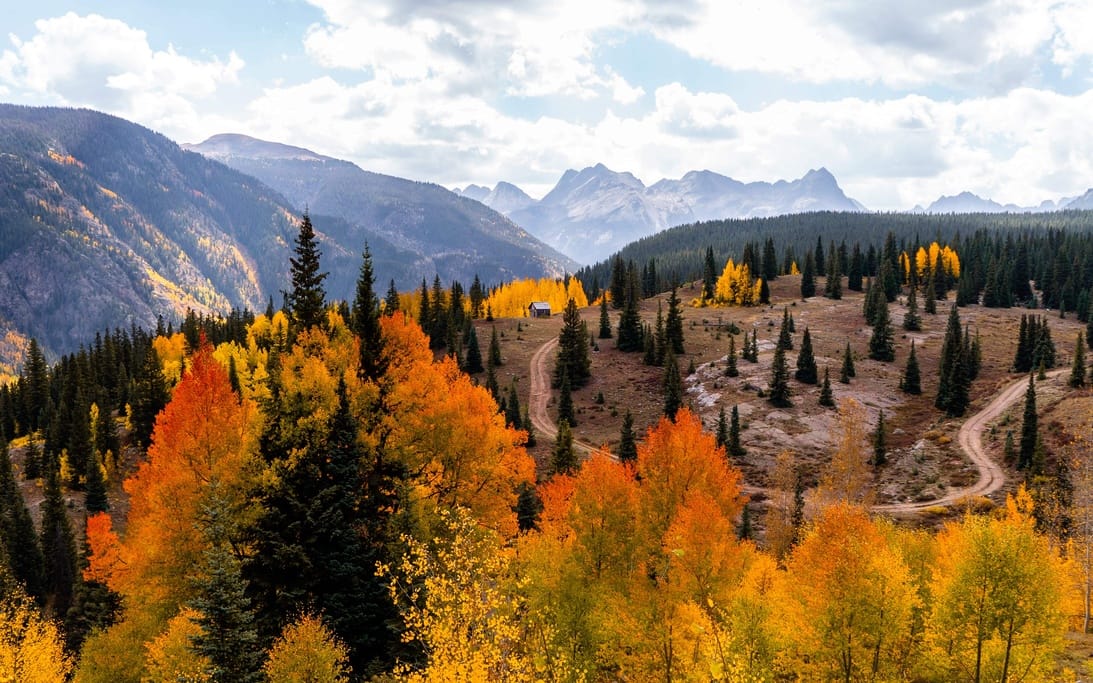
Where you stay can make a huge difference when planning a Colorado fall trip. Rather than changing hotels every night, I usually recommend choosing a few mountain towns as your home base and exploring the scenic drives, hikes, and fall color nearby. If you already know your dates, I would choose an area likely to peak on those dates versus what you want to see. I know that sounds backwards, but if fall colors is your priority, you want to visit a place that will have the best fall colors.
Here are some of my favorite Colorado mountain towns to use as a base during fall:
Estes Park
Nearby: Rocky Mountain National Park, Trail Ridge Road, Peak to Peak Scenic Byway
Typical Peak Timing: Mid to late September
Estes Park is one of the easiest bases if you're flying into Denver and want to concentrate on northern Colorado. You'll have easy access to Rocky Mountain National Park plus the Peak to Peak Scenic Byway, making it a great choice for a shorter fall trip.
Grand Lake
Nearby: Trail Ridge Road, Kawuneeche Valley, Rocky Mountain National Park, Granby
Typical Peak Timing: Mid to late September
Grand Lake is a great alternative to Estes Park if you want to explore the western side of Rocky Mountain National Park. You'll have easy access to Trail Ridge Road and the Kawuneeche Valley, plus plenty of fall color around Grand Lake and Granby. It's also easy to combine with Winter Park and other parts of Grand County.
Silverthorne + Dillon
Nearby: Dillon Reservoir, Frisco, Breckenridge, Keystone, Loveland Pass, Green Mountain Reservoir, Georgetown Railroad, Guanella Pass
Typical Peak Timing: Mid to late September
Silverthorne and Dillon make a really convenient base for a Colorado fall trip, especially if you want to explore more than just Breckenridge. You're centrally located in Summit County with easy access to Frisco, Breckenridge and Keystone, while also being well positioned to head north toward Grand County or west along I-70. The mountains surrounding Dillon Reservoir can also be beautiful when the colors are changing.
Breckenridge
Nearby: Boreas Pass, Frisco, Dillon, Silverthorne, Hoosier Pass
Typical Peak Timing: Mid to late September
Breckenridge makes a great base for exploring Summit County, especially if you don't want to venture too far from Denver. You can easily spend a couple of days exploring Breckenridge itself while taking day trips around Frisco, Dillon and Silverthorne.
Leadville
Nearby: Twin Lakes, Independence Pass, Tennessee Pass, Leadville Railroad
Typical Peak Timing: Mid to late September
Leadville is one of my favorite bases if you're visiting earlier in the season because you're already starting at more than 10,000 feet. Twin Lakes and Independence Pass are close by, and the Leadville Railroad is another incredible way to see the colors without spending the entire day in your car.
Vail
Nearby: Vail Pass, Minturn, Beaver Creek, Tennessee Pass
Typical Peak Timing: Mid to late September
Vail is easy to reach from Denver and works especially well if you want a mountain-town experience with plenty of restaurants and lodging options. It also puts you in a good position to continue toward Leadville, Aspen or Western Colorado. Timing in Vail can be weird and is usually a week after Summit County, making it hard to fit Vail into your trip if your dates are early.
Aspen
Nearby: Maroon Bells, Castle Creek Road, Ashcroft, Independence Pass
Typical Peak Timing: Late September into early October
Aspen is expensive and busy during peak fall color, but there's a reason people come here. You have Maroon Bells, Independence Pass, Castle Creek Road and Ashcroft all within easy reach, giving you several completely different fall-color areas without changing hotels. I'd check Snowmass for hotels, too, as they can sometimes be cheaper than Aspen.
Crested Butte
Nearby: Kebler Pass, Ohio Pass, Gothic, Gunnison
Typical Peak Timing: Late September into early October
Crested Butte is easily one of my favorite fall destinations in Colorado. Kebler Pass alone is worth the trip, but you'll also have Ohio Pass, Gothic and the surrounding Gunnison Valley to explore. This is somewhere I'd give yourself plenty of time rather than treating it as a quick stop between Aspen and the San Juans. Depending on when you visit, Gothic + CB proper usually turn 7-10 days before Kebler and Ohio Pass. Unless you'll be here for two weeks, it's nearly impossible to catch everywhere in this area at Peak. It's always spread out over 2-3 weeks.
Steamboat Springs
Nearby: Buffalo Pass, Rabbit Ears Pass, Flat Tops
Typical Peak Timing: Mid to late September
Steamboat is a great option if you want to get away from some of the busiest fall destinations. Buffalo Pass is one of the area's standout fall drives, and the surrounding Park Range offers plenty of opportunities for hiking and exploring.
Ridgway
Nearby: Dallas Divide, Owl Creek Pass, Ouray, Telluride, Million Dollar Highway
Typical Peak Timing: Late September into early October
If your goal is to explore as much of the northern San Juans as possible, Ridgway is one of my favorite places to base yourself. You're positioned between Ouray and Telluride, with Dallas Divide practically right outside town and easy access to Owl Creek Pass.
Ouray
Nearby: Million Dollar Highway, Silverton, Ridgway, Red Mountain Pass
Typical Peak Timing: Late September into early October
Ouray puts you right in the mountains and is one of the best bases for exploring the Million Dollar Highway. You can easily head north toward Ridgway and Dallas Divide or south toward Red Mountain Pass and Silverton.
Telluride
Nearby: Highway 145, Last Dollar Road, Dallas Divide, Lizard Head Pass
Typical Peak Timing: Late September into early October
Telluride is one of those places where I wouldn't just drive through, take a photo, and leave. The town itself is surrounded by fall color, the free gondola gives you incredible views from above, and Highway 145, Last Dollar Road and Dallas Divide are all nearby. You can easily make an entire trip based in Telluride if you don't mind driving a little to Ridgway.
Silverton
Nearby: Million Dollar Highway, Molas Pass, Red Mountain Pass, Durango
Typical Peak Timing: Mid to late September
At more than 9,000 feet, Silverton is another town I'd watch earlier in the San Juan fall season. It's surrounded by mountains and sits right along the Million Dollar Highway, making it an easy base for exploring both north toward Ouray and south toward Durango. If you're visiting mid to late September and want to get San Juan magic, Lake City and Silverton are usually the first to peak for the San Juans.
Lake City
Nearby: Silver Thread Scenic Byway, Slumgullion Pass, Lake San Cristobal
Typical Peak Timing: Mid to late September
Lake City is a great choice if you want San Juan scenery without basing your entire trip around Telluride or Ouray. It's more out of the way, but that's also part of the appeal. The Silver Thread Scenic Byway gives you access to some beautiful fall country and makes Lake City especially easy to pair with Creede or South Fork. If you're visiting mid to late September and want to get San Juan magic, Lake City and Silverton are usually the first to peak for the San Juans.
Which Town Should You Choose?
You definitely don't need to visit all of these on one trip. In fact, I wouldn't try. Pick a few bases that make sense for your trip dates and the areas currently showing the best color.
I'd rather spend more time exploring a few areas than change hotels every night. You'll spend less time packing and driving, and a lot more time actually enjoying fall colors in Colorado.
What Is the Weather Like in Colorado in the Fall?
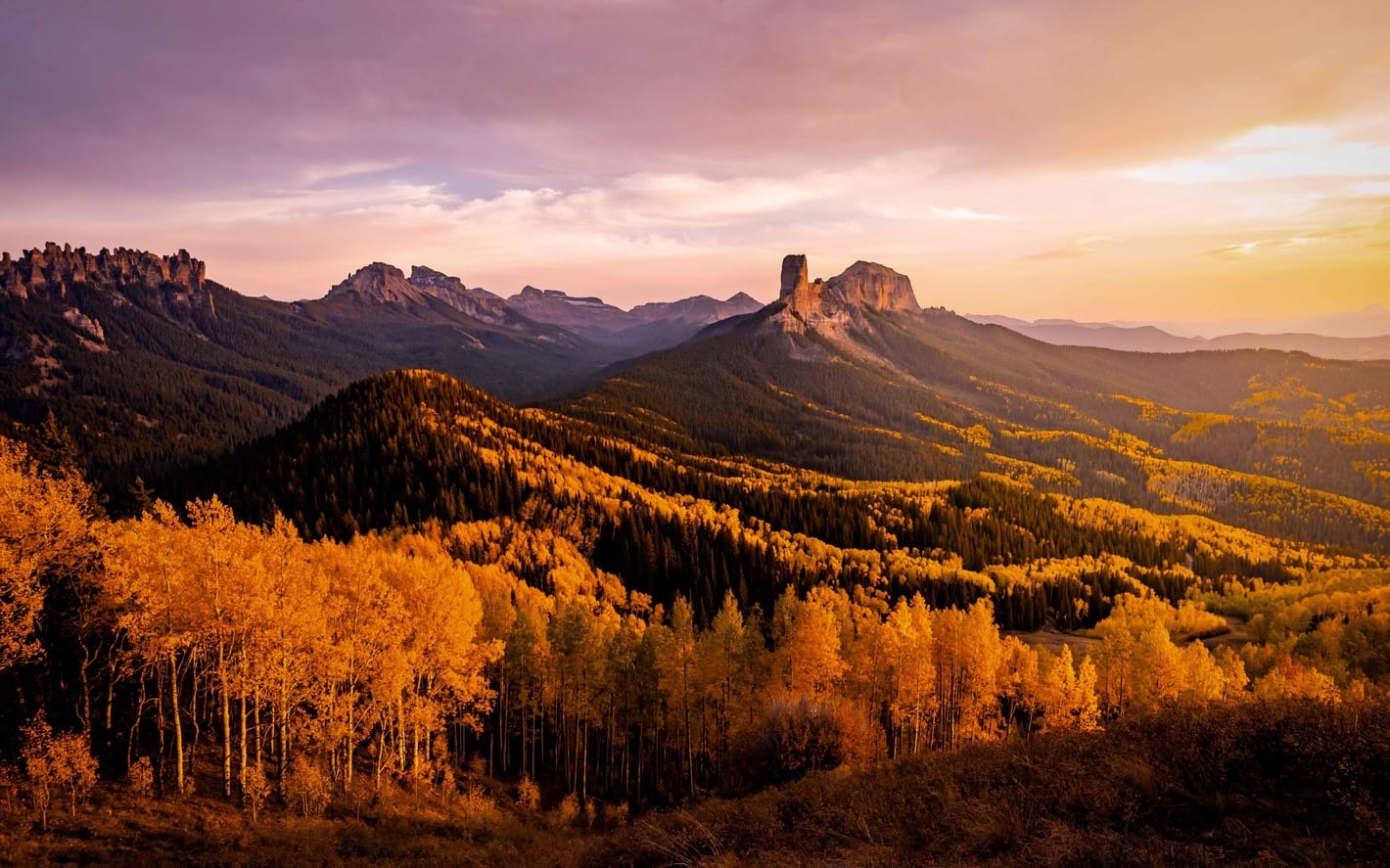
Colorado fall weather can change quickly, especially in the mountains. You can have a warm, sunny afternoon followed by freezing temperatures the next morning, and snow at higher elevations is absolutely possible during fall color season.
Elevation makes a huge difference, so don't check the forecast for Denver and assume that's what you'll experience across the state. Check the weather for the actual towns and mountain passes you'll be visiting, and continue checking throughout your trip. Even the mountain towns can underestimate temperatures if you plan on driving/photographing mountain passes at high elevation.
Weather can also change fall color conditions quickly. Strong winds, a hard freeze, or an early snowstorm can cause leaves to drop almost overnight.
Bottom line: Pack for everything from warm sunshine to freezing temperatures, and don't let a sunny forecast at lower elevations fool you. I'd plan for highs in the high 70s/low 80s and lows in the high 20s/low 30s. We can have 50-60 degree temperature swings from day to night this time of year.
What to Pack for a Colorado Fall Trip
Packing for fall in Colorado is all about layers. You may start the morning below freezing and be in a T-shirt by afternoon, especially if you're moving between different elevations. I always recommend packing for both warmer fall weather and the possibility of cold, rain, wind, or even snow in the mountains.
Packing list I would recommend and I've linked my favorite items to each.
- Lightweight puffy jacket
- Fleece or warm mid-layer
- T-shirts + long-sleeve/base layers
- Comfortable hiking pants or leggings
- Rain/wind shell
- Warm hat or beanie
- Lightweight gloves
- Waterproof hiking shoes or boots
- Wool or moisture-wicking socks
- Sunglasses
- Sunscreen + SPF lip balm
- Reusable water bottle
- Snacks
- Small daypack + rain cover
- Headlamp
- Small first-aid kit
- Portable phone charger + car charger
- Offline maps downloaded before your trip - you can even download MY COLORADO FALL COLORS GUIDE to your Rexby app and have full offline access to your favorite spots
- Moisturizer — Colorado is DRY
- Swimsuit for hot springs
- Microspikes if snow or ice is in the forecast and you're planning to hike
Colorado Fall Festivals and Events for 2026
Fall color season also overlaps with some of Colorado's best festivals and events. If you're planning a trip between mid-September and mid-October, check your dates against these events—you may find something worth adding to your trip, and popular mountain towns can be especially busy during festival weekends.
September 2026
Sept. 18–20 | Vail Oktoberfest: Vail Village — Vail
Second weekend of Vail's huge Oktoberfest celebration.
Sept. 18–20 | Telluride Blues & Brews Festival — Telluride
Live music and craft beer surrounded by the San Juans.
Sept. 19 | Lake City Uncorked — Lake City
Wine, food and live music in downtown Lake City.
Sept. 19 | Colorado Mountain Winefest — Palisade
Colorado wine and tastings in the heart of wine country.
Sept. 19–20 | ARTumn Festival — Crested Butte
Fine art along Elk Avenue during fall colors.
Sept. 19–20 | Durango Autumn Arts Festival — Durango
Nearly 100 artists throughout downtown.
Sept. 20 | Pickin' in the Rockies — Loma
Bluegrass, country and gospel music in Western Colorado.
Sept. 24–27 | Telluride Autumn Classic — Telluride
Classic cars, motorcycles and aircraft surrounded by fall color.
Sept. 25–26 | Fruita Fall Festival — Fruita
Music, vendors, food and classic Western Colorado fall fun.
Sept. 25–27 | Breckenridge Oktoberfest — Breckenridge
Main Street transforms into a huge Oktoberfest celebration.
Sept. 25–27 | Snowmass Balloon Festival — Snowmass Village
30+ hot-air balloons against the fall-covered mountains.
Sept. 25–27 | Mountain Harvest Festival — Paonia
Music, local food, arts and harvest celebrations.
Sept. 26–27 | Autumn Gold Festival — Estes Park
Beer, brats, bands and festivities during elk season.
Sept. 29–Oct. 4 | Aspen Filmfest — Aspen
Independent and acclaimed films screened throughout Aspen.
October 2026
Oct. 1–4 | Original Thinkers Festival — Telluride
Films, stories and thought-provoking conversations.
Early Oct. | Downtown Boulder Fall Fest — Boulder
Food, drinks, live music, artists and fall festivities downtown. 2026 dates had not been officially announced when this guide was published; Oct. 2–4 is anticipated.
Oct. 3 | Harvest Festival at Rock Ledge Ranch — Colorado Springs
Cider making, pumpkins, wagon rides and old-fashioned fall fun.
Oct. 3–4 | Elk Fest — Estes Park
Celebrate the elk rut with wildlife programs, music and bugling contests.
Oct. 3–4 | Buffalo Grass Festival — Colorado Springs
Live bluegrass music at Buffalo Lodge.
Oct. 4 | Pumpkin Fest — Silverthorne
Thousands of pumpkins, games and family fall activities.
Oct. 10 | Pumpkins & Pilsners — Estes Park
Pumpkins, craft beer and live music in Bond Park.
Oct. 10 | Telluride Oktoberfest — Telluride/Mountain Village
Beer, German-inspired food and Oktoberfest festivities.
Oct. 10 | Harvest Festival — Littleton
Pumpkins, wagon rides, demonstrations and old-fashioned games.
Oct. 10 | Fall Fest at the Flying W — Colorado Springs
Family-friendly fall activities at the Flying W Ranch.
Oct. 10–11 | Great American Beer Festival — Denver
One of the country's biggest celebrations of craft beer.
Oct. 10–11 | FoCo Fall Fest — Fort Collins
Vendors, food, live music and fall activities in Old Town.
Planning Tip: Festival weekends can make already-popular fall destinations significantly busier. If your trip overlaps with an event in places like Telluride, Aspen, Breckenridge, Vail or Estes Park, I'd book accommodations well in advance.
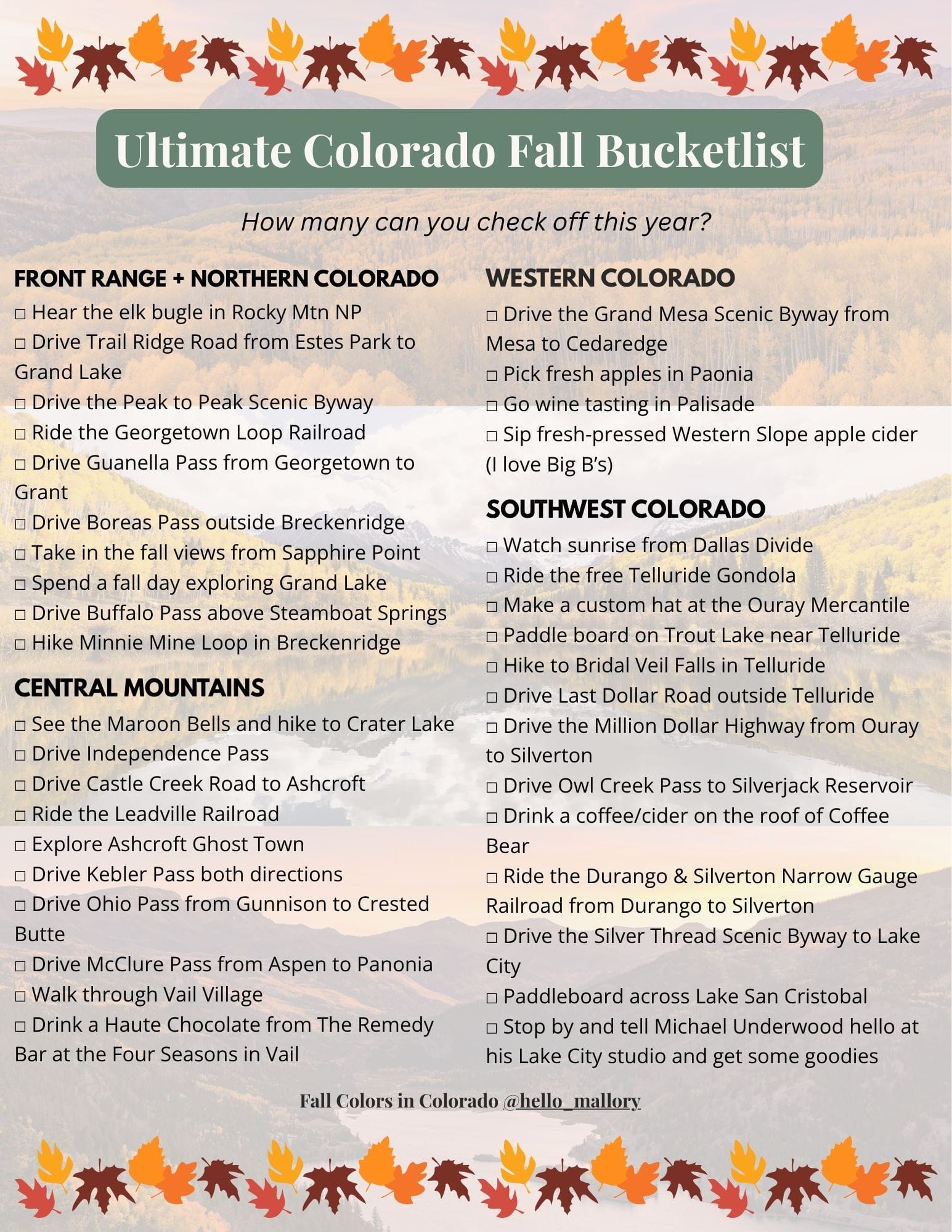
Ultimate Colorado Fall Bucket List
I've put together a Colorado fall bucket list with some of my favorite places and experiences across the state. Feel free to save it to your phone and use it on the go while you're out hunting for fall colors! Download below.
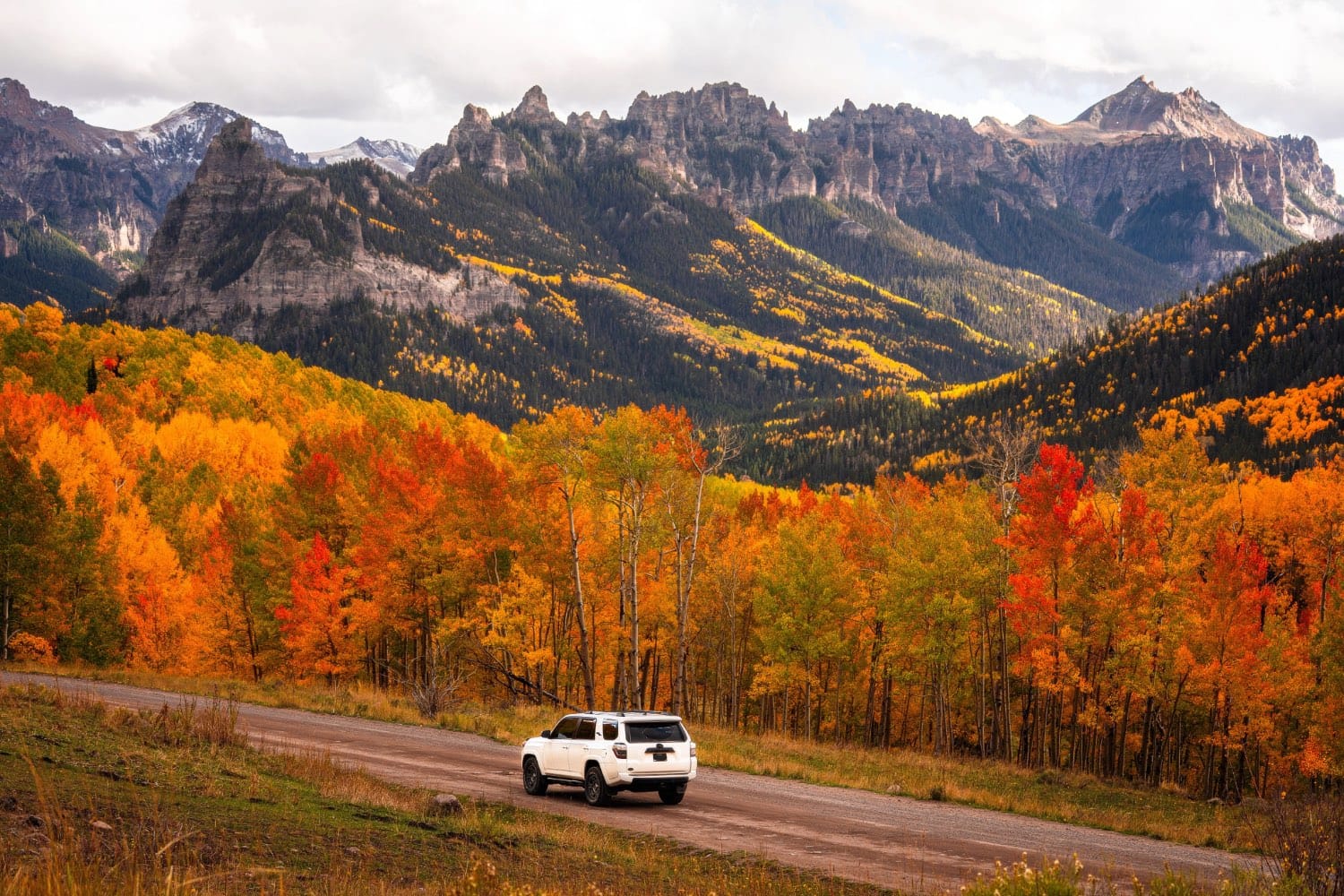
Download My FREE Colorado Fall Colors Guide
Want a copy of my FREE Colorado Fall Colors Guide with everything you need to get started? I've put together a downloadable guide with peak timing, some of my favorite places to see fall colors, scenic drives, planning tips and more. Save it to your phone so you can reference it while planning your trip or chasing colors across Colorado.
→ Download your FREE 2026 Colorado Fall Colors Guide here!
Protect Colorado's Aspens
♻️ Please don't carve into aspen trees. Aspen bark is thin and living, and carving through it creates an open wound that can leave the tree vulnerable to insects, fungi, and disease. Unlike the thick, protective bark of many other trees, aspen bark is easily damaged—even a fingernail can break through its outer layer.
Those initials may seem harmless, but the damage can remain on the tree for decades and affect its health. Take the photo, enjoy the colors, and leave the aspens exactly as you found them.
I've linked two helpful resources below if you want to learn more about why carving into aspens is so damaging:
Colorado Fall Colors FAQ
When is the best time to see fall colors in Colorado?
Generally, mid-September through early October. If I had to choose one week, I'd aim for the last week of September, but peak timing varies every year.
When do fall colors peak in Colorado?
Higher elevations typically change first, beginning in mid-September, with color moving toward lower elevations into October. There is no single peak date for the entire state.
Where are the best fall colors in Colorado?
Some of my favorites are Aspen, Crested Butte, Telluride, Ridgway, Ouray, Silverton, Summit County, Leadville, Grand Mesa, Steamboat Springs and Rocky Mountain National Park.
Does Colorado have fall colors in October?
Absolutely. Early October can be beautiful, particularly in southwest Colorado and at lower elevations. Most high-elevation aspens are typically finished by mid-October.
How long do peak fall colors last?
An individual grove may stay near peak for several days to a week or more, but wind, snow and freezes can cause leaves to drop quickly.
Do I need 4WD to see fall colors?
No. Many of Colorado's best fall drives are paved and accessible with a regular passenger vehicle. High clearance is helpful for certain unpaved mountain roads.
Does it snow during Colorado fall color season?
It can. Snow is possible in the high country even in September, so always check mountain forecasts and pack layers.
What should I pack for Colorado in the fall?
Layers. Bring a puffy jacket, warm mid-layer, rain shell, hiking shoes, hat, gloves, sunscreen and plenty of water.
Do I need reservations for Maroon Bells?
Yes. Parking and shuttle access are managed by reservation during the busy season, and fall dates can sell out.
Is late September crowded in Colorado?
Yes, especially on weekends. Visit during the week when possible, start early and book lodging and required reservations ahead of time.
Can I see all of Colorado's fall colors in one week?
You can see a lot, but don't expect every destination to be at peak simultaneously. Seeing green, peak color and bare trees on the same trip is completely normal.
How do I track current Colorado fall colors?
Use recent photos, webcams, social media, road cameras and on-the-ground reports rather than relying solely on foliage prediction maps.
Final Thoughts
...From Someone Who Plans Their Life Around Fall Colors:
Literally though. I LIVE for fall colors in Colorado. I take time off work for 2-3 weeks every single year for fall—and it’s always the same weeks. Because they work consistently. If you give yourself flexibility and understand how the timing actually works, you won’t miss it. So if you only take away ONE thing from this entire blog:
Visit the last week of September or first week of October You’ll hit peak somewhere in Colorado—just be willing to be flexible and adjust location.
Planning a photography trip to Colorado for fall colors?
If you want exact locations, drives, and photo spots already mapped out (with time of day to shoot them): Check out my Colorado Fall Colors Guide. You can even download the guide in the app for offline access, so you'll always have it with you—even when you don't have cell service in the mountains. And be sure to join my Fall Colors Channel on Instagram where I update live color changes on the West Slope.
See you out there!
Mallory