
7 Day Utah National Parks Itinerary (Las Vegas → Salt Lake City)
Planning to visit all five Utah national parks in one week? It’s possible, but it’s a fast-paced, nonstop itinerary. This guide shows you how to efficiently route the parks so you can see all five in 7 days without wasting time or missing key highlights.


Planning a trip to Utah’s national parks and trying to fit all five into one itinerary in one week? I won't sugar coat it, it IS possible to see all 5 of Utah's National Parks in 7 days, but it's going to be a non-stop week. This is a fast-paced itinerary—but it’s one of the most efficient ways to see all five parks in a single trip. If this is your first visit to Southern Utah, read Southern Utah Travel Guide for First-Time Visitors
Most first-time itineraries end up over packed—too much driving, too many stops, and not enough time to actually experience what makes each park worth visiting. When you don’t know what you don’t know, it’s easy to assume there’s time for both exploring and long drive days… and that’s usually not the case. This is especially important in the winter when daylight is much shorters.
Before you go any further, read this—these are the mistakes visitors make when planning a Southern Utah trip. See Common Mistakes First-Time Visitors Make in Southern Utah
This epic, 7 day itinerary will include stops and overlooks at ALL FIVE Utah National Parks and give you a small taste of what the Southwest has to offer. I promise it will leave you wanting to plan your next trip back before you even leave.
Day 1: Vegas to Zion
Day 2: Zion
Day 3: Bryce to Capitol Reef
Day 4: Capitol Reef
Day 5: Capitol reef to Moab (via Hanksville)
Day 6: Arches
Day 7: Canyonlands to Salt Lake City
This itinerary is most doable during warmer temps when the days are longer.
Winter provides short days here and unfortunately can be very restricting if you only have 7 days. If you plan to come in the winter when the days are shorter, I suggest splitting this into one of two trips:
- Zion, Bryce, Kanab, Page
- Capitol Reef, Arches, Canyonlands, Hanksville
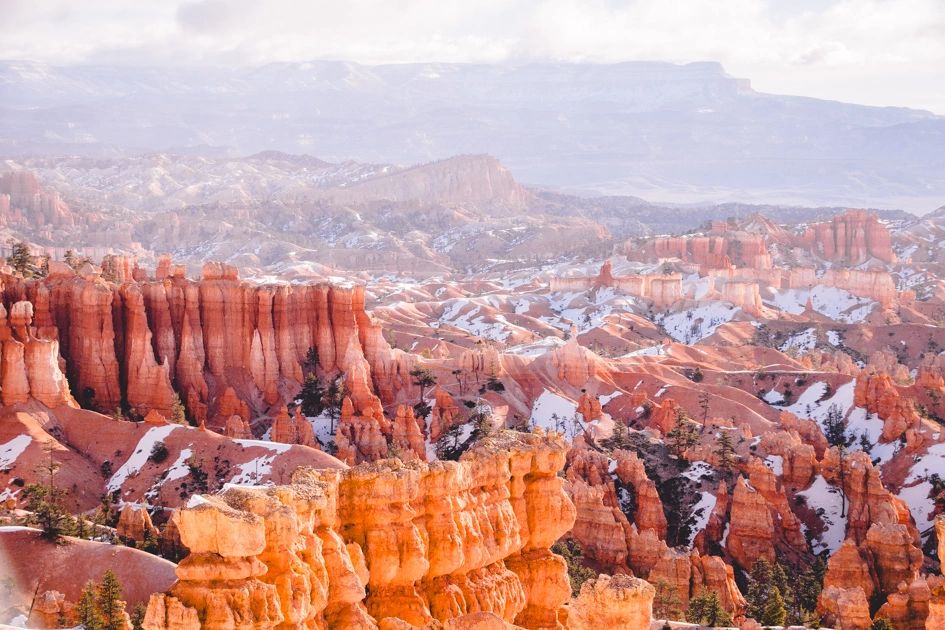
Route Overview + Driving Strategy
Start: Las Vegas
End: Salt Lake City (or can consider Grand Junction, Colorado)
Total drive time: ~12–14 hours across the course of your week
Total Distance: ~700–800 miles
Trip Length: 7 days
Best Time to Visit: Spring + Fall (June through August = hot, plan early starts)
This route moves east and north through Utah in a natural progression, instead of looping back on itself on your very last day.
Why this matters:
Backtracking is one of the biggest time-wasters on Southwest road trips. This route eliminates wasted time driving on your last day to maximize time for adventures, which is what makes fitting all five parks into seven days even possible.
Day 1: Las Vegas to Zion National Park
Drive Time: ~2.5–3 hours
Where to Stay: Springdale or Hurricane/La Verkin
After landing in Las Vegas, head straight to Zion National Park, the most visited national park in Utah and your first introduction to the Southwest’s red rock landscapes.If you'd like to make a stop along the way (and have time), I recommend stopping at Valley of Fire State Park just 45 minutes outside of Las Vegas. Important note that many of the popular hiking trails CLOSE from May to September to decrease heat-related injuries and rescue calls. If you're visiting during the summer, you can still see Mouse Tank Road and Elephant Arch, but if you're pressed for time, I'd skip in the warmer months since the popular hiking trails are close. If you visit outside of the closure, I'd recommend the Fire Wave and White Domes Loop.
Evening plan:
- Walk the Pa’rus Trail (paved and accessible for everyone)
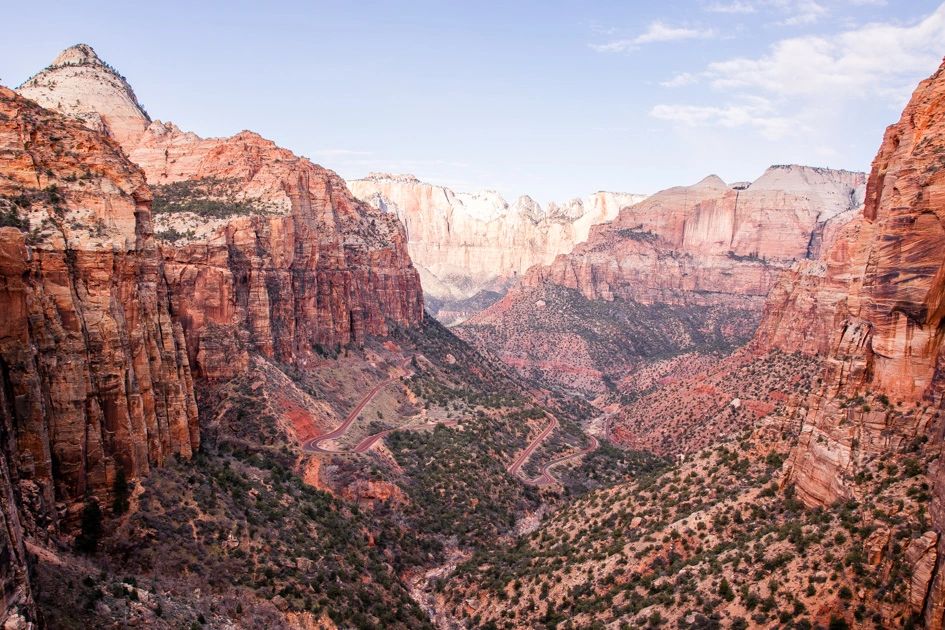
- Canyon Overlook for a quick view of how incredible Zion really is **THIS IS MY PICK**
- Sunset near the Watchman
Day 2: Zion National Park (Full Day)
Spend a full day exploring Zion National Park. You're going to want to arrive early, trust me on this one. Many parking lots can be full before 8 am, especially if you plan to catch the shuttle into Zion canyon.
Main Ideas for Hikes
- The Narrows (requires you to ride the shuttle.)
- Observation Point via East Mesa Trail.
- Angel's Landing – this one takes advanced planning for a permit and cannot decide to show up and hike. Read Southern Utah Hikes Requiring Permits (Full List + How to Apply)
Important tips:
- Arrive early to avoid long shuttle lines. You need to be parked before 8am at the Visitor Center.)
- Summer heat can exceed 100°F
- Permits are required for Angels Landing
This is one of the few parks where logistics matter just as much as the scenery.
Day 3: Zion to Bryce Canyon National Park
Drive Time: ~2 hours
Where to Stay: Bryce Canyon City, Tropic, or Panguitch
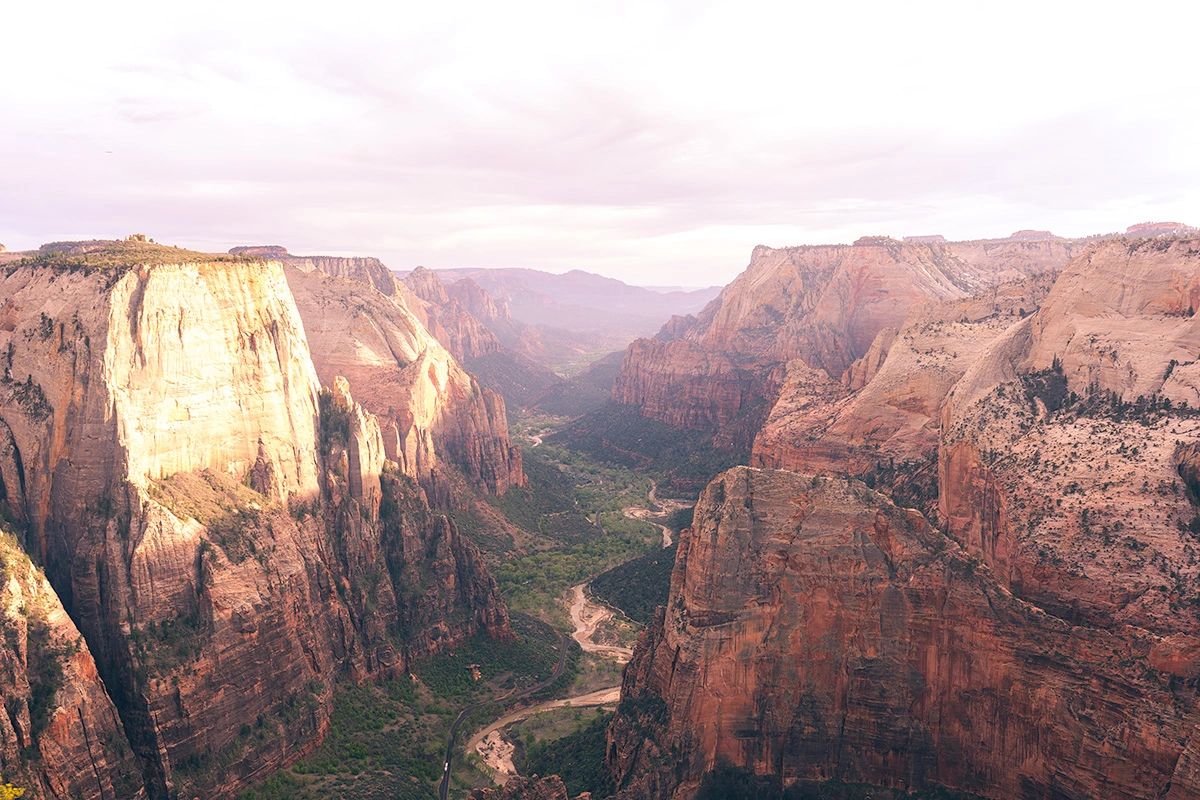
Travel from Zion to Bryce Canyon National Park, known for its unique hoodoo formations and a landscape unlike anything you've ever seen before.
Best things to do:
- Sunrise Point
- Sunset Point
- Inspiration Point
- Optional short hike (Navajo Loop / Queen’s Garden) - only about 3 miles roundtrip and is my favorite in the park. I prefer starting at Queen's Garden and ending at Sunset Point to go up the switchbacks versus down (less risk of injury.)
- Another optional short hike is Mossy Cave, featuring a waterfall in Bryce Canyon. This waterfall is SEASONAL, so usually only runs after signification precipitation or in the spring.
It's also important to know that Bryce sits at a higher elevation than Zion, meaning:
- Cooler temperatures
- Potential for afternoon storms
- Risk of altitude sickness, as much of the park sits above 8k feet so it's easy to get out of breathe.
Day 4: Bryce Canyon to Capitol Reef (via Scenic Highway 12)
Drive Time: ~3–4 hours
Where to Stay: Torrey or Hanksville
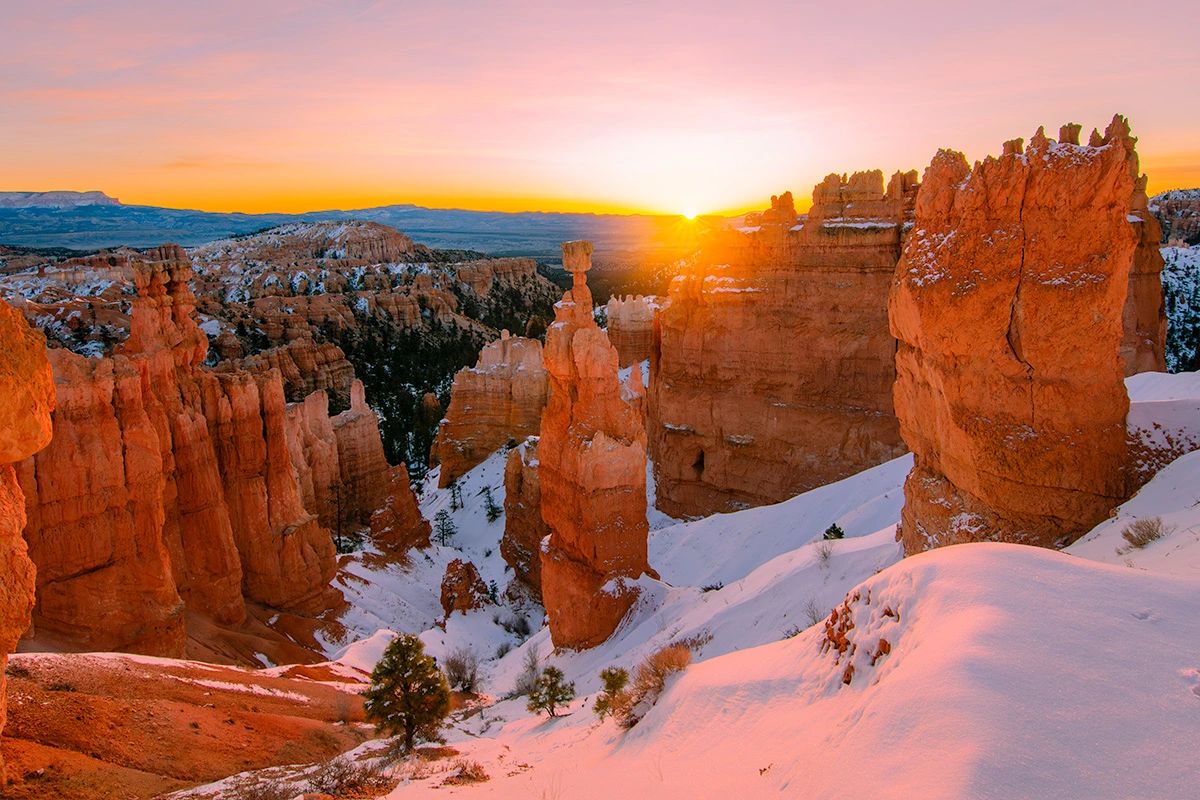
This stretch includes one of the most scenic drives in the country: Utah Scenic Byway 12. Do not listen to google maps on the route because if you do, you will miss the greatest stretch of highway in the state. Make sure to stick to highway 12, and drive through Tropic, Cannonville, Escalante, Boulder, and Torrey.Arrive at Capitol Reef National Park, one of the least crowded parks in Utah.
What makes Capitol Reef special:
- The Waterpocket Fold (a massive geologic wrinkle)
- Historic Fruita orchards where you can even pick your own fruit (certain times of year)
- Accessible petroglyph panels
Things to do:
- Scenic drive through the park
- Stop roadside to see Fremont petroglyphs
- Hike to Hickman Bridge or Cassidy Arch
- Hike through Capitol Gorge and see the Pioneer Register, signatures from original pioneers in the 1800s
- Explore Fruita and grab a pie at Gifford Homestead. My pick is the Strawberry Rhubarb
This park is often overlooked, but it adds depth to your itinerary beyond just viewpoints. Capitol Reef is unlike any other Utah National Park
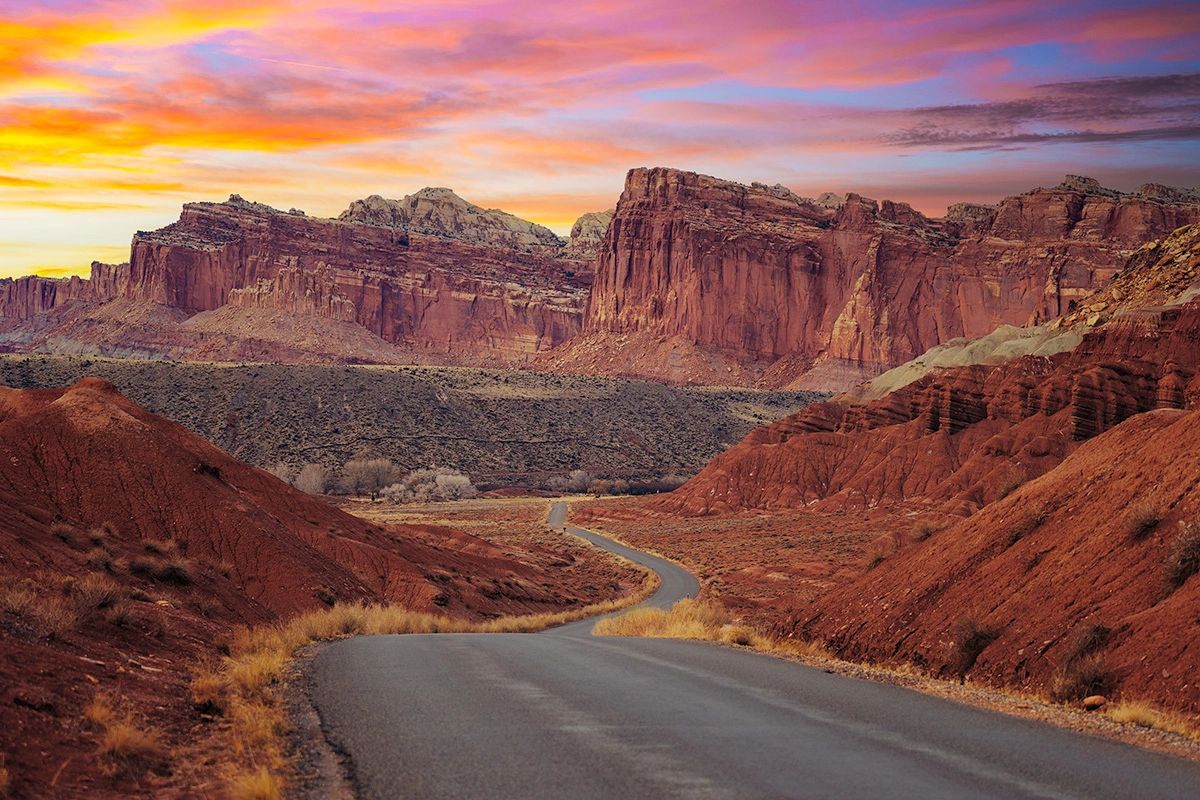
Day 5: Capitol Reef to Moab (via Hanksville)
Drive Time: ~2.5 hours (from Torrey) or ~1.75 hours from Hanksville
Where to Stay: Moab // Moab will be your base for the next two nights.
Head to Moab and visit Canyonlands National Park and Arches National Park, home to over 2,000 natural sandstone arches, but first you're going to want to spend the morning in Hanksville, Utah. With only a population of 200, you've likely never even heard of Hanksville, but it's one of my favorite adventure town in Utah.
Morning:
- Explore Goblin Valley State Park
- If you're feeling extra adventurous, hike Little Wild Horse Slot Canyon or Wild Horse Window before hitting the road to Moab
Best afternoon stops in Arches:
- Park Avenue
- Balanced Rock
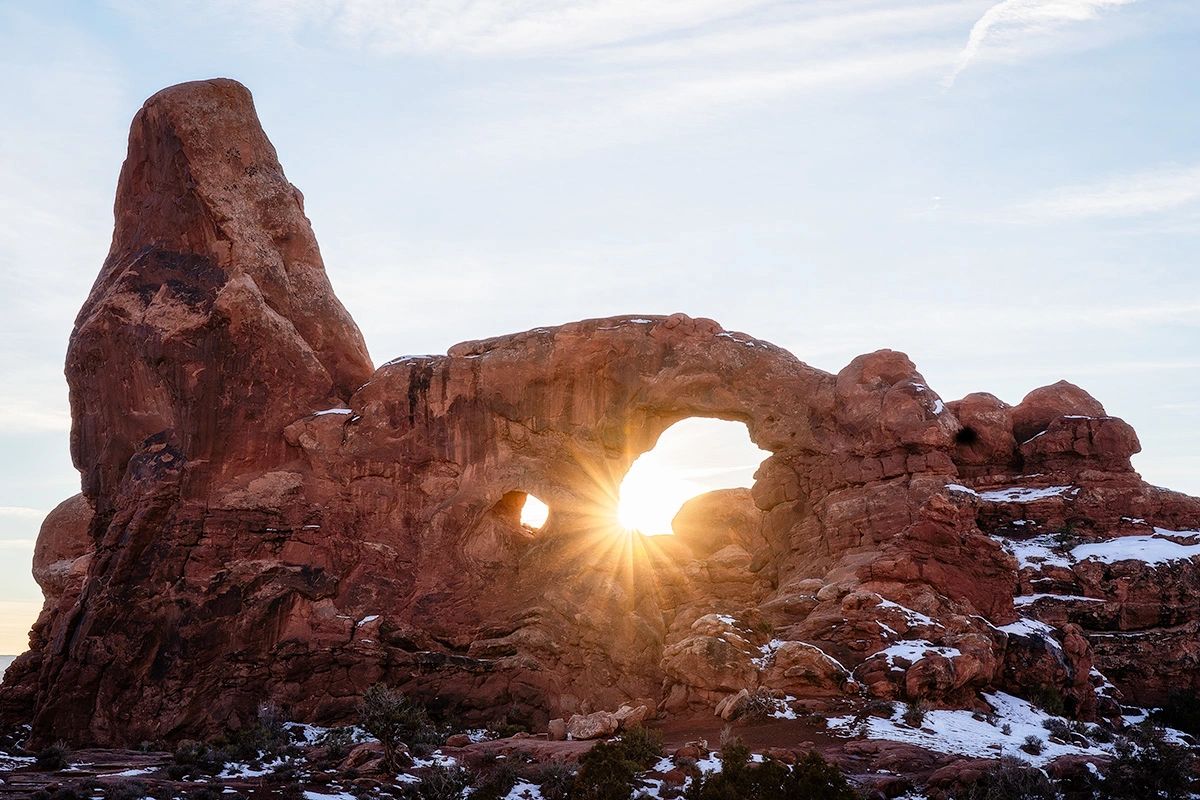
- Windows Section (Double Arch, North and Souther Window Arches, Turret Arch)
Evening:
- Delicate Arch (if timing allows for sunset) If you don't have time for Delicate, sunset from the Windows section is fabulous
Day 6: Canyonlands + Arches National Park
Start your morning at Canyonlands National Park (Island in the Sky district).
Morning:
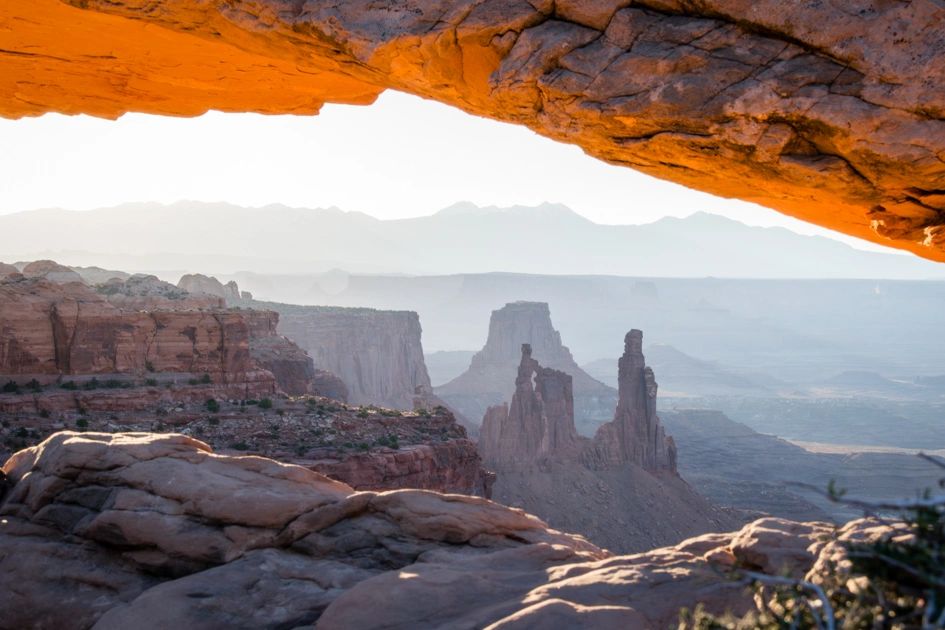
- Mesa Arch at sunrise --if you're a photographer, you'll want to arrive at least 45 minutes before sunrise to secure your spot
- Grand View Point -- optional hike along the rim
- Scenic overlooks -- definitely see Green River overlook. It's my favorite overlook in the park. Other easy ones are Buck Canyon, Orange Cliffs, and Shafer Canyon
- Head back to Moab for lunch. I recommend Moab Garage Co or Sweet Cravings, my two favorite spots.
Afternoon:
Return to Arches National Park to explore:
- Sand Dune Arch (optional hike to Broken arch) but Sand Dune itself is very easy and one of the best in my opinion.
- Devil's Garden – can hike the primitive loop (8 miles) to see up to 8 additional arches, or even Double O and back in 4 miles round trip to see Landscape Arch, Navajo Arch, Partition Arch, and Double O Arches
Day 7: Moab to Salt Lake City
Drive Time: ~4 hours
Drive to Salt Lake City for departure. If you have a later flight, I'd recommend doing a quick hike before hitting the road. If you want to be a little closer to your departing airport, consider flying out of Grand Junction, Colorado instead. Grand Junction is only 1.5 hours from Moab instead of 4, but being a regional airport, flights can often be a little more expensive.
Optional Morning Activities:
- Corona Arch is <3 miles total round trip and close to town. It's a quintessential Moab hike that everyone needs to do at least once.
- Sunrise at Dead Horse Point State Park -- if you can fit in this stop, I highly recommend it. It's one of the best state parks in Utah, and arguably one of the best views in Moab
Final Thoughts
Southern Utah will absolutely live up to the hype, and I promise you will want to visit over and over, but to ensure a seamless vacation, it's going to take a little extra planning on your part. This is where I can also come into play and help you. I create 1:1 personalized itineraries based on what you want to see and make sure it's realistic based on your goals and travel style. If you want help mapping out your own trip, you can book a personalized itinerary HERE. Slow down. Plan smarter. Start each day earlier than you think you need to.
Planning a Trip to Southern Utah?
I’ve spent 10+ years exploring the Southwest, and THIS digital guide is everything I’d actually recommend—organized so you can build your trip without second-guessing every stop. It has hikes, scenic drives, overlooks, and 7 pre-built itineraries so you can plan it right the first time. Click the map above to learn more.
See you out there,
Mallory