
Horseshoe Bend, Arizona: Parking, Hiking & Best Time to Visit
Planning a visit to Horseshoe Bend in Page, Arizona? Here's what to know about parking, the overlook trail, entrance fees, photography, and the best time to visit.


All photographs are © Roaming the Southwest unless stated otherwise. Unauthorized reproduction or use is prohibited.
Horseshoe Bend is one of the most recognizable photography locations in the Southwest. Located just outside Page, Arizona, the overlook sits approximately 1,000 feet above the Colorado River, where the river makes a nearly 270-degree turn around a massive sandstone formation.
Visiting is pretty straightforward. You don't need a permit or guided tour, and the walk to the overlook is relatively short. Here's what to know about parking, hiking, and photographing Horseshoe Bend.
Where Is Horseshoe Bend, Arizona?
Horseshoe Bend is located approximately five miles south of Page, Arizona, just off US Highway 89. It's an easy addition to a trip to Antelope Canyon or Lake Powell.
The overlook is within Glen Canyon National Recreation Area, managed by the National Park Service, although parking is operated by the City of Page. Horseshoe Bend is not part of Grand Canyon National Park.
Horseshoe Bend Parking Fees & Hours
As of 2026, parking costs $10 per passenger vehicle or $5 per motorcycle. Commercial vehicle fees vary by passenger capacity.
Your America the Beautiful Pass does not cover parking, and no permit or reservation is required to visit the overlook.
Official parking hours are generally listed as sunrise to sunset, although I've personally been able to access the parking lot approximately 20 minutes before sunrise and made it just in time.
Parking is first-come, first-served, and roadside parking or passenger drop-offs along Highway 89 are prohibited.
Check the official Horseshoe Bend website for current fees and hours.
Horseshoe Bend Hike: Distance & Difficulty
- Distance: 1.5 miles round-trip (approximately 15–25 minutes to walk the 0.75 miles each way)
- Difficulty: Easy
- Elevation gain: Approximately 137 feet
- Time needed: 1–1.5 hours, including photographs
- Trail: Wide, hardened path (not paved)
The trail is approximately 0.75 miles each way, with gradual elevation changes. It's designed to accommodate wheelchairs and strollers, although slopes and desert conditions may present challenges.
There are two shaded rest areas, but most of the trail is exposed. Bring water, especially during summer when temperatures regularly exceed 100°F. Restrooms are available at the parking lot.
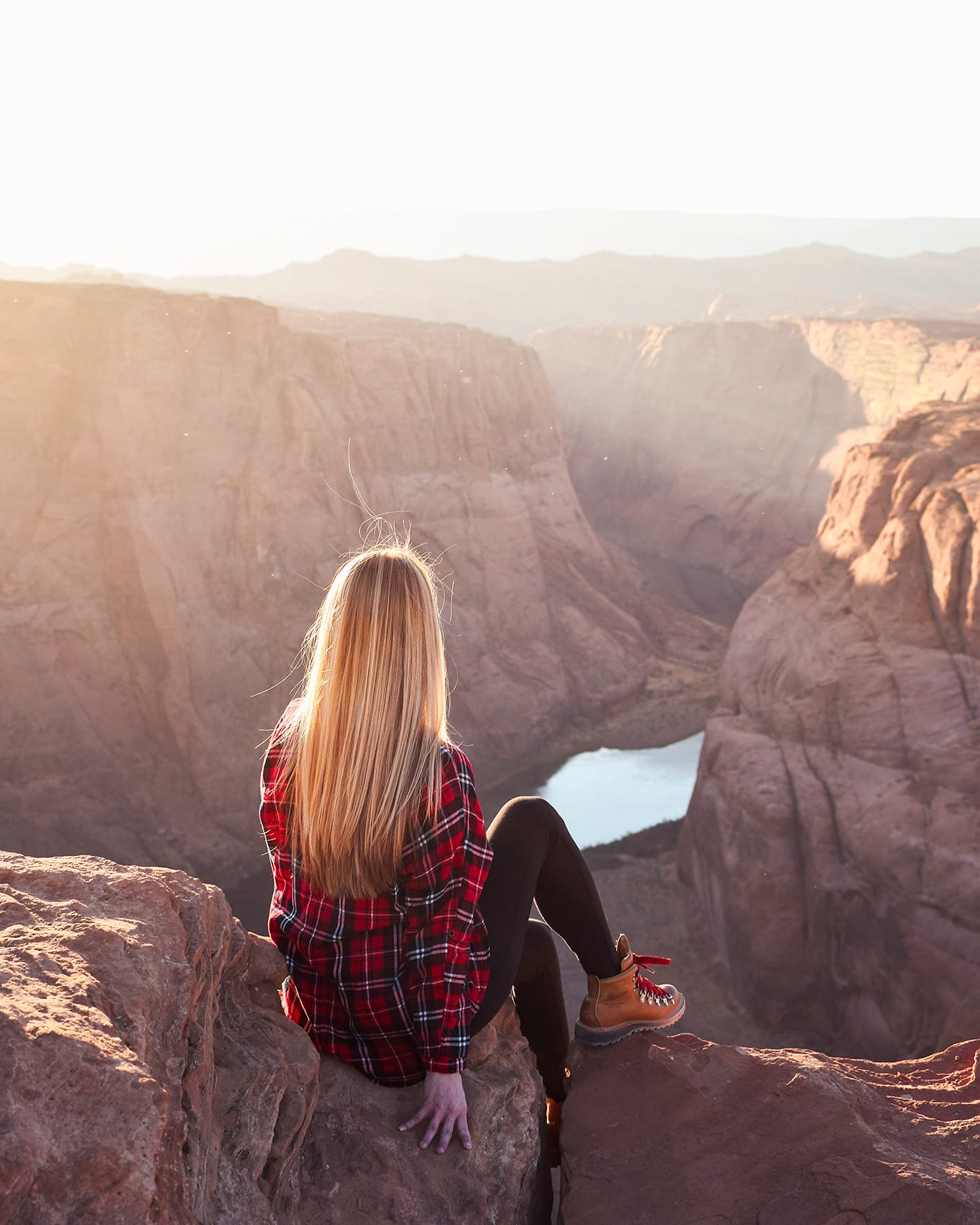
A designated viewing platform has safety railings, but much of the surrounding canyon rim is unprotected. Be especially careful with children and pets near the edge.
Best Time to Visit Horseshoe Bend
Ask 10 people and you will get 10 different answers. Basically if you're visiting the area, it's a good time to go. Spring and fall generally offer the most comfortable temperatures. Summer can be extremely hot, while winter brings cooler weather and potentially fewer visitors.
Personally, I wouldn't plan an entire trip around a particular season just for Horseshoe Bend. If you're already visiting Page, it's worth adding to your itinerary.
For photography, however, the time of day makes a significant difference.
How Crowded Is Horseshoe Bend?
Let's set some realistic expectations. Horseshoe Bend is BUSY. According to the official Horseshoe Bend website, more than 1.4 million people visited in 2023. This is one of the most popular photography locations in Arizona, so don't expect to have the overlook to yourself, even at sunrise.
The good news? There's plenty of room to spread out along the overlook. Even when it's busy, you can generally find space to take photographs without other visitors in your frame.
If you're hoping to avoid the largest crowds, I recommend visiting at sunrise rather than sunset. Just remember that fewer people doesn't mean no people.
My advice is to go expecting crowds, be patient, and give yourself time to find a composition. You can still come away with incredible photographs without having the place to yourself.
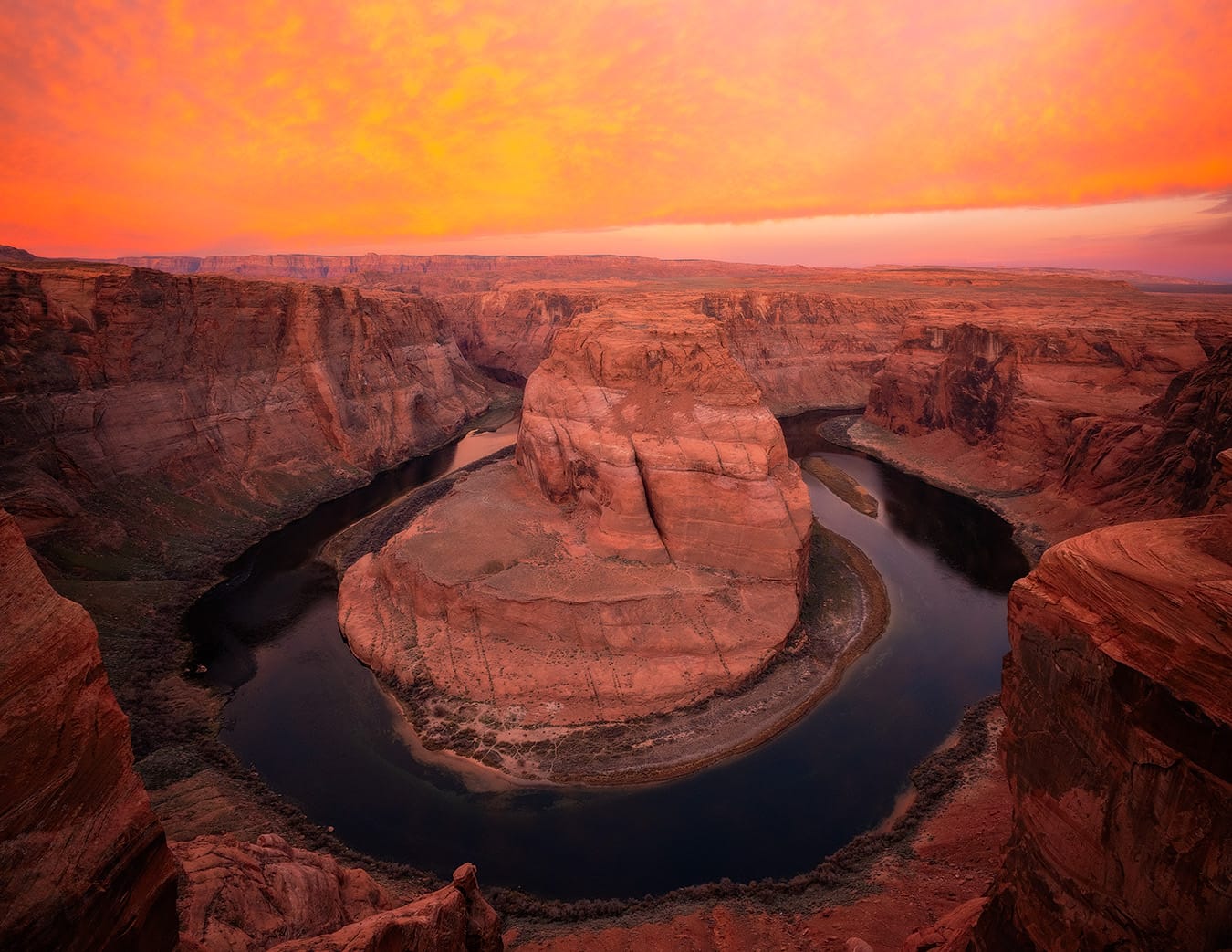
Horseshoe Bend Sunrise vs. Sunset: Which Is Better?
Horseshoe Bend faces generally west, so the position of the sun makes a huge difference in how the canyon photographs.
Both sunrise and sunset have their advantages, but I personally prefer sunrise for the smaller crowds, with one important caveat: I recommend photographing before the sun actually rises.
However, if you don't mind the crowds, golden hour and sunset are hard to beat! As I mentioned earlier, there's plenty of room to spread out along the overlook, but I recommend arriving early enough to find a composition you love before the best light hits.
Sunrise at Horseshoe Bend
Pros:
- Generally fewer crowds and a quieter experience
- Beautiful colors in the sky before sunrise
- No direct sunlight shining into your camera
- Cooler temperatures, particularly during summer
Cons:
- The Colorado River and canyon walls will be in shadow
- Once the sun rises, direct sunlight can create a harsh line across the landscape
- Early access to the parking lot isn't guaranteed
Sunrise is my favorite time to photograph Horseshoe Bend, but timing matters. I prefer photographing before the sun comes up, when the light is softer and more even. Once direct sunlight hits the canyon, you'll notice a distinct line between the illuminated sandstone and the areas still in shadow. This is not a good photograph.
I'd much rather work with the shadows before sunrise than deal with the larger crowds that typically gather for sunset.
Sunset at Horseshoe Bend
Pros:
- Potential for dramatic skies and colorful sunsets
- Beautiful backlighting and can get some sunbursts
Cons:
- Significantly more crowded
- Shooting toward the sun can make exposure challenging
- Deep shadows may obscure portions of the river and canyon
- You'll want to arrive early to find a good composition
Sunset can produce beautiful photographs, but don't assume the entire canyon will be illuminated just because the sky looks incredible.
What About Midday?
Midday isn't typically my first choice for landscape photography, but the higher sun angle can illuminate more of the Colorado River and reduce shadows inside the canyon. The feature image of this article was mid-afternoon.
The trade-off is harsher light and potentially extreme heat during summer.
If your priority is photographing the entire bend with more even illumination, midday may actually be worth considering during cooler months.
Horseshoe Bend Photography Tips
1. Bring an Ultra-Wide-Angle Lens
A wide-angle lens is a MUST if you're hoping to capture the entire bend.
I recommend 20mm or wider on a full-frame camera, but personally prefer 14–16mm to include the entire river bend and surrounding canyon. Even at 20mm, I still have to stitch multiple images together to capture the entire scene.
That said, don't go buying a new lens just for this shot! If you use Lightroom, you can stitch multiple photographs together to create a panorama. But if you want to capture the entire bend in a single frame, you'll need something wider than 20mm.
If you're photographing Horseshoe Bend with your phone, try the ultra-wide camera, typically 0.5x.
2. Pay Attention to Canyon Shadows
The sun's position changes throughout the year, so the lighting at Horseshoe Bend can look very different depending on your visit date.
If you're planning your trip around photography, consider using PhotoPills to check the sun's direction and elevation.
Even when the sun is above the horizon, the canyon walls may prevent direct sunlight from reaching the Colorado River.
3. Bracket Your Exposures
The contrast between the bright sky and darker canyon can be challenging, especially around sunset.
Consider exposure bracketing to preserve details in both highlights and shadows. You can blend the images later if necessary.
If you're shooting RAW, prioritize protecting highlights and recover shadow detail during editing when possible.
4. Be Careful With Polarizing Filters
A circular polarizer can help reduce reflections and increase contrast, but it can also produce uneven skies with ultra-wide-angle lenses.
Experiment with and without the filter rather than assuming it's always beneficial.
5. Experiment With Composition
Try both horizontal and vertical compositions, and pay attention to how much of the surrounding landscape you include.
You don't necessarily need the entire bend in every photograph. Tighter compositions can emphasize the sandstone textures and Colorado River.
Just remember that much of the canyon rim is unprotected. No photograph is worth getting dangerously close to the edge.
Things to Do Near Horseshoe Bend
If you're visiting Page, there are several nearby destinations worth exploring:
- Antelope Canyon: One of the most famous slot canyons in the Southwest, known for its sculpted sandstone walls and beautiful reflected light. Guided tours through authorized Navajo operators are required.
- Lake Powell: A great place for kayaking, boating, and exploring Glen Canyon National Recreation Area.
- Glen Canyon Dam Overlook Trail: I recommend this short walk for one of the best views of Glen Canyon Dam and the Colorado River. It's only about 0.2 miles round-trip, with uneven sandstone steps leading to the overlook.
- Secret Sand Cave (Biidi the Arch): A photogenic sandstone alcove near the Shell gas station on Coppermine Road. It's a fun, quick stop for photography, and this is another spot you'll want your ultra-wide lens to shoot.
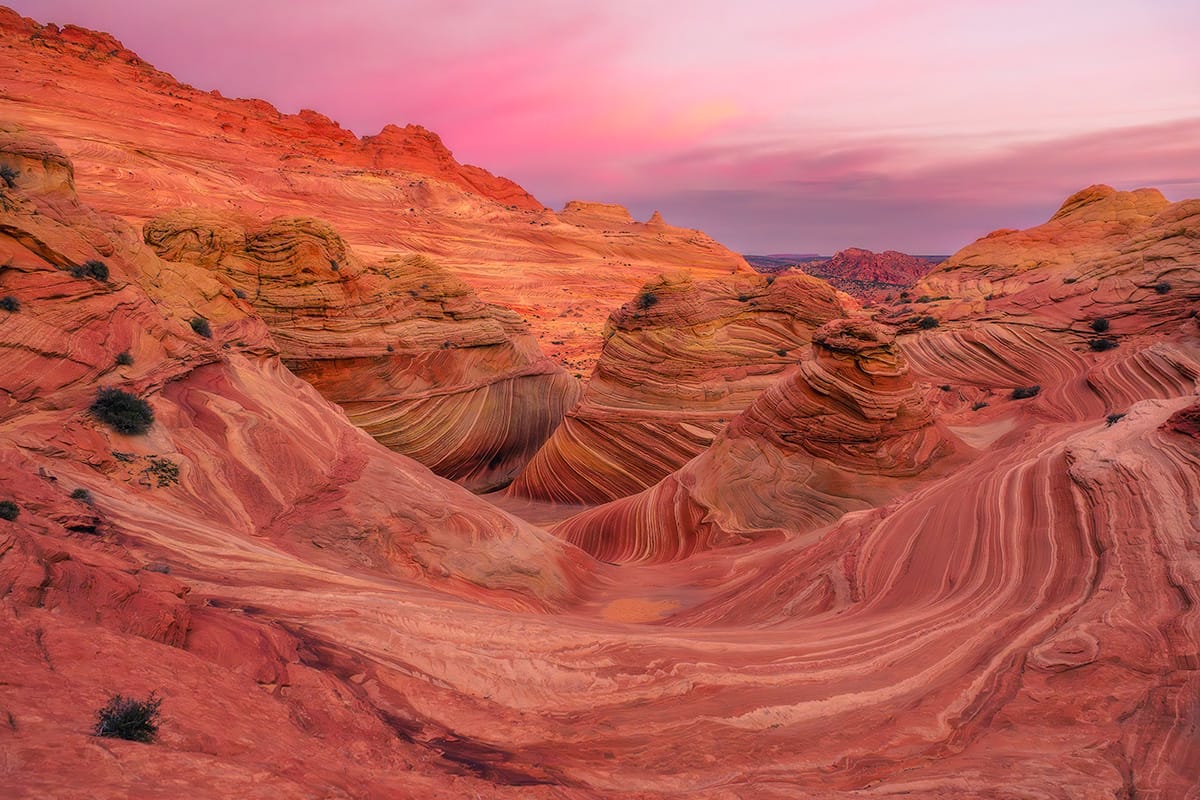
- The Wave (Coyote Buttes North): One of the most incredible sandstone formations in the Southwest, located about an hour from Page. Visiting requires a highly competitive permit and a challenging desert hike, so this isn't a spontaneous stop. Check out my guide to hiking The Wave for permit information, hiking tips, and what to expect.
Horseshoe Bend FAQs
How Long Do You Need at Horseshoe Bend?
Allow approximately 1–1.5 hours for the walk, photographs, and time at the overlook. Photographers may want longer.
Are Dogs Allowed at Horseshoe Bend?
Yes. Dogs are allowed on a leash no longer than six feet. Bring water and be mindful of hot trail surfaces during summer.
Can You Fly a Drone at Horseshoe Bend?
Launching, landing, or operating drones on National Park Service-managed land within Glen Canyon National Recreation Area is prohibited without special authorization.
Plan Your Southwest Adventure
Planning to explore more of the Southwest? My Best of the Southwest Travel Guide + Interactive Map includes some of my favorite scenic drives, hikes, photography locations, and hidden gems to help you plan your next adventure.
Use code ROAM15 to save 15% on the guide!
Final Thoughts on Visiting Horseshoe Bend
Horseshoe Bend is one of those places that really does live up to the photographs. It's an easy stop if you're exploring Page, and you don't need much time to appreciate just how impressive the landscape is.
Just come prepared for the crowds, bring plenty of water, and don't forget your wide-angle lens! Whether you visit at sunrise or sunset, it's absolutely worth seeing on your Southwest road trip.