Capitol Reef National Park Travel Guide: Best Things to Do, Hikes & Tips
Planning a trip to Capitol Reef National Park? Discover the best things to do, hikes, scenic drives, where to stay, and practical tips for visiting Utah's Capitol Reef National Park.


All photographs are © Roaming the Southwest unless stated otherwise. Unauthorized reproduction or use is prohibited.
Capitol Reef National Park is one of Utah's Mighty Five, but it often gets overlooked in favor of Zion, Bryce Canyon, and Arches. A lot of people skip it entirely, but unpopular opinion: it's one of my top two favorite national parks in Utah. No, I'm not kidding!
I'm obsessed with the Waterpocket Fold and the hidden slot canyons off Notom-Bullfrog Road. It's also the park I head to when I want to escape the crowds.
Located in south-central Utah, Capitol Reef is home to the nearly 100-mile-long Waterpocket Fold, colorful sandstone cliffs, historic Fruita orchards, and some of my favorite scenic drives in Utah.
Highway 24 runs directly through the park, with easy access to overlooks, short hikes, petroglyphs, and the historic Fruita district. But trust me, don't limit your visit to the main highway. You'll miss some of the best parts of Capitol Reef, especially if you have time to explore its more remote areas.
In this Capitol Reef National Park travel guide, I'll cover the best things to do, hikes, scenic drives, where to stay, and practical tips for planning your first visit.
Capitol Reef National Park Overview
Where Is Capitol Reef National Park?
Capitol Reef National Park is located in south-central Utah, with its main visitor center approximately 11 miles east of Torrey along Utah Highway 24.
Unlike some National Parks, Capitol Reef doesn't have a single entrance gate that every visitor must pass through. Highway 24 is a public highway that crosses the park, and many popular attractions are accessible directly from it.
The park's developed visitor area is concentrated around Fruita, while Cathedral Valley and the southern Waterpocket District require additional planning.
How to Get to Capitol Reef National Park
Most visitors arrive by car, either from Bryce Canyon along Utah Scenic Byway 12 or from the Moab area via Interstate 70 and Utah Highway 24.
If you're driving from Bryce Canyon, I highly recommend taking Scenic Highway 12 through Escalante and Boulder. It's one of Utah's most scenic drives and worth allowing extra time for stops.
Torrey is the closest town to the park's main entrance area and makes a convenient overnight base.
Closest Airports to Capitol Reef National Park
Capitol Reef doesn't have a nearby major airport, so you'll need a rental car regardless of where you fly.
Grand Junction and Salt Lake City are two practical options. Salt Lake City offers more flight choices, while Las Vegas makes sense if you're visiting Zion and Bryce Canyon before Capitol Reef.
Capitol Reef National Park Entrance Fees & Reservations
Capitol Reef does not currently require timed-entry reservations to visit the park.
The standard entrance fee is $20 per private vehicle, valid for seven days. The fee applies to the Scenic Drive area, while Utah Highway 24 and several attractions along it can be accessed without paying the Scenic Drive entrance fee.
If you have an America the Beautiful Pass, it covers the standard entrance fee.
For current pass options and changes, see my America the Beautiful Pass: What to Know guide.
Important: Although general park entry doesn't require a reservation, Fruita Campground requires advance reservations, and certain backcountry activities require permits.
Always check the official National Park Service website before visiting, since fees and access requirements can change.
Best Time to Visit Capitol Reef National Park
Spring and fall are generally the most comfortable seasons for hiking and exploring Capitol Reef, although the best time depends on what you want to do.
Spring (March–May)
Spring brings milder temperatures and opportunities to explore the park before the intense summer heat arrives.
It's a good time for hiking, although weather can be unpredictable and rain or snow can affect unpaved roads.
Summer (June–August)
Summer can be extremely hot, especially on exposed hiking trails with little shade.
Afternoon thunderstorms also create flash-flood risks in narrow canyons and washes. If you're visiting during summer, plan strenuous hikes for early morning and pay close attention to weather forecasts.
Fall (September–November)
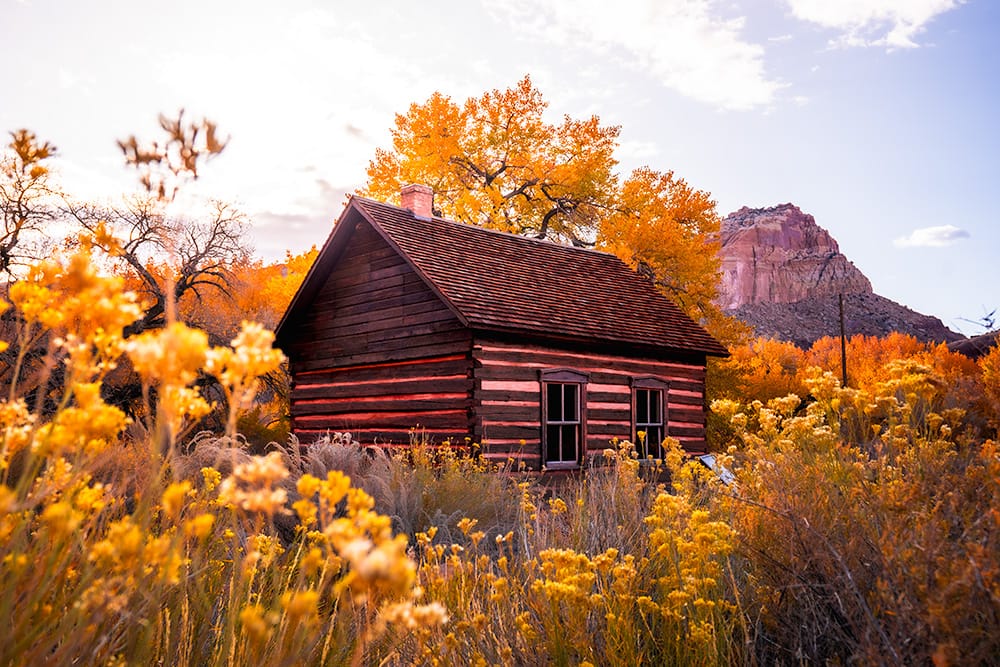
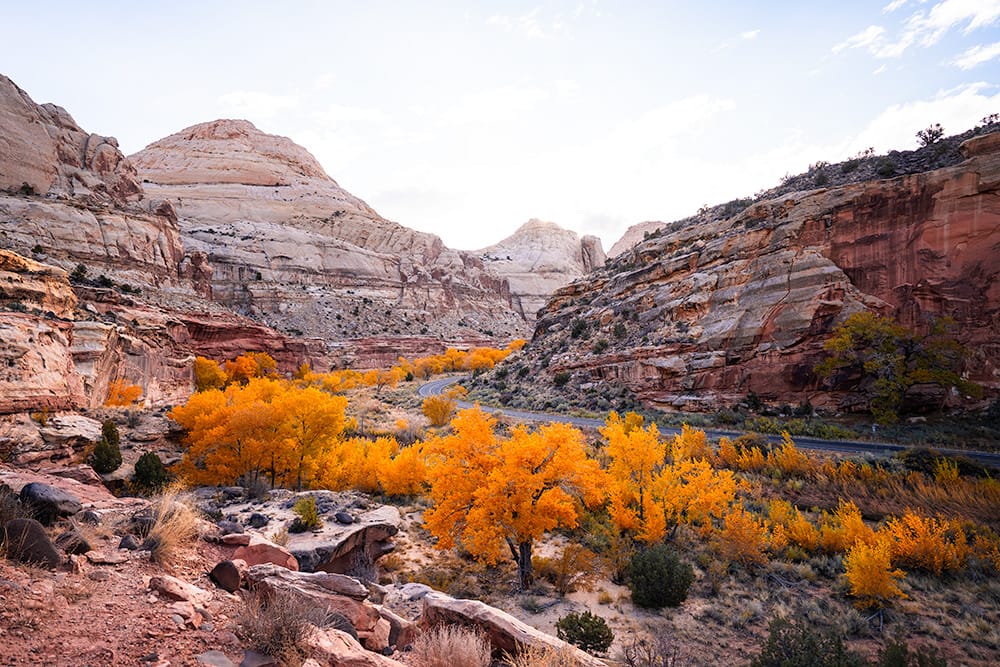
Fall is another excellent time to visit, with generally cooler temperatures and changing colors in the historic Fruita orchards. This is actually my favorite time of year to visit, as the cottonwoods and orchards are unreal when they change colors.
The timing of fruit harvests varies by year and orchard, so check the National Park Service's current orchard information if picking fruit is part of your plans.
Winter (December–February)
Winter can be a great option if you prefer fewer visitors and don't mind cold temperatures.
Snow and ice are possible, especially at higher elevations and along shaded trails. Unpaved roads may become muddy or impassable after precipitation.
Getting Around Capitol Reef National Park
You'll need your own vehicle to explore Capitol Reef. There is no park-wide shuttle system.
For most first-time visitors, I recommend focusing on three areas:
- Utah Highway 24: The main road through the park, with access to several popular viewpoints and trails.
- Fruita and the Scenic Drive: Historic buildings, orchards, the campground, and scenic canyon access.
- Remote districts: Cathedral Valley and the southern Waterpocket Fold, which require more time and careful road planning.
Do You Need 4WD for Capitol Reef?
Not for the main developed areas.
Utah Highway 24 and the paved Scenic Drive are suitable for standard passenger vehicles under normal conditions.
However, some dirt roads, particularly those in Cathedral Valley and the southern park districts, may require high clearance or four-wheel drive depending on conditions.
Even roads normally accessible to passenger cars can become impassable after rain or snow.
Always check current road conditions before leaving paved roads.
Best Things to Do in Capitol Reef National Park
Capitol Reef has plenty to do beyond driving Highway 24. These are the stops and hikes I'd prioritize, whether you have a few hours or a couple of days.
1. Hike Capitol Gorge to the Pioneer Register and Water Tanks
Capitol Gorge is an easy walk through a narrow canyon to the Pioneer Register, where travelers carved their names into the sandstone in the 1800s.
Don't stop there! Continue to the Water Tanks, natural potholes that collect rainwater. The short side trail requires some scrambling over slickrock.
Access is via the unpaved Capitol Gorge Road, which can close after rain.
2. Explore Grand Wash
Grand Wash is an easy canyon hike with towering sandstone walls and a narrow section that's worth seeing.
You can start from Highway 24 or Scenic Drive, and you don't need to complete the entire 4.4-mile round trip to reach the narrows.
Important: Avoid Grand Wash whenever rain is possible. Flash floods can occur even when storms are miles away.
3. Hike to Cassidy Arch
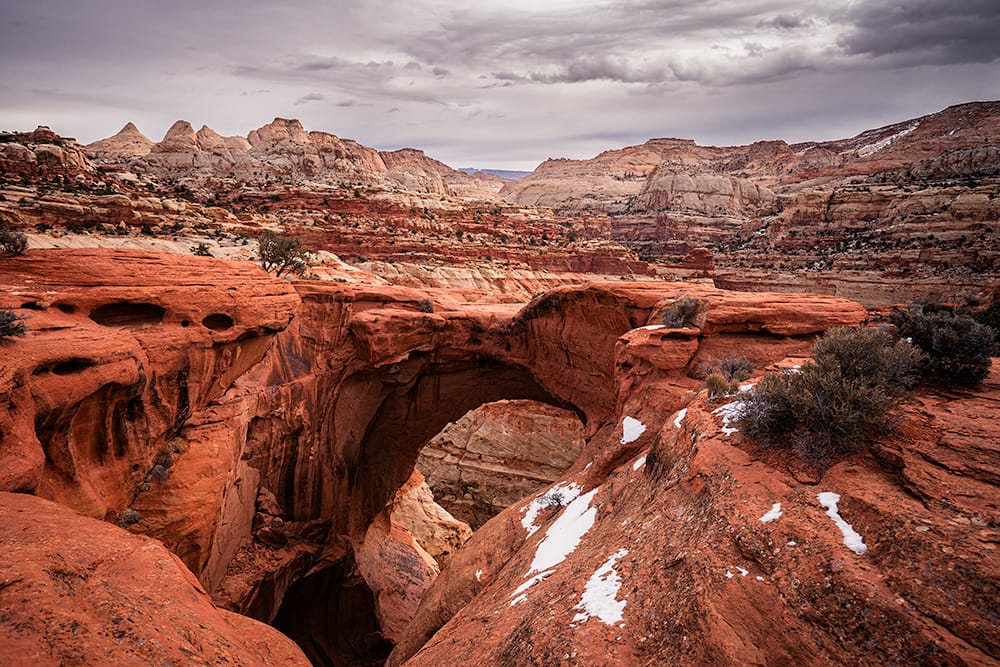
This 3.4-mile round-trip hike climbs steeply from Grand Wash to a massive sandstone arch named after Butch Cassidy. I actually prefer Cassidy Arch over Hickman Bridge if I had to choose one or the other.
Expect exposed slickrock, little shade, and some of my favorite elevated views in the park.
4. Get a Pie at Gifford Homestead
Whatever you do, don't skip the pies at Gifford Homestead! My favorite is the strawberry rhubarb and my husband loves the peach, but honestly, you can't go wrong with any of them.
I usually stop first thing in the morning, grab a few pies, and enjoy them after hiking. They sell out, so don't wait until late afternoon.
Gifford Homestead is open seasonally, so check dates before visiting.
5. Hike Cohab Canyon
Cohab Canyon starts with a steep climb above Fruita before entering a canyon filled with interesting sandstone formations and narrow passages.
Don't skip the side trails to the overlooks for views of the Fruita orchards and surrounding cliffs.
6. Drive the Capitol Reef Scenic Drive
The 7.9-mile paved Scenic Drive is an out-and-back route with access to Grand Wash and Capitol Gorge.
Allow about 90 minutes for the round-trip drive and stops, longer if you're hiking. The paved road is suitable for passenger vehicles, but the dirt spur roads can become impassable after rain.
7. See the Fremont Petroglyphs
These approximately 1,000-year-old petroglyphs are located right along Highway 24.
A short boardwalk makes them easy to visit for everyone. Look carefully because some of the figures are surprisingly easy to miss.
Stay on the boardwalk and never touch the rock art.
8. Hike to Hickman Bridge
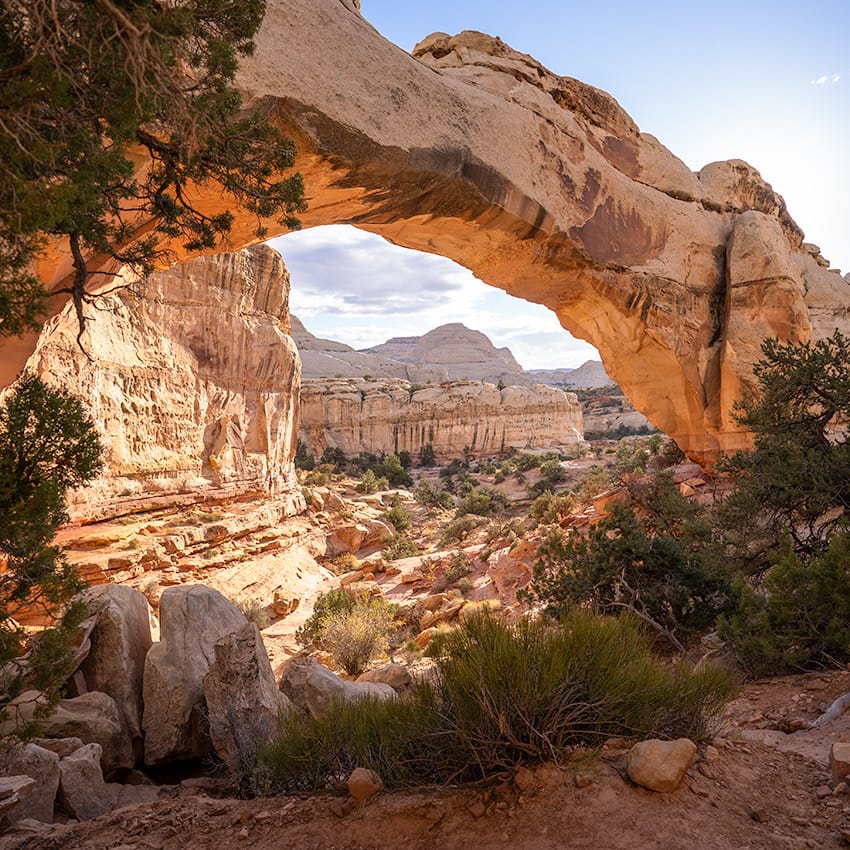
This 1.8-mile round-trip hike leads to a massive natural bridge and is one of the best shorter hikes in Capitol Reef.
There's some climbing and very little shade, but it's a good option if you don't have time for a longer trail.
9. Explore the Historic Fruita District and Orchards
Fruita is home to historic buildings and orchards surrounded by red sandstone cliffs. Make sure to stop and see the Gifford Homestead and photograph the old barn.
Depending on the season, you can even pick fruit from designated orchards. Check which orchards are open for harvesting before visiting.
10. Visit Panorama Point, Goosenecks Overlook, and Sunset Point
These three viewpoints are close together and easy to visit on your way into or out of the park.
Panorama Point has wide desert views, while Goosenecks overlooks the canyon carved by Sulphur Creek.
I'd save Sunset Point for the end of the day. It's a short walk and a quick and easy sunset stop if you're staying in Torrey.
11. Explore Cathedral Valley and the Temples of the Sun and Moon
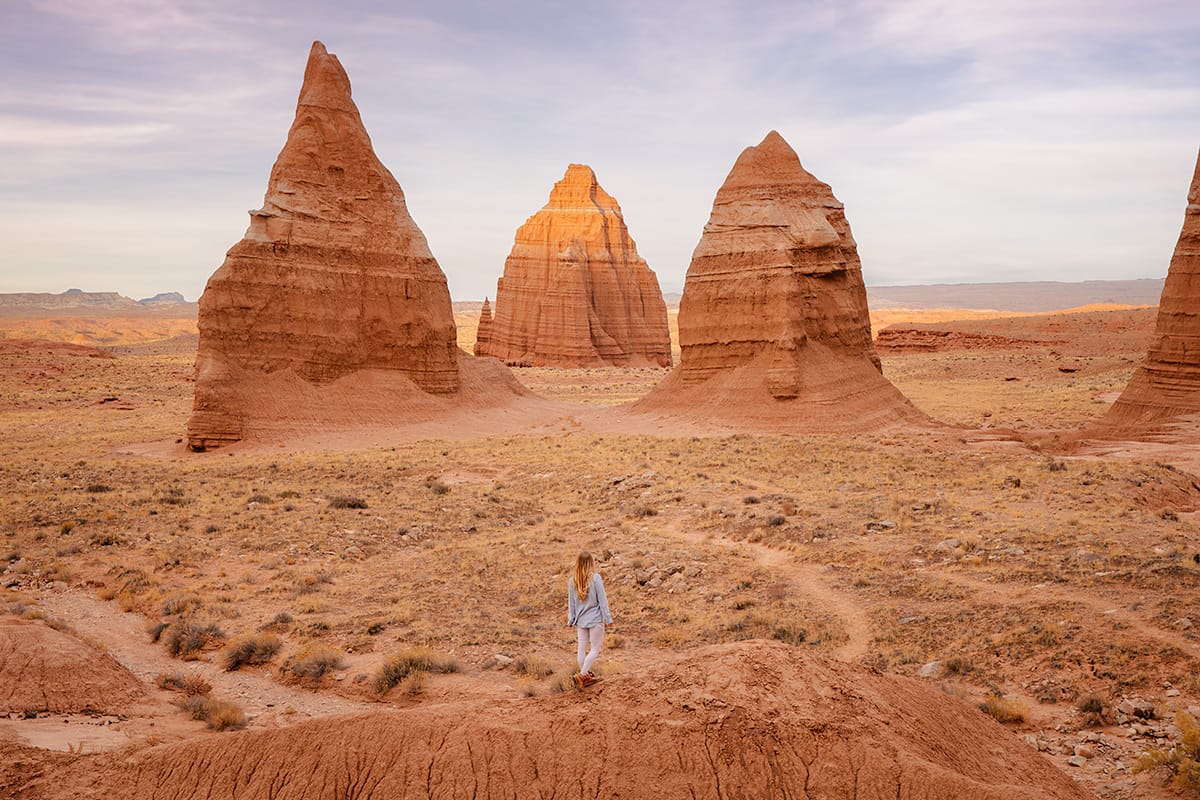
Cathedral Valley is one of Capitol Reef's more remote areas, known for the massive sandstone monoliths called the Temples of the Sun and Moon.
Plan on spending most of a day exploring. Roads are unpaved, and some routes involve a river crossing. Check conditions and vehicle requirements before attempting the drive.
12. Hike Chimney Rock Loop
This 3.6-mile loop starts with a steep climb before opening up to views of Chimney Rock and the surrounding colorful sandstone layers.
There's very little shade, so I'd hike it early or save it for cooler weather.
Best Hikes in Capitol Reef National Park
Distances listed below are round-trip unless otherwise noted. Trail conditions and access can change, especially in the park's remote districts.
My recommendation: If you only have time for a few hikes, prioritize Capitol Gorge to the Pioneer Register and Water Tanks, Cassidy Arch, and Grand Wash.
For shorter hikes, consider Hickman Bridge or Cohab Canyon. If you have more time and want to explore beyond Fruita, Upper and Lower Muley Twist Canyon are worth considering.
Keep in mind that some trailheads require driving unpaved roads, and narrow canyons should be avoided when rain is possible.
Best Scenic Drives in Capitol Reef National Park
Capitol Reef has several scenic drives, but road conditions and vehicle requirements vary considerably once you leave the pavement.
Capitol Reef National Park Scenic Drive
Distance: 7.9 miles one way (15.8 miles round trip)
Time needed: Approximately 1.5 hours with stops, longer if hiking
Vehicle: Passenger cars under normal conditions
Entrance fee: $20 per private vehicle, or covered by an America the Beautiful Pass
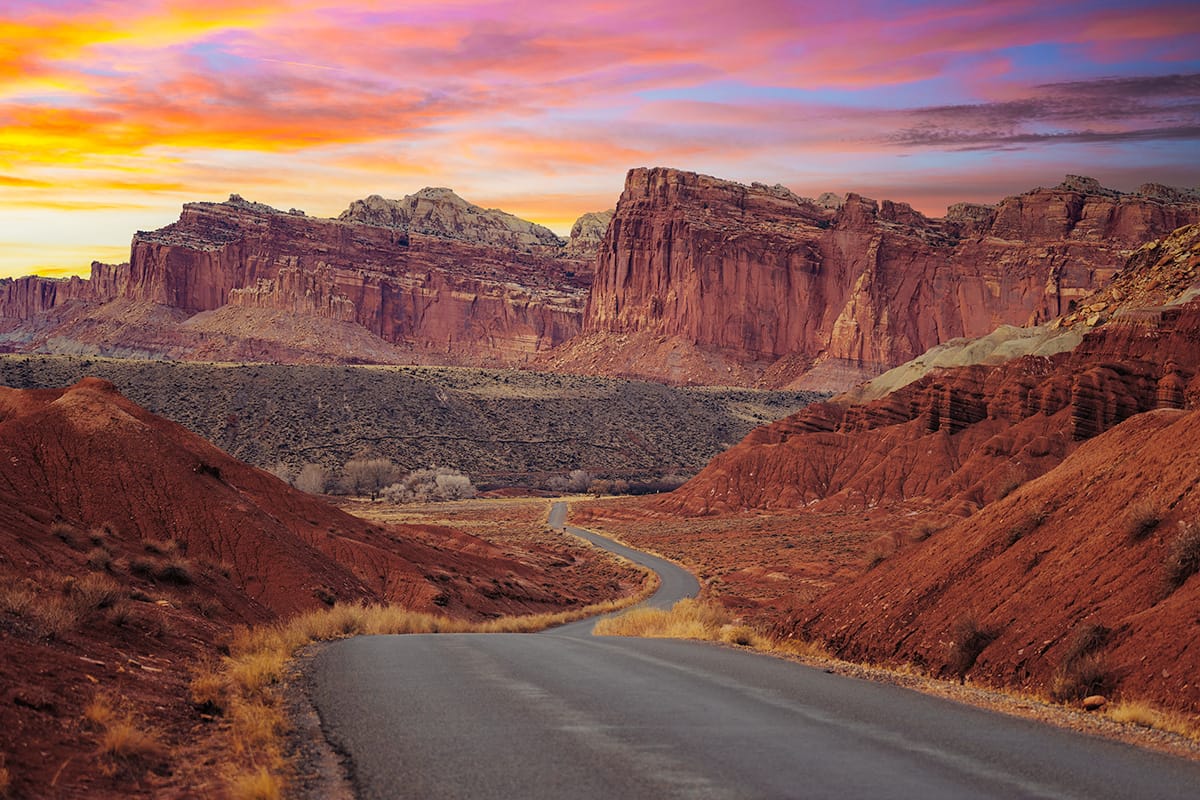
The Capitol Reef National Park Scenic Drive starts near the Fruita Historic District and follows the Waterpocket Fold beneath towering sandstone cliffs. It's a paved, out-and-back road, so you'll return the same way you came.
Two unpaved spur roads lead into Grand Wash and Capitol Gorge, both worth exploring if you have extra time. Grand Wash is an easy canyon hike, while Capitol Gorge leads to the Pioneer Register and Water Tanks.
My tip: I love photographing the Scenic Drive around sunset. The cliffs catch the evening light, and I'd recommend allowing enough time to stop along the road rather than rushing through.
The paved Scenic Drive is suitable for standard passenger vehicles, but the dirt roads into Grand Wash and Capitol Gorge can close after rain. Check current conditions before visiting.
For a detailed route map, the best stops, drive times, and road conditions, check out my Capitol Reef National Park Scenic Drive Guide.
Cathedral Valley Scenic Drive
Distance: Approximately 58 miles for the traditional loop
Time needed: 6–8 hours
Vehicle: High clearance recommended; 4WD may be necessary
Entrance fee: No standard park entrance fee for this route
Cathedral Valley is home to the Temples of the Sun and Moon, two massive sandstone monoliths. It's one of my favorite areas of Capitol Reef, especially for photography around sunrise and sunset.
The traditional loop includes unpaved roads and a crossing of the Fremont River at the eastern entrance. If you're uncomfortable with the river crossing, you can access Cathedral Valley from the west, although you'll need to retrace your route.
Check road conditions before visiting, especially after rain, and don't underestimate how long it takes to explore this remote area.
Burr Trail and Notom-Bullfrog Road Scenic Drive
Distance: Varies depending on your route
Time needed: Allow several hours, or a full day if hiking
Vehicle: Passenger vehicles on paved sections; high clearance may be needed on unpaved sections
Entrance fee: No standard park entrance fee for these roads
Burr Trail and Notom-Bullfrog Road provide access to the southern Waterpocket Fold, including the Burr Trail switchbacks and some of my favorite remote hikes in Capitol Reef.
I'm particularly obsessed with the slot canyons along Notom-Bullfrog Road, including Headquarters Canyon and Sheets Gulch. If you have extra time and want to explore beyond Fruita, this is one of the areas I'd prioritize.
Road conditions vary considerably, and unpaved sections can become impassable after rain. Check conditions before heading out, especially if you're planning to hike any of the narrow canyons.
Capitol Reef National Park Photography Tips
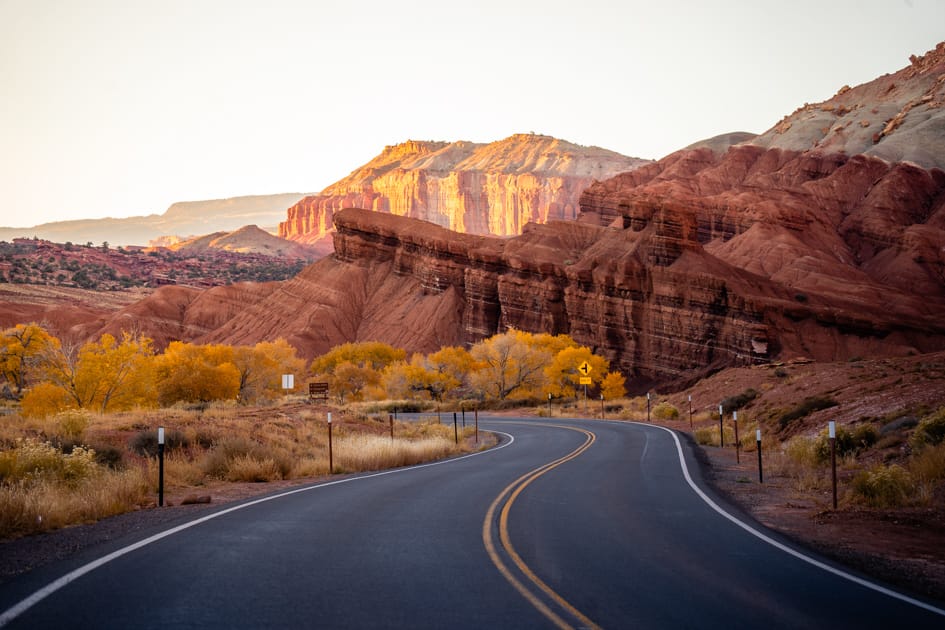
Capitol Reef is one of my favorite Utah national parks to photograph, especially in the evening. These are the four locations I'd prioritize:
- Scenic Drive at Sunset: My favorite place to photograph sunset in Capitol Reef. The sandstone cliffs look incredible in the evening light, and there are plenty of places to pull over along the drive.
- Cassidy Arch: You can walk right out onto the slickrock above Cassidy Arch for a different perspective than most Utah arches. The trail also has great views overlooking Grand Wash.
- Hickman Bridge: One of my favorite hikes in the park, especially during fall colors. In addition to the bridge, you'll get beautiful views of the Fremont River and surrounding cottonwoods from higher up along the trail.
- Cathedral Valley: The Temple of the Sun and Temple of the Moon are my favorite subjects here, especially around sunrise and sunset. Check road conditions before heading out, as getting into Cathedral Valley can be challenging.
Capitol Reef National Park Itineraries
Half-Day Capitol Reef Itinerary
If you're driving through Capitol Reef and only have a few hours, I'd prioritize the main Highway 24 and Fruita attractions.
- Stop at Panorama Point and Goosenecks Overlook.
- Visit the Capitol Reef Visitor Center.
- Explore Fruita and the Gifford Homestead, if open.
- See the petroglyph panels.
- Hike Hickman Bridge if time and conditions allow.
One-Day Capitol Reef Itinerary
With a full day, you can experience more of the park without rushing between every stop.
Morning: Hike Hickman Bridge before temperatures climb, then visit the petroglyph panels.
Midday: Explore Fruita, stop at the Gifford Homestead, and have lunch + Pie.
Afternoon: Drive Scenic Drive and explore Grand Wash if conditions allow. Want a challenging hike? Hike Cassidy Arch.
Evening: Finish at Sunset Point.
Two-Day Capitol Reef Itinerary
Day 1: Explore Fruita, drive Scenic Drive, visit the Fremont petroglyphs, and hike Capitol Gorge to the Pioneer Register and Water Tanks. Stop at Gifford Homestead for pie!
Day 2: I'd recommend choosing one of two options:
- Cathedral Valley: Spend the day exploring this remote area, including the Temples of the Sun and Moon. Check road conditions and vehicle requirements before visiting.
- Notom-Bullfrog Road: Explore Headquarters Canyon or Sheets Gulch, two remote, unmaintained canyon hikes along the Waterpocket Fold. These require more planning than the developed park trails, especially Sheets Gulch. Check road conditions and the weather forecast before heading out, and never enter narrow canyons when rain is possible.
Where to Stay Near Capitol Reef National Park
Torrey, Utah
Torrey is the closest town to Capitol Reef's main visitor area and where I'd recommend most visitors look for lodging.
It's convenient for early hikes, Scenic Drive, and exploring the Fruita district without a long commute. You'll also find a variety of hotels, restaurants, and other accommodations.
Hanksville, Utah
Hanksville is another option, particularly if you're approaching Capitol Reef from Moab or planning to explore areas east of the park.
Located approximately 45 miles east of the Capitol Reef Visitor Center, Hanksville is a small desert town with a more limited selection of accommodations and restaurants than Torrey.
It's also a convenient base for exploring nearby destinations like Factory Butte, the Bentonite Hills, and Goblin Valley State Park.
If your main priority is hiking and exploring Fruita, I'd choose Torrey. But if you're planning a longer road trip through the area, Hanksville is worth considering, especially if you're just planning one day in Capitol Reef and heading to Moab the next day, as Hanksville will be closer.
Fruita Campground
Fruita Campground is the only developed campground inside Capitol Reef National Park.
It has 71 sites, operates year-round, and requires reservations through Recreation.gov.
The campground has restrooms and potable water but no individual electrical, water, or sewer hookups.
Other Camping Options
Capitol Reef also has primitive camping opportunities in remote areas, including Cathedral Valley and Cedar Mesa.
These campgrounds have fewer amenities and require additional planning, particularly because of road conditions and limited services.
Capitol Reef National Park FAQs
How Many Days Do You Need in Capitol Reef National Park?
One full day is enough to experience many of the main attractions around Fruita, Highway 24, and Scenic Drive. I'd allow two days if you want to complete longer hikes or explore beyond the developed areas.
Is Capitol Reef National Park Worth Visiting?
Yes. Capitol Reef offers a different experience from Utah's other National Parks, with historic orchards, sandstone canyons, scenic drives, and opportunities to explore more remote desert landscapes. Most people skip Capitol Reef and it's such a shame!
Do You Need Reservations for Capitol Reef National Park?
No timed-entry reservation is currently required for general park visitation. However, Fruita Campground requires reservations, and certain backcountry activities require permits.
Can You Drive Through Capitol Reef National Park?
Yes. Utah Highway 24 crosses the park and provides access to several popular attractions without requiring a long hike.
Do You Need 4WD for Capitol Reef?
No, not for the main developed areas. Highway 24 and the paved Scenic Drive are accessible to standard passenger vehicles under normal conditions.
Some remote roads require high clearance or four-wheel drive, and weather can make even normally accessible roads impassable.
Can You Visit Capitol Reef and Bryce Canyon on the Same Trip?
Absolutely. Capitol Reef and Bryce Canyon are commonly combined on a Southern Utah road trip, with Scenic Highway 12 connecting the two areas.
Are Dogs Allowed in Capitol Reef National Park?
Dogs are permitted in certain developed areas, but not on most hiking trails or in the backcountry. Always check the park's current pet regulations before visiting.
Plan Your Southwest Road Trip
Capitol Reef is a natural addition to a Southern Utah road trip, especially if you're visiting Bryce Canyon, Arches, or Canyonlands on the same trip.
Planning to visit more parks? Explore my U.S. National Parks travel guides for park-specific tips, hikes, scenic drives, and trip-planning information.
For help planning your route, check out my 7-Day Utah National Parks Itinerary and Best Route to Visit Utah's Mighty Five National Parks.
If you're planning a longer trip through Utah, Arizona, Colorado, or New Mexico, my Best of the Southwest Travel Guide includes more than 350 personally vetted locations, an interactive map, and seven pre-built road trip itineraries.
Explore My Southwest Travel Guide + Interactive Map →