
How to Photograph the Maroon Bells in the Fall
The Maroon Bells in Aspen, Colorado are one of the most photographed landscapes in the Rockies. In fall, golden aspens, calm reflections, and dramatic peaks create an iconic scene—but timing, permits, and conditions all play a key role in getting the shot.


The Maroon Bells in Aspen, Colorado are one of the most photographed landscapes in the American Southwest. In the fall, golden aspens, calm reflections, and dramatic peaks combine into one of the most iconic scenes in the Rockies. Timing, permits, and conditions all play a major role in getting this fall bucket-list shot.
📌 More Colorado Fall Colors Guides
- Colorado Fall Colors - Find all of my fall color content in this hub
- Complete Guide to Fall Colors in Colorado - Everything you need to plan a Colorado fall colors trip.
- Where to See the Best Fall Colors in Colorado
- When to See Fall Colors in Colorado: Peak Timing Guide
- How to Track Colorado Fall Colors in Real Time
- Best Scenic Drives for Fall Colors in Colorado
When to Visit the Maroon Bells for Peak Fall Colors?
Timing is one of the most important factors for photographing the Maroon Bells.
The best time to visit the Maroon Bells for peak fall colors is typically:
- Late September to early October. Late September is most reliable, between September 22-30.
- Exact timing varies slightly each year depending on elevation and weather
What to expect by season
- Late September: Most reliable peak color window is the last weekend of September. I've shot peak color here the most between September 25-30.
- Early October: Risk of color dropping or weather changes, but the highest probability of snow.
- Mid-October: Fewer crowds but reduced foliage. You will likely have very little color under the Bells.
For photography, the ideal conditions are peak color, calm weather, and soft light. What's so hard about that? Right? LOL After years of chasing colors, I can tell you I still stress over when to get permits every single year, but sunrise will give you the best bet for those conditions.
The Aspens at Maroon Bells Do NOT Change at the Same Time
One thing that's really important to understand when you're trying to time peak fall colors at Maroon Bells is that all of those aspens you see underneath the Bells do NOT change at the same time. And that's not necessarily a bad thing. Because the groves change at different times, you can have great color here for longer than if everything changed at once, giving you more opportunities to photograph Maroon Bells during your Colorado fall colors trip.
They're growing at different elevations, so the color generally starts with the higher groves farther back and gradually works its way down toward Maroon Lake. Even when I consider Maroon Bells to be at peak, you'll usually see a mix of yellow, lime green, and even some dark green.
I've photographed Maroon Bells in the fall more times than I can count, and I've never seen every single aspen underneath the Bells perfectly yellow at the same time.
This is also why I would rather photograph Maroon Bells a little early than a little late. Early in peak, you may still have some green closer to the lake, but the higher aspens usually still have their leaves. Wait too long for those lower trees to turn, and the aspens higher up may already be bare.
How to Visit the Maroon Bells for Peak Fall Colors?
If photographing the Maroon Bells during peak fall colors is on your bucket list, this is one place you really do need to plan ahead. Peak color is usually sometime in late September, but it can shift every year, and reservations during this window go FAST.
You'll need either a private vehicle reservation or a shuttle reservation to access the Maroon Bells Scenic Area. If you're coming specifically for sunrise or sunset, you'll want a private vehicle reservation, since the shuttle doesn't run during those times. I've included exactly how to book both options below.
Private vehicle access is restricted daily between 8:00 AM and 5:00 PM from May 22 through October 18. If you have a vehicle reservation, you'll need to enter before 8:00 AM or wait until after 5:00 PM. You can leave the area at any time.
My biggest advice for fall: don't wait to make your reservation. Once you know your dates, book it. Peak fall weekends are extremely popular, and parking reservations can disappear quickly. With the new no-show fee, there's a better chance that last-minute reservations may pop back up as people cancel. They can go FAST, though, so if you're trying to snag one last minute, you'll want to stalk the reservation website.
Where and When Do I Reserve My Maroon Bell Permit?
Reservations for the Maroon Bells are made through the official Aspen-Snowmass shuttle and parking reservation system. During peak season, you’ll need to book either a shuttle ticket or a private vehicle reservation in advance online, as walk-up access is extremely limited. Private vehicle reservations typically open ahead of the summer and fall seasons—mark your calendar for June 18, 2026 at 8am MST so you’re ready to book as soon as they become available. Reservations can sell out quickly, especially during peak fall foliage, so it’s best to book early through the official site before your trip. Shuttle reservations are already available for the upcoming fall.
How Much Does a Maroon Bells Permit Cost?
Private Vehicle Reservations
- $10 per vehicle
- Must park before 8am or after 5pm so you either book a morning permit or afternoon
- Free with the America the Beautiful Pass, but a $2.40 service fee still applies. Need an America the Beautiful Pass? You can buy one in advance here.
- Without the pass: $12.40 total per vehicle ($10 + $2.40)
If you arrive before 7:00 AM or after 6:00 PM you will need to be prepared to leave your reservation information on the dash of your car. You can either have your reservation email printed out, or write your reservation number on a sheet of paper, and leave it on your dashboard.
Shuttle Reservations
Advance shuttle pricing:
- $16 Adults
- $10 Children (12 and under)
- $10 Seniors (65+)
Same-day shuttle pricing:
- $20 Adults
- $14 Children (12 and under)
- $14 Seniors (65+)
Availability is limited and first-come, first-served, so tickets often sell out quickly during peak season—especially in the fall.
New For 2026 - NO SHOW FEES
Maroon Bells now charges a $10 no-show fee for trailhead parking reservations. If your plans change, make sure to cancel or modify your reservation at least 48 hours in advance. The new fee is intended to discourage people from holding parking reservations they don’t use, which keeps those limited spots from being available to other visitors. Shuttle reservations also require at least 48 hours’ notice to cancel or reschedule; cancellations within 48 hours and no-shows are not refunded.
Reservations can only be cancelled utilizing their official webpage or by emailing info@visitmaroonbells.com.
 Roaming the Southwest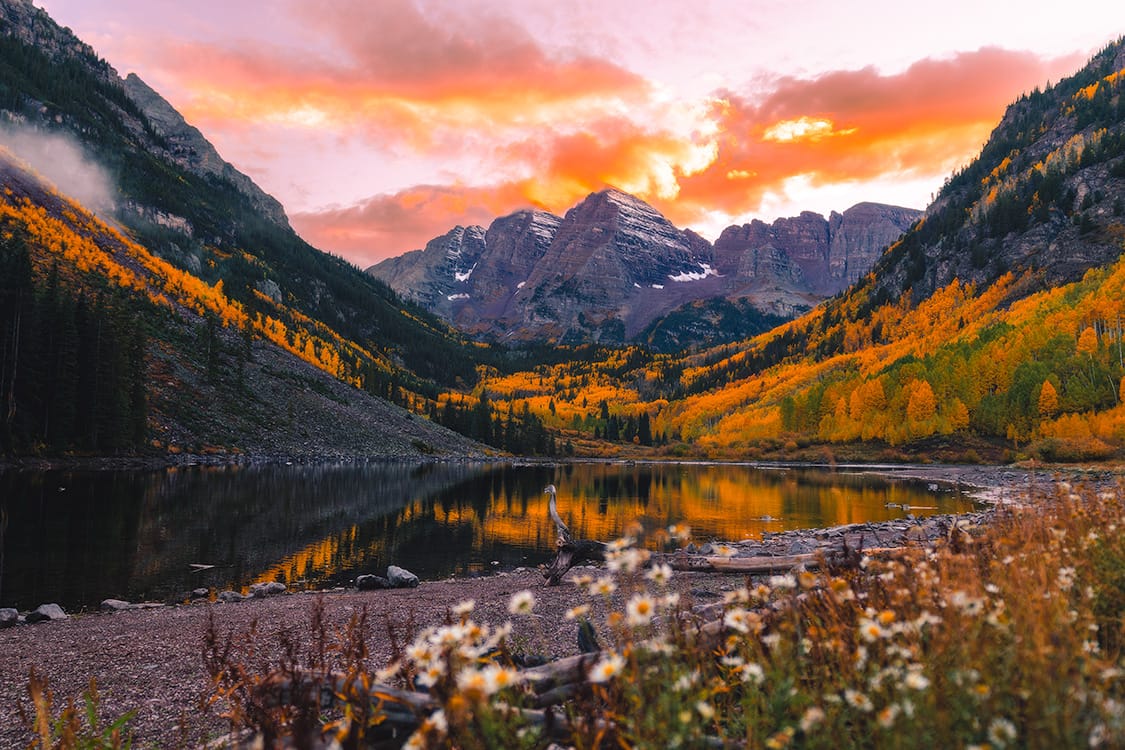
Photography Guide
Best Time of Day for Photography
Sunrise
Ask most photographers and they'll tell you sunrise is the best time to photograph the Maroon Bells, and there's a reason it's the classic shot.
Why sunrise is preferred:
- Calmer water, giving you the best chance of getting that classic reflection of the Bells
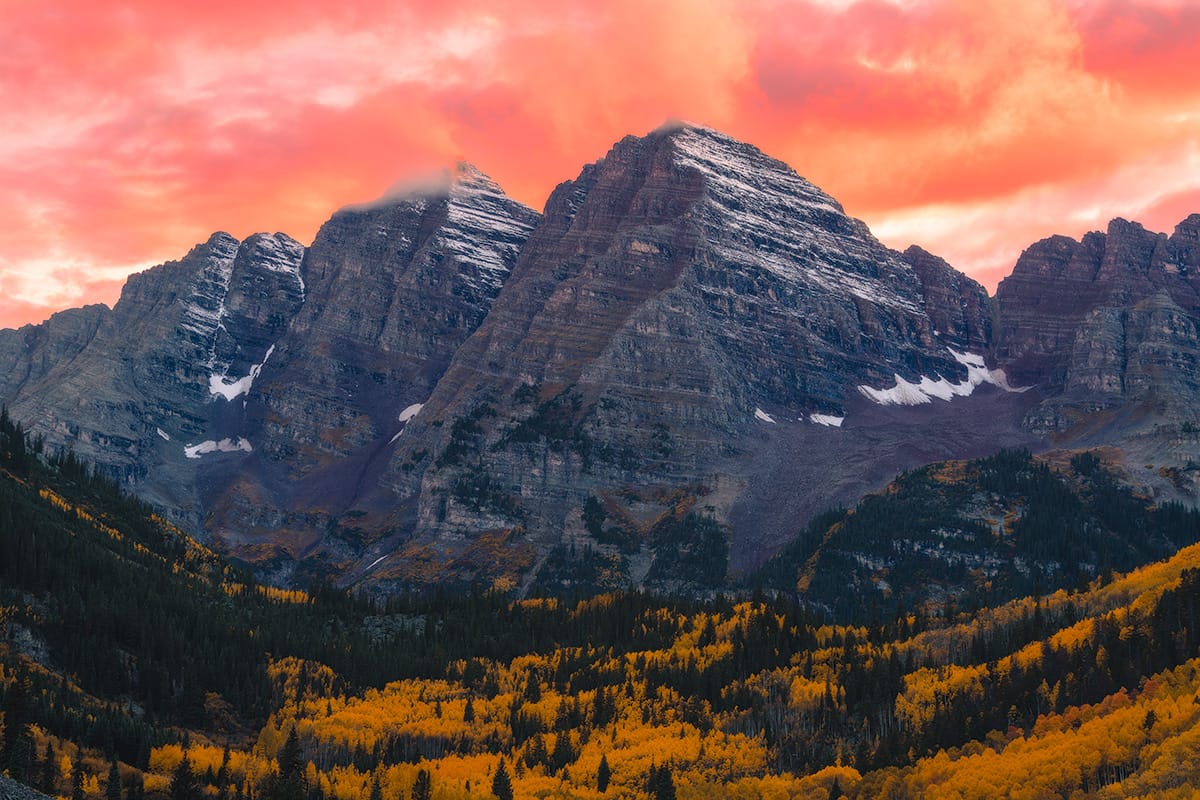
- Alpenglow on the peaks, when the first morning light turns the Bells pink/orange
- Cooler, clearer conditions, with less wind than you typically see later in the day
- More wildlife activity, with a good chance of seeing deer, elk, moose, bear, or waterfowl
If you're photographing Maroon Bells for the first time and want that classic shot you've seen in photographs, I'd choose sunrise.
Sunset
Sunset can still be absolutely beautiful at Maroon Bells, and honestly, I think it's underrated.
- Wind is more common in the afternoon, so you're less likely to get that perfectly still reflection you see in classic Maroon Bells photos. That doesn't bother me as much anymore. With the ropes keeping photographers back from the water and lower water levels, getting that perfect reflection isn't as much of a priority for me.
- You won't get the classic alpenglow that Maroon Bells is famous for at sunrise. BUT the sun sets directly behind the Bells, so if you get lucky with clouds, you can get some incredible color in the sky behind the peaks.
- Crowds are usually minimal. By sunset, access is limited to private vehicles, and most photographers choose sunrise for the classic alpenglow. There's a good chance you'll have far fewer photographers around and much more freedom to choose the composition you want.
If your goal is the classic Maroon Bells shot, choose sunrise. If you care more about fewer crowds, flexibility with your composition, and the chance for a dramatic sky, don't completely rule out sunset.
Best Photography Spots at Maroon Bells
You don’t need to hike far for the famous composition and don't forget to look behind you. There are photo opportunities everywhere!
Maroon Lake Shoreline
Photo Location: 39.098201, -106.942931
This is the most popular photography spot and the classis photo you see at Maroon Bells and gives you:
- The classic mountain reflection, if the lake is high enough and the water is calm
- Easy access from the parking and shuttle area
- A great wide-angle composition. I prefer my Sony 16–35mm GM for shots from the lake. The feature photo in this article was shot at 35mm.
- Please stay behind the rope. It's there for a reason, helping protect the shoreline and prevent erosion around the lake.
Crater Lake
Photo Location: 39.087314, -106.965563
If you want to explore beyond Maroon Lake, hike the 3.7-mile round-trip trail to Crater Lake, which takes you through a beautiful aspen grove beneath the Bells. In a low-moisture year, Crater Lake may be very low or even dry, but the hike itself is still worth doing, especially in the fall.
Keep in mind that you'll still need the appropriate parking or shuttle reservation to access the Maroon Bells Scenic Area.
Trail Details
- Distance: ~3.7 miles round trip via the Maroon Bells Scenic Loop and Crater Lake trails
- Difficulty: Moderate
- Elevation/Terrain: Rocky, uneven trail with steady elevation gain
- Elevation Gain: ~700 feet
- Time: About 2 to 3 hours // you're battling day light here if you go for sunset. This is best for a sunrise permit and can hike this after you shoot sunrise.
Maroon Bells Lake Bridge
Photo Location: 39.096219, -106.948423
This is my favorite composition at Maroon Bells, and it's usually much less crowded than the classic lake view.
You will NOT get the standard shot of the Bells from here. Instead, you're closer to the aspens and can incorporate the bridge and small reflection pond into your photos.
I especially like this spot when the aspens around the main lake are still dark green in the front right. The groves farther back here are usually more advanced, so you can sometimes find much better color here when the classic view isn't quite ready yet. Just know that works both ways. If you're visiting toward the end of peak, these aspens may already be bare while the trees around the lake still have leaves.
This is usually one of the first places I check when the color around Maroon Lake isn't where I want it yet.
Trail Details
- Distance: ~1.5 miles round trip along the Maroon Bells Scenic Loop Trail
- Difficulty: Easy
- Elevation/Terrain: Mostly flat, well-maintained dirt path
- Time: About 30 to 45 minutes excluding photography time
Photography Gear for the Maroon Bells
You don’t need a full professional kit, but a few items make a big difference:
Recommended gear
- Wide-angle lens (landscape + reflection shots) The majority of my shots at Maroon Lake Shoreline are shot between 24-35mm
- Tripod (especially for sunrise or sunset, as it gets pretty dark at the lake)
- Polarizing filter (reduces glare on water)
- Extra layers (mornings and evenings can be very cold in fall, sometimes below freezing or very close to freezing so be sure to pack an extra layer, puffy jacket, beanie, and gloves)
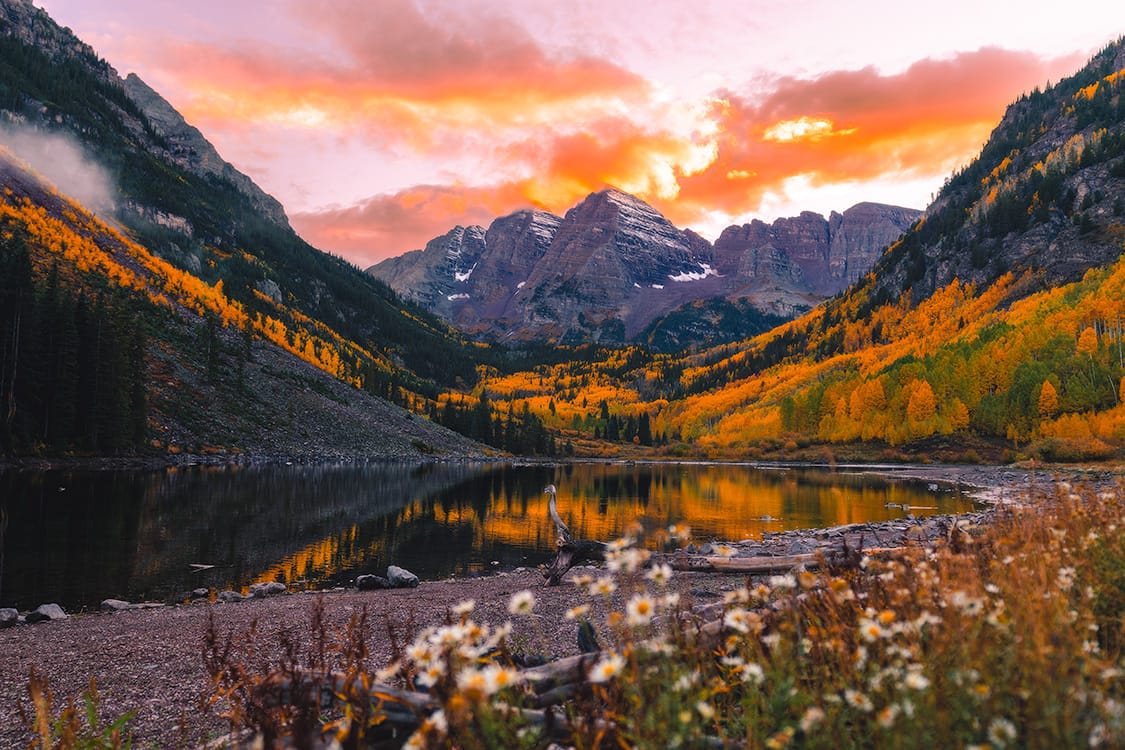
Photo Tips For Maroon Bells In The Fall
- Arrive before sunrise and scout compositions early. You need to be there minimally 30 minutes prior to sunrise because this is the busiest time of day.
- Shoot multiple focal lengths (wide + tighter frames). I take both my 16-35mm and my 50-300mm.
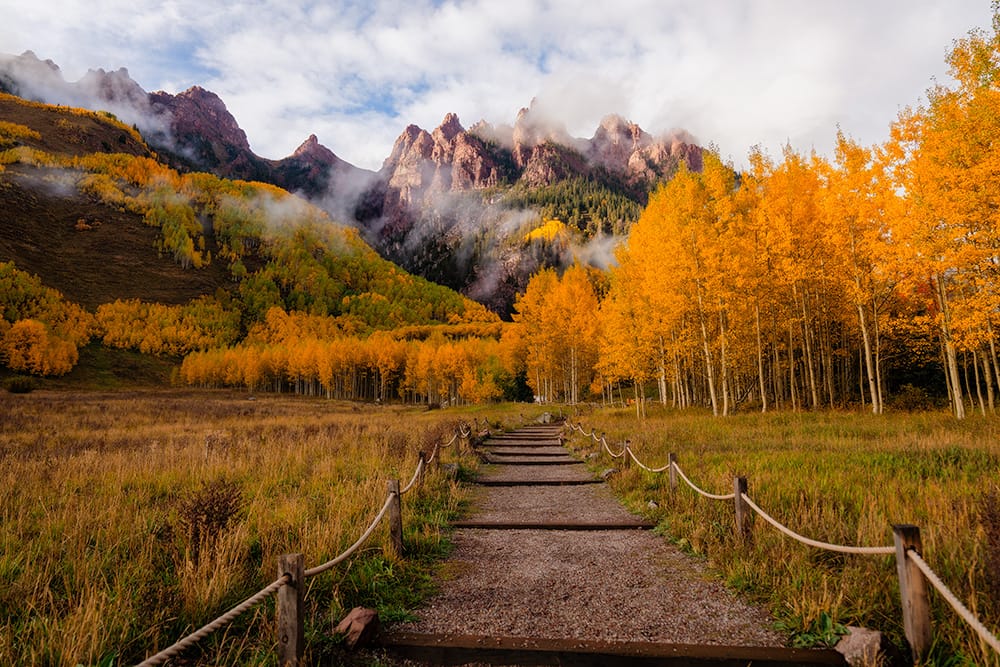
- Include foreground elements for depth. Sometimes the summer white daisies are still in late bloom the end of September, and can sometimes get a log in the foreground, too. (See image just above for the daisies)
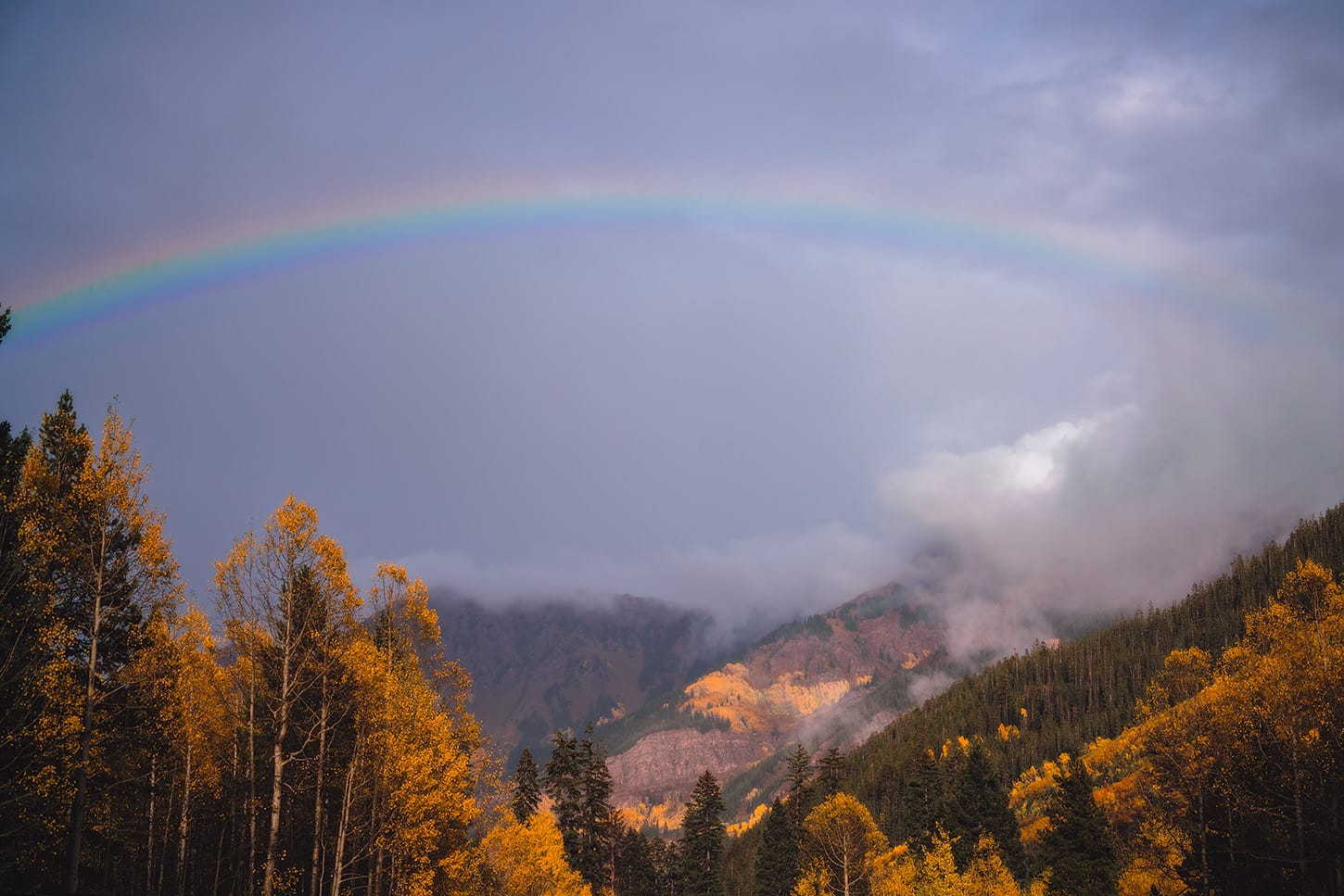
- Stay flexible — conditions change fast so don't cancel if it's raining or snowing. You might get some incredible fog or even a rainbow. Moody days at the Bells are my favorite.
- Aim for the beginning of peak versus end. By doing this, you avoid the aspens in the back dropping their leaves so only half the trees are peak near the lake.
- If you shoot sunset, the sun dips behind the Bells about an hour before sunset. If you want a burst, you'll need to be there before 5:30pm (My sunburst shot was at 5:38pm) and I had to use a tripod earlier than expected because of this.
Crowds, Conditions & What to Expect
The Maroon Bells are not a hidden location or hidden gem so you WILL see people. They are quite literally the most photographed place in Colorado, and fall is a very high tourism time to see them.
Crowds
- Expect a LOT of photographers at sunrise. Whatever number you're thinking, add 50-100 more. You will be shoulder to shoulder with photographers and tripods surrounding Maroon Lake.
- Arrive early to secure a good viewing position. Minimally 30 minutes prior to sunrise.
- Be patient. Everyone is there for the same reason and it's the most wonderful time of the year.
- Want fewer crowds? Plan to go for sunset.
Conditions
- Wind can impact reflections quickly, especially at sunset.
- Weather changes fast in the mountains so don't cancel if it's raining or snowing. My photos here? It was supposed to be 100% rain and it didn't rain on us at all. We just got incredible clouds, fog, and a rainbow.
- Cloud cover can improve or ruin light depending on timing. Go anyways. There is no bad day at the Maroon Bells and I promise you will find something beautiful.
- Know the trees you see in the background do NOT turn uniformly. This is normal. They usually start at the highest elevation in the furthest back, and gradually change towards the lake. I've shot here more times that I can count, and not once, has every tree been at peak at the same time.
- Knowing that, it's better to go early once you see a change versus late. When the aspens are at peak closest to the lake, the ones in the back will likely be dropped.
Frequently Asked Questions for Visiting the Maroon Bells During Fall:
Do you need reservations or a permit to visit the Maroon Bells in Aspen, Colorado?
Yes. During peak season (typically May 15–October 31), access to the Maroon Bells Scenic Area is strictly managed and requires either a shuttle reservation or a private vehicle reservation. This system is in place to protect the area and manage heavy visitor demand.
How does access to the Maroon Bells work?
From mid-May through late October, private vehicle access is restricted for most of the day. Visitors must use the shuttle system from Aspen Highlands during peak hours (generally 7 AM–3 PM). A limited number of private vehicle reservations are available outside shuttle hours, but sunrise and peak fall visits require advance booking.
Where do you book Maroon Bells reservations?
Private vehicle and shuttle reservations are made through the official site:
Parking reservations can be made here: https://www.visitmaroonbells.com/maroon-bells-parking-reservations/
Shuttle reservations can be made here: https://www.visitmaroonbells.com/maroon-bells-shuttle-reservations/
How much does a Maroon Bells permit cost?
Private vehicle reservations:
- $10 per vehicle
- Free with the America the Beautiful Pass (plus $2.40 service fee)
- Without pass: $12.40 total ($10 + $2.40)
Shuttle reservations:
- Advance: $16 adults / $10 children / $10 seniors
- Same-day: $20 adults / $14 children / $14 seniors
Availability is limited and often sells out in fall.)
Can you visit the Maroon Bells without a reservation?
During peak season, reservations are required 24/7. Same-day shuttle tickets may be available on a first-come, first-served basis, but lines are common and tickets often sell out quickly, especially during fall colors.
What happens if you don’t book ahead?
If you don’t book ahead, you may still have a couple of options. Same-day shuttle tickets can sometimes be available, but they aren’t guaranteed. You can also watch for last-minute parking cancellations, especially now that the new no-show fee gives people more incentive to cancel reservations they aren't going to use. These can go FAST during peak fall colors, so you’ll need to keep checking the reservation website.
Can I ride my bike or e-bike to the Maroon Bells?
Yes. Standard bikes are allowed, and e-bikes are permitted but classified as motorized vehicles. E-bike entry requires a $5 amenity fee per visit, but this fee is covered by the Maroon Bells Season Pass or America the Beautiful Pass. Entry does not sell out, so you can purchase it when your plans are confirmed.
When is the best time to take photographs of the Maroon Bells?
Sunrise is best if you want the classic Maroon Bells shot. You have the best chance for calm water and a reflection, plus the morning alpenglow on the Bells. It’s also when you’ll find the most photographers lined up along Maroon Lake.
I personally wouldn’t rule out sunset, though. It’s usually much less crowded, and because the sun sets behind the Bells, the right clouds can produce some incredible color behind the peaks. You probably won’t get the classic alpenglow or perfectly calm reflection, but you’ll have a lot more freedom to move around and try different compositions.
Final Thoughts:
I've photographed the Maroon Bells in the fall in all kinds of conditions, and you're not always going to get the perfect combination of peak color, calm water, alpenglow, and clear skies every single time.
Make your reservations early, but be flexible once you're there. If the classic view isn't quite at peak, walk farther back toward the bridge. If it's windy and you aren't getting a reflection, try a different composition. And don't skip it just because the conditions don't look perfect.
I've been here when the aspens were still green, when some were already dropping, when the lake was low, and when the weather didn't cooperate. I've still never regretted going.
Planning a photography trip to Colorado for fall colors?
If you want exact locations, drives, and photo spots already mapped out (with time of day to shoot them): Check out my Colorado Fall Colors Guide and be sure to join my Fall Colors Channel on Instagram where I update live color changes on the West Slope.
See you out there!
Mallory
Fall Colors in Colorado
Be sure to subscribe to my newsletter to get a special discount code for my travel guides.