Accessibility in Arizona's National Parks: Accessible Trails, Overlooks & Facilities
Planning an accessible trip to Arizona's national parks? Find wheelchair-accessible trails, scenic overlooks, facilities, and mobility information for each park.


Planning a trip to Arizona's national parks with mobility limitations isn't always straightforward. Accessible trails, overlooks, and facilities vary significantly between parks, and a paved trail doesn't necessarily mean it's wheelchair-accessible.
This guide covers accessibility at Grand Canyon, Saguaro, Petrified Forest, and Chiricahua National Parks, including wheelchair-accessible locations, trails that may require assistance, visitor facilities, campgrounds, and transportation options.
You'll also find information on the free America the Beautiful Access Pass for qualifying visitors with permanent disabilities.
A Note About Accessibility and This Guide
One of the most common requests I receive when helping people plan national park itineraries is for accessible trails and activities. I wanted to compile this information in one place to make planning a trip to Arizona's four national parks a little easier.
Accessibility looks different for everyone, and what works for one person may not work for another. I've done my best to distinguish wheelchair-accessible trails and facilities from routes that may be suitable for visitors with other mobility limitations.
I don't have a mobility disability, and I don't claim to be an accessibility expert. This guide combines my experiences exploring these parks with information published by the National Park Service. I also encourage readers to seek out firsthand experiences from visitors with disabilities.
I'm always open to corrections, suggestions, and personal experiences that can make this guide more accurate and useful. If there's something I've missed or could explain better, I'd genuinely love to hear from you.
Accessibility in Arizona's 4 National Parks: Quick Overview
Arizona's four national parks offer different levels of accessibility, from developed scenic overlooks and paved trails to historic facilities and more challenging natural surfaces.
The table below summarizes accessible options, mobility equipment information, and links to each park's official National Park Service accessibility guide. Further down, you'll find specific trails, overlooks, facilities, and campgrounds for each park.
| National Park | Accessible Options | Mobility Equipment | NPS Accessibility Guide |
|---|---|---|---|
| Chiricahua | Bonita Creek Trail, select developed areas & picnic facilities | Confirm availability with park | NPS Guide ↗ |
| Grand Canyon | Rim overlooks, developed paths, shuttles & facilities | Wheelchair rentals and limited loans; confirm locally | NPS Guide ↗ |
| Petrified Forest | Developed trails, scenic overlooks & museums | Confirm availability with park | NPS Guide ↗ |
| Saguaro | Paved desert trails, visitor centers & scenic drives | Confirm availability with park | NPS Guide ↗ |
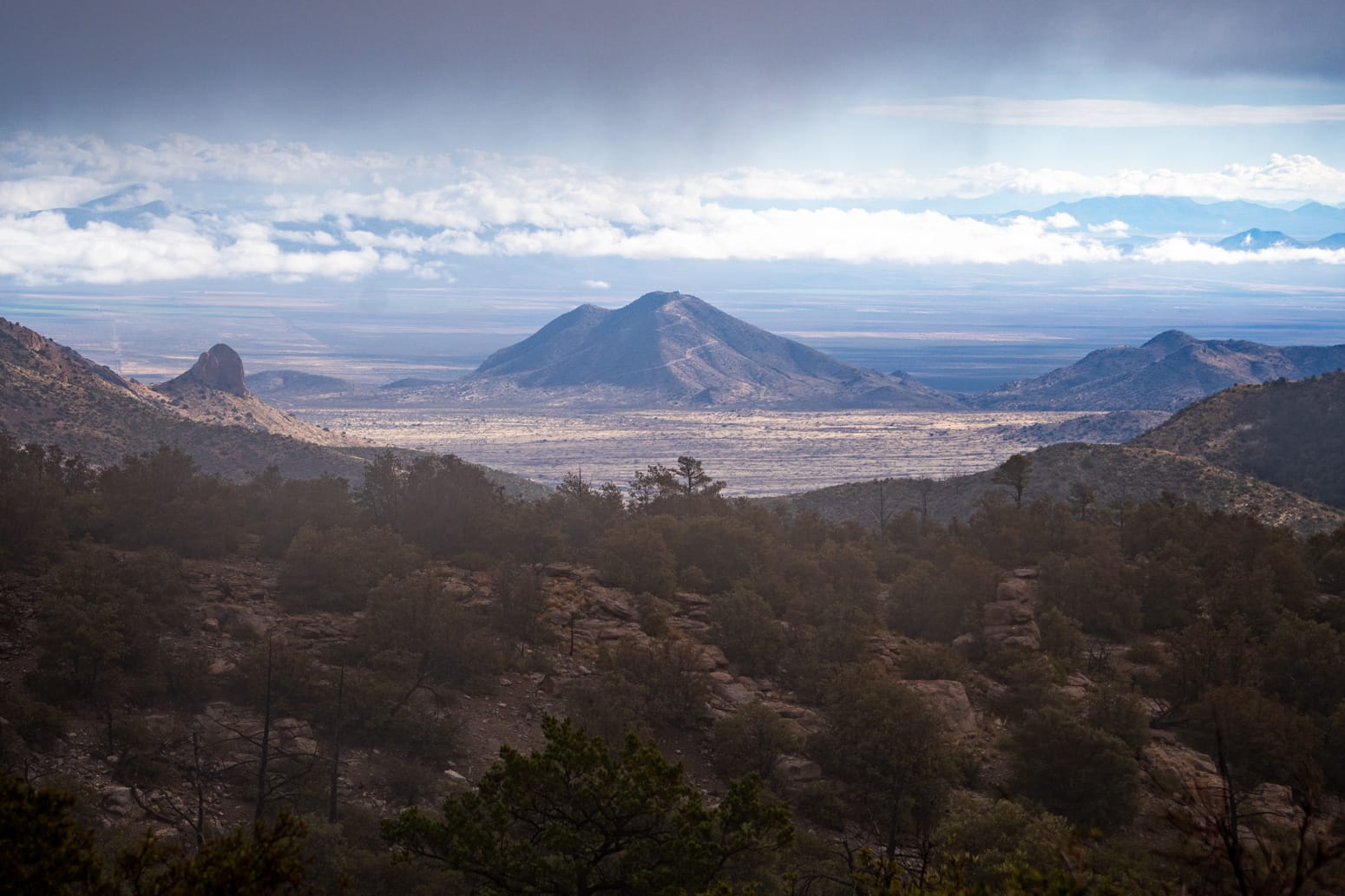
Accessibility at Chiricahua National Park
Chiricahua became Arizona's fourth national park in October 2026. The park has limited wheelchair-accessible trail options because most hiking routes have steep grades, large stone steps, and narrow passages.
The paved Bonita Creek Trail is the park's primary accessible trail, while some other developed areas may be suitable for visitors using mobility devices.
Accessible Trails & Scenic Overlooks
The table below includes Chiricahua's accessible trail and developed areas identified by the NPS, along with distances, surfaces, and potential obstacles.
| Trail or Overlook | Distance | Surface | Accessibility Notes |
|---|---|---|---|
| ♿ Bonita Creek Loop Trail (paved portion) | 0.2 mi loop overall | Paved section | NPS identifies the paved portion as suitable for all mobility devices. Confirm which sections are paved before visiting. |
| Faraway Ranch House Area | Varies | Developed grounds | NPS describes the area around the house as generally suitable for most mobility devices. The building interior may not be accessible. |
| Massai Point Trail (partial) | Approximately 0.1 mi section | Rocky, uneven sections | A portion may be accessible using power-assisted mobility devices. The entire trail is not wheelchair-accessible. |
| Massai Point Picnic Area | Near parking | Developed picnic area | An accessible picnic table is available near the parking area. Trail accessibility is separate. |
♿ Wheelchair-accessible: The NPS identifies the paved portion of Bonita Creek Trail as suitable for all mobility devices. Other areas listed may be usable with certain mobility devices but are not necessarily wheelchair-accessible. Most other trails have steps, narrow passages, and significant elevation changes. See the official NPS Chiricahua accessibility guide for current information.
Accessible Facilities & Campgrounds
- Visitor Center: Accessible building and nearby restrooms. The doors do not have automatic openers.
- Bonita Canyon Campground: Site 8 is designated as an accessible campsite. Reservations are required through the park's campground reservation system.
- Bonita Creek Picnic Area: Accessible picnic area with a hardened route to an accessible vault toilet.
- Massai Point Picnic Area: An accessible picnic table is located near the parking area.
- Ranger Programs: Contact the park at least 14 days ahead to request specific accommodations.
Mobility Equipment at Chiricahua National Park
The NPS does not identify an all-terrain wheelchair checkout program on its accessibility page.
Most of Chiricahua's trails are unsuitable for wheeled mobility devices due to steep terrain, stone steps, and narrow passages. The park recommends checking individual accessibility needs with staff before visiting.
For questions about accessibility or accommodations, contact the park at (520) 824-3560 or visit the official Chiricahua National Park accessibility guide.
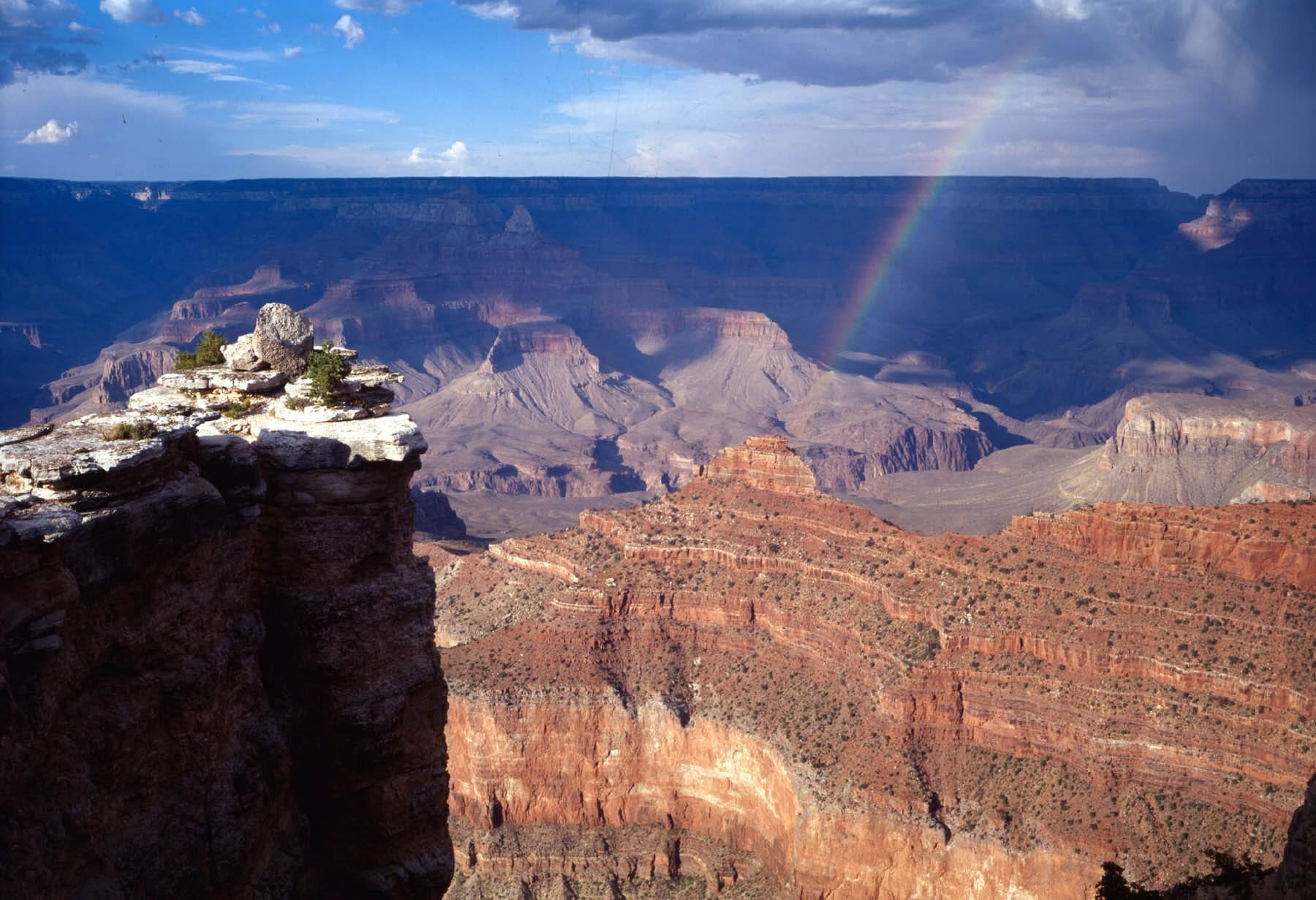
Accessibility at Grand Canyon National Park
Grand Canyon has accessible viewpoints, visitor facilities, and shuttle transportation, but accessibility varies between the South Rim and North Rim. Many developed areas are accessible, while most trails below the rim have steep grades, steps, and uneven terrain.
The South Rim generally offers more transportation and developed visitor services. The park also provides a Scenic Drive Accessibility Permit for visitors with mobility limitations who need vehicle access to certain roads normally closed to private traffic.
Accessible Trails & Scenic Overlooks
The table below covers major developed viewpoints and routes at Grand Canyon National Park. Distances and accessibility conditions should be confirmed with the park, particularly where only part of a trail is accessible.
| Trail or Overlook | Distance | Surface | Accessibility Notes |
|---|---|---|---|
| South Rim | |||
| ♿ Mather Point | Short approach | Paved | Wheelchair-accessible viewpoint with paved paths from the visitor center area. Some viewing positions have stairs. |
| ♿ Trail of Time / Rim Trail | Varies by section | Paved, some grades | Wheelchair-accessible paved sections along the South Rim. Steep grades and uneven surfaces occur elsewhere. |
| ♿ Yavapai Point / Geology Museum | Short approach | Paved | Wheelchair-accessible museum and developed canyon overlook. Accessible parking nearby. |
| Hermit Road Viewpoints | Varies by overlook | Paved, uneven sections | Accessible shuttles serve the road. Scenic Drive Accessibility Permits allow vehicle access; individual overlooks vary. |
| Desert View Area | Short developed paths | Paved, some slopes | Accessible viewing opportunities near the parking area. Upper floors of Desert View Watchtower are not wheelchair-accessible. |
| North Rim | |||
| Grand Canyon Lodge Area | Varies | Developed paths | Historic lodge destroyed in the 2025 Dragon Bravo Fire. Former lodge area and nearby trails have restricted access. |
| Point Imperial / Cape Royal Scenic Drive | Roadside stops | Paved roads, mixed overlook surfaces | Vehicle-based canyon viewing. Walking approaches vary. Scenic roads are subject to seasonal and recovery-related closures. |
♿ Wheelchair-accessible: Identifies locations or designated sections described as wheelchair-accessible by the National Park Service. Other listed trails and overlooks may have accessible portions or require assistance, but are not necessarily wheelchair-accessible throughout. Surfaces, slopes, and obstacles vary. See the official NPS Grand Canyon accessibility guide for detailed conditions and the North Rim status page for current closures.
Accessible Facilities & Campgrounds
- Visitor facilities: The park provides accessible visitor services, museums, food facilities, and lodging accommodations, although some historic buildings have limitations.
- Shuttles: South Rim shuttle buses have wheelchair ramps. Wheelchairs larger than 30 inches wide by 48 inches long cannot be accommodated, and most motorized scooters will not fit.
- Campgrounds: The NPS accessibility guide identifies accessible camping options at Mather Campground and the North Rim Campground. Confirm current operations and campsite details before reserving.
- North Rim: Facilities and roads are seasonal or subject to closures. Check current operating conditions before planning an accessible visit.
Accessible Transportation & Mobility Equipment at Grand Canyon National Park
Grand Canyon offers a Scenic Drive Accessibility Permit for visitors with mobility limitations. It allows private vehicle access to certain areas of Hermit Road and Yaki Point Road that are otherwise restricted.
- Where to obtain: Park entrance stations and NPS visitor centers.
- Parking: The permit does not replace a state-issued accessible parking placard.
- Wheelchairs: The NPS accessibility guide lists wheelchair rentals at Bright Angel Bicycles on the South Rim and limited wheelchair loans on the North Rim. Confirm current availability directly.
- All-terrain wheelchairs: I could not verify a park-operated all-terrain wheelchair checkout program.
For current transportation and accessibility requirements, visit the official Grand Canyon National Park accessibility guide.
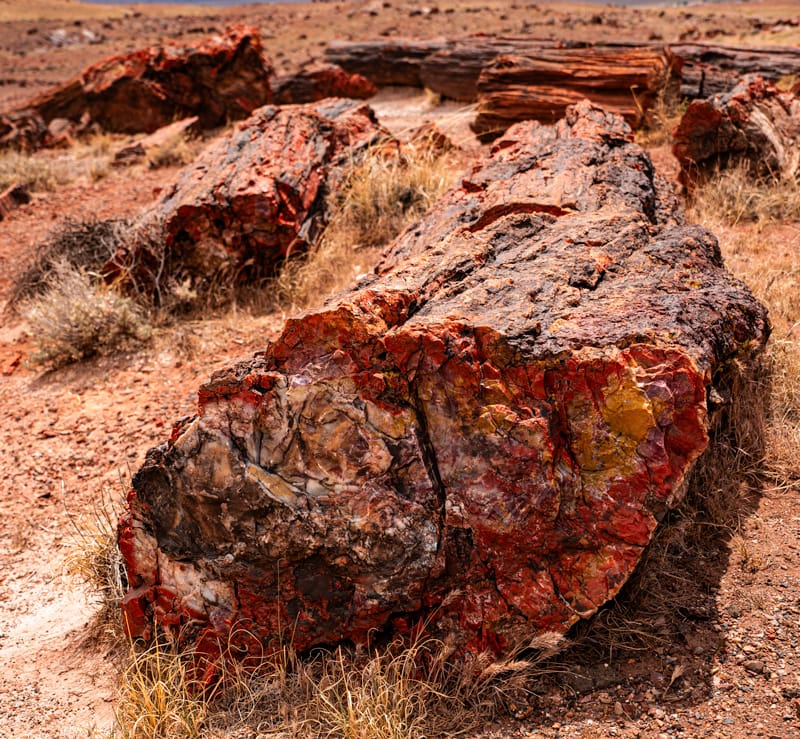
Accessibility at Petrified Forest National Park
Petrified Forest National Park has developed scenic overlooks, paved trails, and accessible visitor facilities along its main park road. However, the NPS cautions that some paved trails have grades exceeding accessibility standards.
Several trails can be explored at least partially with mobility devices, making it especially important to check the specific section you plan to visit.
Accessible Trails & Scenic Overlooks
The table below includes developed trails and viewing areas at Petrified Forest National Park, along with distances, surfaces, and accessibility limitations.
| Trail or Overlook | Distance | Surface | Accessibility Notes |
|---|---|---|---|
| ♿ Tawa Trail | 1.2 mi one way | Groomed surface | NPS states this trail meets standards for outdoor developed areas. Grades reach 8.3%, with no listed obstacles. |
| Puerco Pueblo Trail | 0.3 mi loop | Paved | Suitable for various manual and powered mobility devices except for a short spur. |
| Long Logs Trail (initial section) | First 0.5 mi | Paved | Initial section suitable for mobility devices. The remaining loop has rough surfaces and narrow turns. |
| Agate House Trail (initial section) | First 0.5 mi | Paved | Initial section suitable for mobility devices. Beyond it, rough surfaces and grades up to 14.7% may require assistance. The structure itself is closed to entry. |
| Painted Desert Rim Trail | 1 mi round trip | Dirt, gravel | Not designated wheelchair-accessible. Waterbars, steep grades, and cross slopes may make the route unsuitable for mobility devices. |
| Giant Logs Trail | 0.4 mi loop | Paved, with stairs | Several sets of stairs and grades up to 19.1% make this trail unsuitable for many mobility devices. |
♿ Accessible developed trail: The NPS identifies Tawa Trail as meeting standards for outdoor developed areas. Other listed trails may have usable sections but are not necessarily wheelchair-accessible throughout. See the official NPS Petrified Forest trail accessibility information for grades, cross slopes, and obstacles.
Accessible Facilities & Campgrounds
- Painted Desert Visitor Center and Rainbow Forest Museum: Both provide accessible visitor facilities, exhibits, and a captioned orientation film.
- Restrooms: Accessible restrooms are listed at major visitor facilities, Painted Desert Inn, Puerco Pueblo, and Hózhó Point. Some historic facilities may require assistance.
- Picnic Areas: Hózhó Point has accessible picnic facilities and a restroom. Rainbow Forest picnic area has limited accessibility.
- Camping: Petrified Forest does not allow vehicle camping inside the park. Camping is limited to wilderness areas reached primarily by cross-country hiking.
Mobility Equipment at Petrified Forest National Park
The NPS does not identify a park-operated all-terrain wheelchair checkout program on its accessibility page.
Because trail grades and surfaces vary significantly, visitors using wheelchairs or other mobility devices should review the park's individual trail measurements and contact a visitor center when planning their visit.
For current information, see the official Petrified Forest National Park accessibility guide.
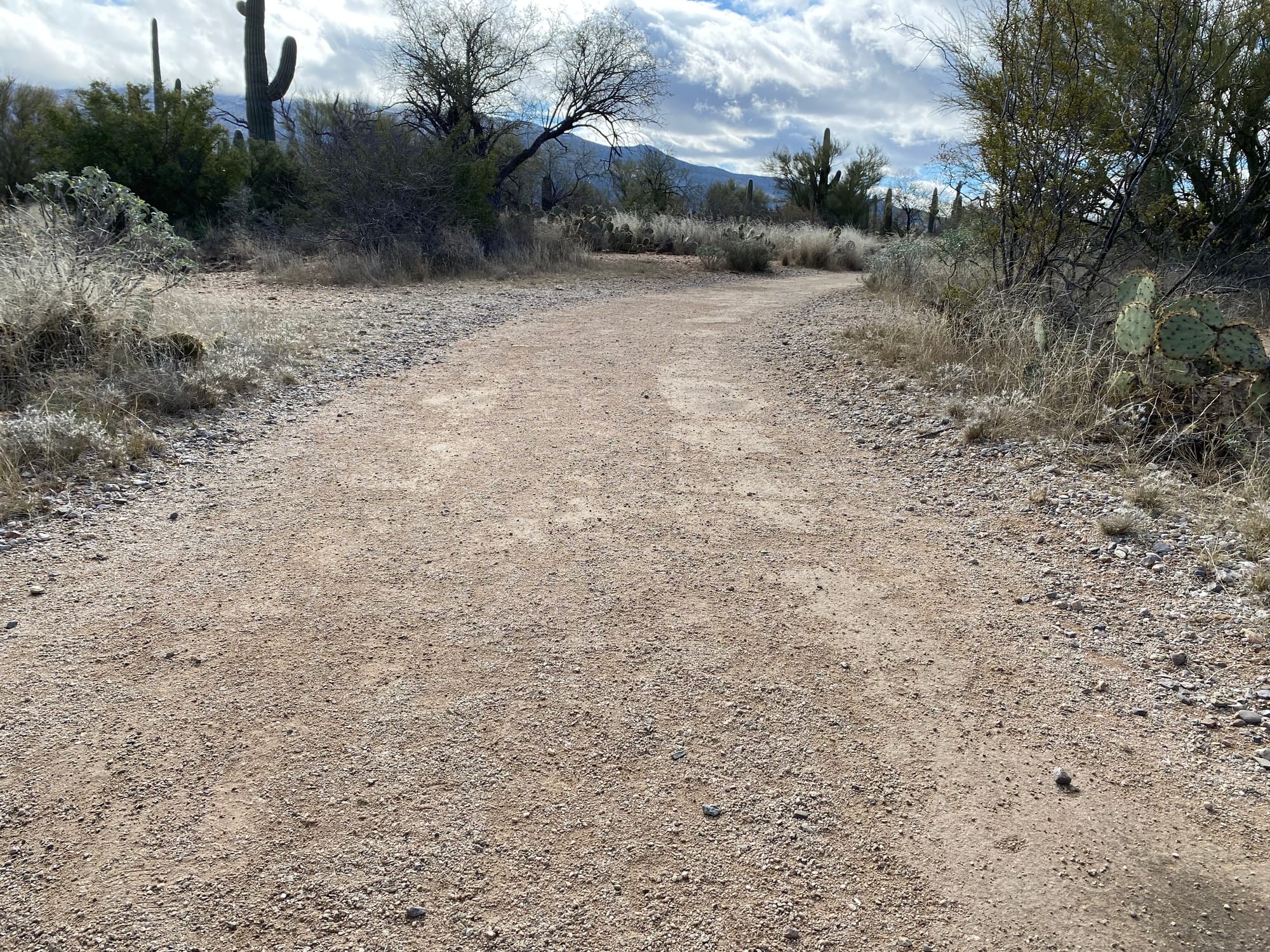
Accessibility at Saguaro National Park
Saguaro National Park has paved desert trails and accessible visitor facilities in both its districts: Saguaro East (Rincon Mountain District) and Saguaro West (Tucson Mountain District).
The park's short interpretive trails are good places to start when looking for routes with more developed surfaces, although the hard-packed Mica View Trail has different conditions from the paved trails.
Accessible Trails & Scenic Overlooks
The table below includes Saguaro's main trails identified by the NPS for visitors with mobility limitations, along with distances, surfaces, and potential obstacles.
| Trail or Overlook | Distance | Surface | Accessibility Notes |
|---|---|---|---|
| Saguaro East (Rincon Mountain District) | |||
| ♿ Desert Ecology Trail | 0.25 mi loop | Paved | NPS-designated ADA-accessible trail with interpretive exhibits and benches. |
| ♿ Mica View Trail | 0.7 mi one way | Firm, hard-packed | NPS-designated ADA-accessible trail connecting Mica View Picnic Area and Broadway Trailhead. |
| Cactus Forest Scenic Drive | 8 mi driving loop | Paved road | Seven scenic parking areas have accessible parking and interpretive signs. Vehicle-based viewing is available. |
| Saguaro West (Tucson Mountain District) | |||
| ♿ Desert Discovery Trail | 0.5 mi loop | Paved, textured | NPS-designated ADA-accessible trail with interpretive signs, shaded ramadas, and benches. |
| ♿ Cactus Garden Trail | 300 ft loop | Paved | NPS-listed wheelchair-accessible garden path near the Red Hills Visitor Center. Not separately identified as ADA-standard. |
| Bajada Loop Drive | 5 mi driving loop | Unpaved road | Vehicle-based sightseeing with accessible parking at some picnic areas. Road conditions may vary. |
♿ Wheelchair-accessible: Identified as wheelchair-accessible by the National Park Service. Desert Ecology Trail, Mica View Trail, and Desert Discovery Trail are specifically described by NPS as constructed to ADA standards. Surfaces and conditions may vary. See the official NPS Saguaro accessibility guide for current information.
Accessible Facilities & Campgrounds
- Visitor Centers: Both districts have accessible visitor centers with designated parking, restrooms, drinking fountains, paved cactus garden paths, and captioned orientation programs.
- Picnic Areas: The NPS identifies six vehicle-accessible picnic areas, each with a wheelchair-friendly picnic table and accessible restroom. Approaches may involve compacted soil or gravel.
- Ranger Programs: Many programs take place near visitor centers or along developed trails. Some are conducted as vehicle caravans.
- Camping: Saguaro does not offer developed frontcountry vehicle campgrounds inside the park. Its wilderness camping options require separate accessibility considerations.
Mobility Equipment at Saguaro National Park
The NPS provides information about accessible trails and facilities but does not confirm a park-operated all-terrain wheelchair checkout program on its accessibility page.
Visitors who need mobility equipment should contact the appropriate visitor center before traveling.
- Saguaro East: (520) 733-5153
- Saguaro West: (520) 733-5158
For current trail conditions, visit the official Saguaro National Park accessibility guide.
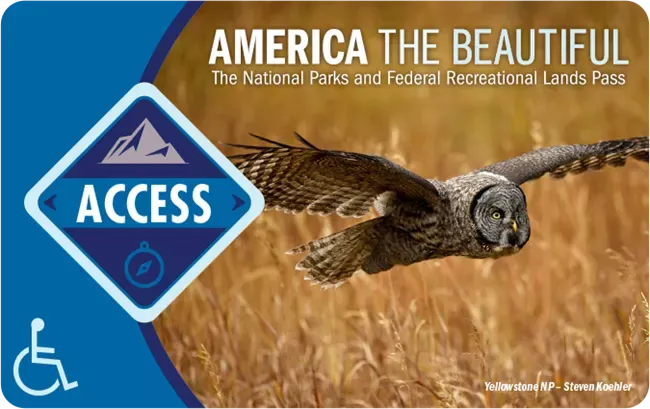
America the Beautiful Access Pass
If you have a permanent disability, you may qualify for a free lifetime America the Beautiful Access Pass, which covers entrance fees at Arizona's national parks and more than 2,000 federal recreation sites.
The pass is available to U.S. citizens and permanent residents with a permanent disability. You do not need to have a 100% disability rating to qualify.
What Does the Access Pass Cover?
- Free entrance for the passholder and passengers in one private vehicle at parks that charge per vehicle.
- At parks charging per person, admission for the passholder and up to three accompanying adults.
- Discounts of up to 50% on certain federal recreation fees, including some camping fees.
The pass is free when obtained in person at a participating federal recreation site. Online or mail orders may include processing or shipping fees.
You can learn more about eligibility, documentation, and how to apply through the official USGS Access Pass website.
Tips for Visiting Arizona's National Parks With Limited Mobility
Accessibility varies between trails, overlooks, and facilities, even within the same park. Arizona's heat, exposed desert landscapes, and remote roads also require some additional planning.
- Check current trail conditions. Closures, construction, flooding, and seasonal restrictions can affect accessible routes.
- Review grades and surfaces. Paved doesn't automatically mean wheelchair-accessible. Steep slopes, cross slopes, and uneven pavement may require assistance.
- Plan around the heat. Saguaro and lower-elevation desert areas can be dangerously hot, particularly during summer.
- Check seasonal access. Grand Canyon's North Rim has different operating conditions from the South Rim.
- Confirm transportation options. Grand Canyon offers accessible shuttles, while the other three parks are primarily explored by private vehicle.
- Contact parks about mobility equipment. Do not assume an all-terrain wheelchair is available without confirmation.
- Allow extra time. Parking, accessible restroom locations, and trail approaches can affect how long each stop takes.
Additional Accessibility Resources
For firsthand accessibility experiences and detailed trail information, WheelchairTraveling.com is another resource worth exploring alongside the official National Park Service guides.
Frequently Asked Questions About Accessibility in Arizona's National Parks
Which Arizona national park is the most wheelchair-accessible?
Grand Canyon and Saguaro offer several developed accessibility options, but the best choice depends on your mobility needs. Grand Canyon has accessible shuttle transportation and developed viewpoints, while Saguaro has short paved desert trails in both districts.
Are there wheelchair-accessible hiking trails in Arizona's national parks?
Yes, although accessibility varies. Saguaro has paved interpretive trails, Petrified Forest identifies portions of developed trails suitable for mobility devices, and Chiricahua has a paved section of Bonita Creek Trail. Grand Canyon has developed rim paths, but many hiking routes are steep and unsuitable for standard wheelchairs.
Does Grand Canyon National Park have wheelchair-accessible shuttle buses?
Yes. The park's shuttle buses accommodate wheelchairs within size restrictions. Visitors who cannot use the shuttle may qualify for a Scenic Drive Accessibility Permit.
Can I borrow an all-terrain wheelchair at Arizona's national parks?
Unlike Utah's Mighty 5, I could not verify park-operated all-terrain wheelchair checkout programs at these four Arizona parks. Contact each park directly to confirm current mobility equipment options.
Is Chiricahua National Park wheelchair-accessible?
Chiricahua has limited accessible trail options. The paved portion of Bonita Creek Trail is identified by the NPS as suitable for all mobility devices. The visitor center, certain picnic areas, and an accessible campground site provide additional options.
Do visitors with disabilities get free admission to national parks?
Eligible U.S. citizens and permanent residents with permanent disabilities can receive a free lifetime America the Beautiful Access Pass. Online or mail processing fees may apply.
Are service animals allowed in Arizona's national parks?
Yes. Trained service dogs are generally permitted in areas open to visitors, including places where pets are otherwise restricted. Emotional support animals are not considered service animals under NPS rules and must follow each park's pet restrictions.
Final Thoughts on Accessibility in Arizona's National Parks
Arizona's national parks offer a range of accessible trails, overlooks, and visitor facilities, but accessibility varies significantly between parks. I've used official National Park Service information to distinguish accessible locations from routes that may require assistance or specialized mobility equipment.
Always check current conditions before visiting. If you notice outdated information, have a correction, or would like to request an update to this guide, please leave a comment below or email me at mallory@roamingthesouthwest.com. I welcome firsthand feedback from visitors with mobility disabilities.